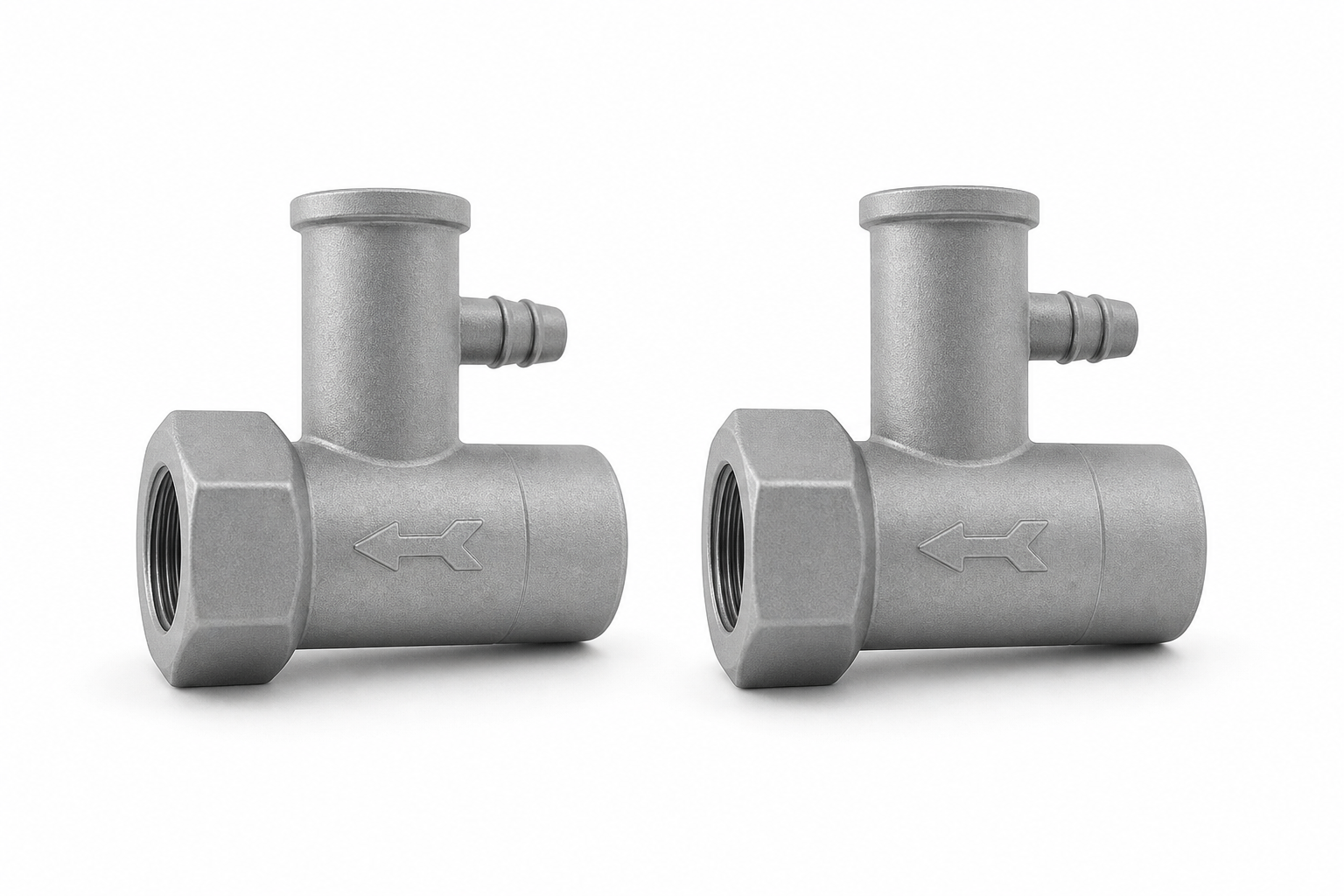
A request for a stainless replacement is more useful when it describes the conditions the component will face. For a buyer currently ordering brass, the first task is to gather those conditions in plain language. You do not need to select the alloy yourself before starting the discussion.
Explain where the part sits, what touches it, and how the product is cleaned. Separate confirmed information from assumptions. The result is a practical brief that helps the supplier and your product team decide which material and finished condition deserve evaluation.
Describe the location at component level
A product may be described as indoor equipment while one component remains wet, exposed to cleaning fluid, or close to a source of heat. Start with the part itself. Is it inside a closed housing, visible on the outside, or located where liquid can collect?
Include a photograph of the component installed in the product. Mark the areas exposed during normal operation and the areas exposed only during cleaning or maintenance. This often explains more than a broad industry label.
For an outdoor product, describe the actual setting rather than simply saying weather resistant. A sheltered location, a coastal installation, and a frequently washed surface can present different conditions. Record the known facts and ask for help with any missing details.
List what the surface contacts
Write down the liquids, cleaning products, or other materials expected to contact the part. Where available, provide their specified concentration and temperature range. If several product variants have different uses, identify them separately rather than assuming one description covers all of them.
Outokumpu's corrosion guidance explains that stainless performance depends on both its composition and the environment. It also identifies chloride-containing conditions as relevant to localized corrosion. A generic stainless description is therefore not a complete application assessment.
This is a reason to improve the brief, not to guess a universal replacement grade. Have the supplier explain the proposed material in relation to your actual conditions, and have the responsible product team confirm the evidence required for acceptance.
Include the cleaning routine
Cleaning may expose a component to conditions different from normal use. Provide the approved cleaning instructions and product names where you have them. Note the cleaning frequency, contact time, rinsing, and drying steps specified for the equipment.
Do not create a new cleaning procedure during a sourcing discussion. Your aim is to explain the existing requirement and identify whether the proposed material and finish are suitable. Any changes to instructions need the appropriate product review.
Outokumpu's post-fabrication guidance also emphasizes surface condition and cleaning after manufacture. Ask the supplier to state the condition in which parts will be delivered, including any agreed finishing and cleaning operations.
Explain what must keep working
Environmental information belongs beside the component's function. Does the part mainly hold something in position, carry fluid, support movement, or contribute to a visible surface? State what failure would look like in ordinary words, then refer to the product's established requirements.
If the existing copper alloy was chosen for electrical or thermal behavior, say so explicitly. Replacing its appearance or shape does not establish that another material can perform that job. Retain the material question as an open decision until the relevant evidence is available.
For a visible component, distinguish acceptable appearance from functional acceptance. A surface observation may matter to customers without being the only requirement. Our guide to replacing a brass finish explains that separate appearance discussion.
Keep material and manufacturing questions connected
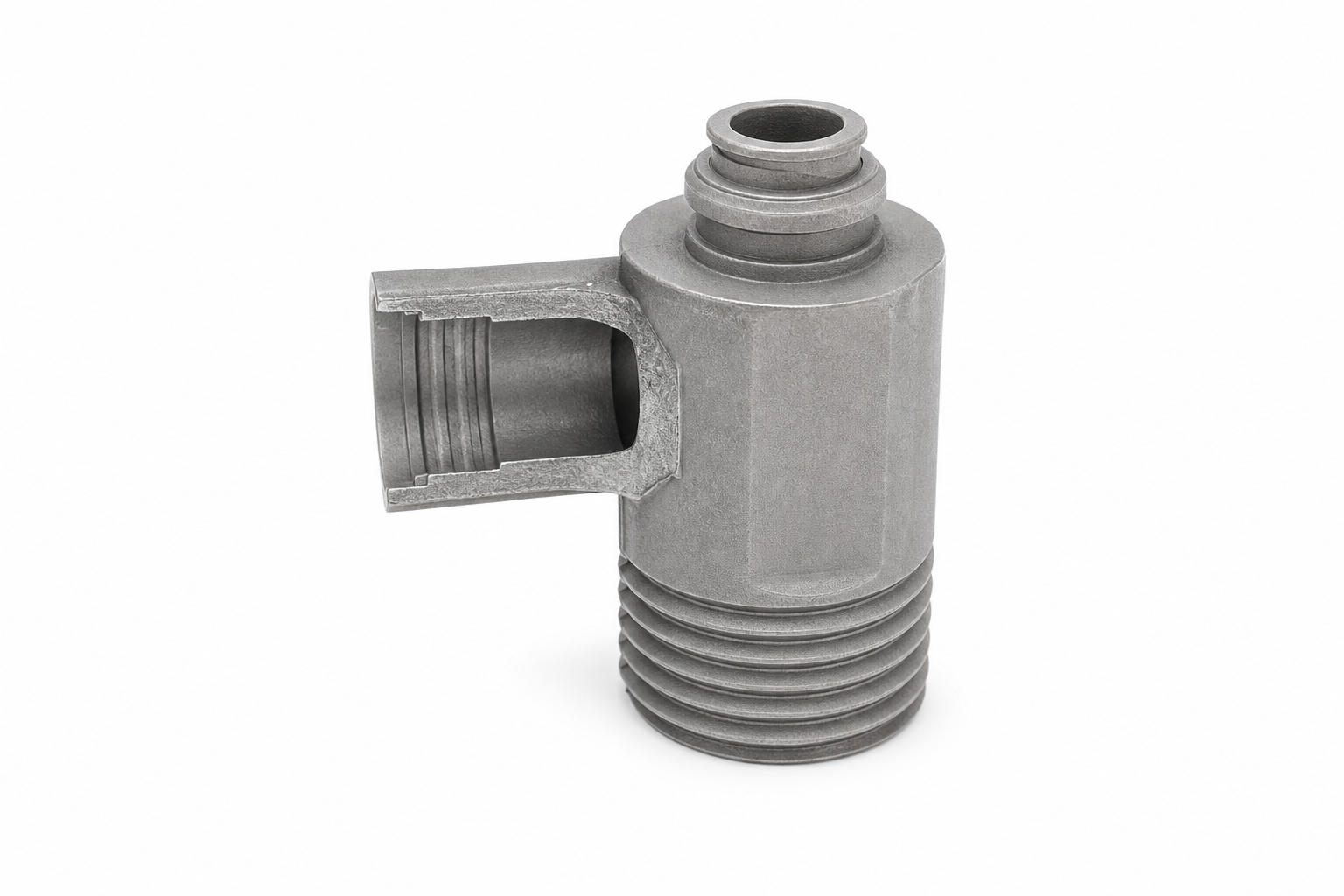
Metal Injection Molding (MIM) shapes a metal-powder mixture in a mold and processes it into a metal component. It may be a route to consider for a small complex stainless part. Choosing that route does not remove the need to assess the material, final surface, and application together.
Ask the supplier to identify any assumptions behind the proposal. If the quoted grade or finish relies on a particular exposure description, keep that description attached to the quotation. A later change in use should trigger a review rather than silently extending the original conclusion.
Make clear which product versions are covered. A component acceptable for one use should not be treated as accepted for every market or environment simply because the same drawing is used.
Turn unknowns into specific next steps
Your first brief may be incomplete. Perhaps the cleaning product is known but its normal dilution is not, or the temperature stated in an old document has never been confirmed. Mark each gap and name the person who can obtain the information.
Ask the supplier which missing details prevent a meaningful recommendation and which can be resolved later. This separates essential inputs from background questions. It also prevents an early estimate from being mistaken for a final material recommendation.
Where testing is needed, let the relevant product and quality specialists agree the method and acceptance criteria. A generic test result or an attractive sample photograph cannot substitute for evidence appropriate to the intended application.
Send a brief that can be reviewed
Bring together the installed-part photograph, use conditions, contact materials, cleaning instructions, required function, and known product requirements. Include the current material if documented, expected quantities, and the reason for considering a stainless alternative.
Then share the brief with LP MIM and ask for the proposed material, finished condition, open assumptions, and next evaluation step. A useful first response explains what deserves investigation and what remains uncertain, giving purchasing a clearer basis for the next decision.
Comments
Loading comments...