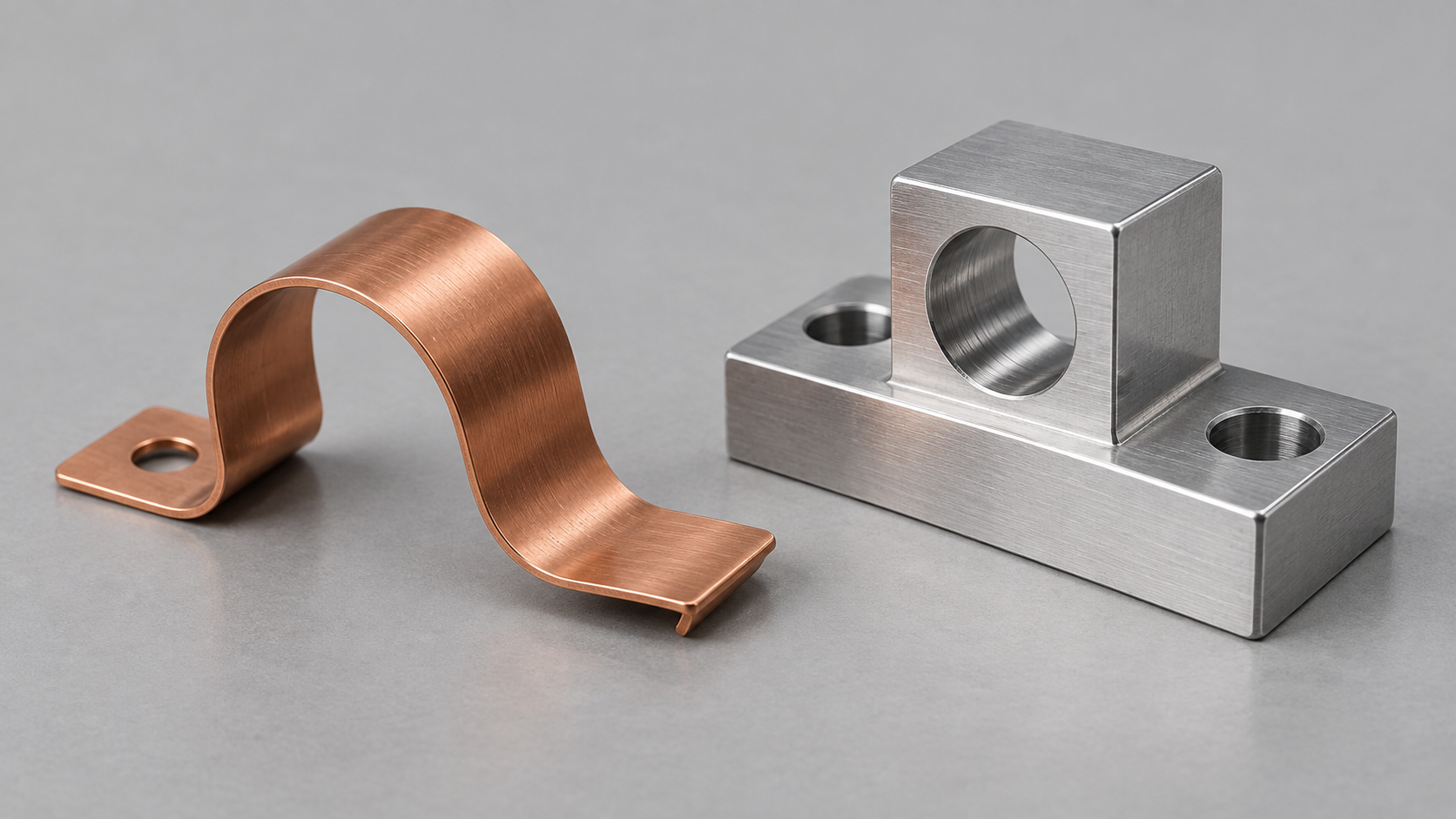
Some brass parts hold their shape; others are expected to bend and return during use. If your component clips, presses, latches, or maintains contact by flexing, identify that function before considering a stainless replacement. Matching the outline does not establish that a different material and manufacturing route will provide the same behaviour.
A buyer does not need to design the spring to ask the right opening question: which movement is intentional? The answer helps separate a structural part that might suit a new stainless shape from an elastic element that needs its own material and product assessment.
Watch the complete movement
Ask the product owner to show the part before installation, during installation, and in normal use. Identify which areas move and whether that movement happens once or repeatedly. A photograph of the resting component may hide the very function that explains the original material choice.
Record what the movement achieves. It may retain another piece, maintain pressure, allow release, or provide a user action. Ask what would happen if the part stayed bent, became harder to operate, or no longer returned to its intended position. Those consequences help the responsible team define the requirements.
Our assembly-trial guide covers observing a new component in the workflow. This review starts earlier: establishing whether intentional flexing is part of the material decision before a supplier is asked to reproduce the shape.
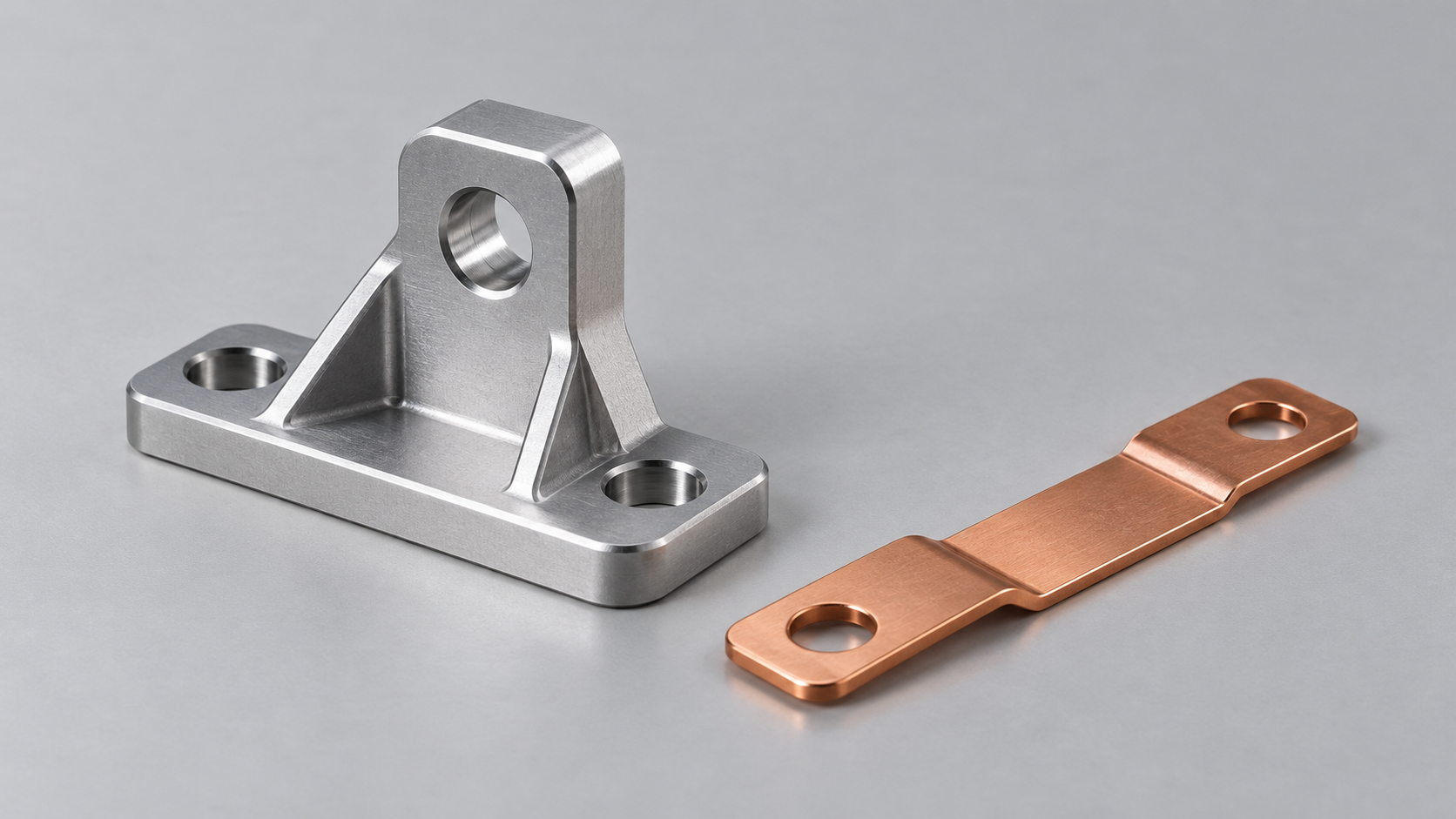
Conceptual illustration: silver support bracket beside a separate copper-colored contact strip.
Find the specification behind the familiar name
Check the existing material designation and supplied condition. Do not assume that all copper-coloured parts are the same brass or that the alloy name alone describes the finished item. Ask the supplier and product team which records identify the actual material and processing basis.
If the record is incomplete, preserve an identifiable reference sample and document what is unknown. Avoid using a casual bend demonstration to assign a material or approve a replacement. The observation can help describe the function, but it cannot provide every requirement for repeat supply.
Ask the responsible specialist to define the relevant movement, load, recovery, life, and environment requirements in an appropriate form. Purchasing should carry those requirements into the enquiry without translating them into an unsupported promise such as any stainless spring material will work.
Keep manufacturing feasibility separate
Metal Injection Molding (MIM) forms a metal-powder mixture with a temporary binder in a mold, followed by processing that produces the metal component. BASF provides a process introduction. It is a manufacturing option, not a guarantee that an existing flexible copper-alloy component can be copied directly.
CMG's guidance discusses materials and subsequent operations. Ask the proposed supplier to explain the complete route and the evidence needed for the intended function. A statement that a shape can be made does not answer how the finished component will behave through repeated movement.
The sensible result may be a stainless structural body with a separate elastic element, a different design assessed by the product team, or retention of the current part. Keep those outcomes open instead of making an all-stainless assembly the success criterion before the function is understood.
Make the sample purpose explicit
Tell the supplier which question the sample must answer. An early piece may be intended to check space or assembly access, while a later representative sample is required for functional assessment. Label those purposes clearly so a fit sample does not acquire a broader approval through repeated handling.
Confirm the sample's material, condition, manufacturing route, and finish. Record any differences from the proposed production version. Have the responsible reviewer decide whether those differences prevent the sample from answering the planned question.
For a hypothetical retaining clip, easy installation once does not establish reliable retention through its intended use. Ask the product team to choose a suitable evaluation and acceptance basis. Do not create a universal number of cycles or an informal hand-force threshold merely to make the purchasing file look complete.
Compare the assembly rather than the loose part
If the proposal separates the support from the flexible element, include both items and their assembly. Check access for installation and replacement, identification, and the parts that could be lost during handling. A lower price for the support alone may leave significant work outside the quotation.
If the proposal integrates a previously separate feature, ask which function benefits and what becomes harder to replace. The serviceability discussion helps keep that tradeoff visible. Integration should be evaluated against the product's actual maintenance needs.
Include representative evaluation and any required additional processing in the commercial plan. Keep uncertain performance benefits separate from confirmed prices. A supplier's confidence is useful input to the review, but it is not a substitute for the agreed evidence supporting release.
Record what was actually accepted
Keep the approved component identity, material condition, configuration, and evidence references together. State which product versions and uses are covered. Record any limitations rather than summarizing a narrow result with an unrestricted approved stamp.
Have future material, processing, or design changes routed to the appropriate reviewer. Purchasing may see the same part number while an underlying condition changes. A clear requirement and change process help prevent an apparently equivalent replacement from bypassing the original functional assessment.
To start, send LP MIM photographs of the component in its different working positions, the available specification, demand, and the purchasing problem. Explain where bending is intentional and what must return afterward. That brief makes it possible to discuss a useful stainless manufacturing opportunity while protecting the elastic function the product depends on.
Comments
Loading comments...