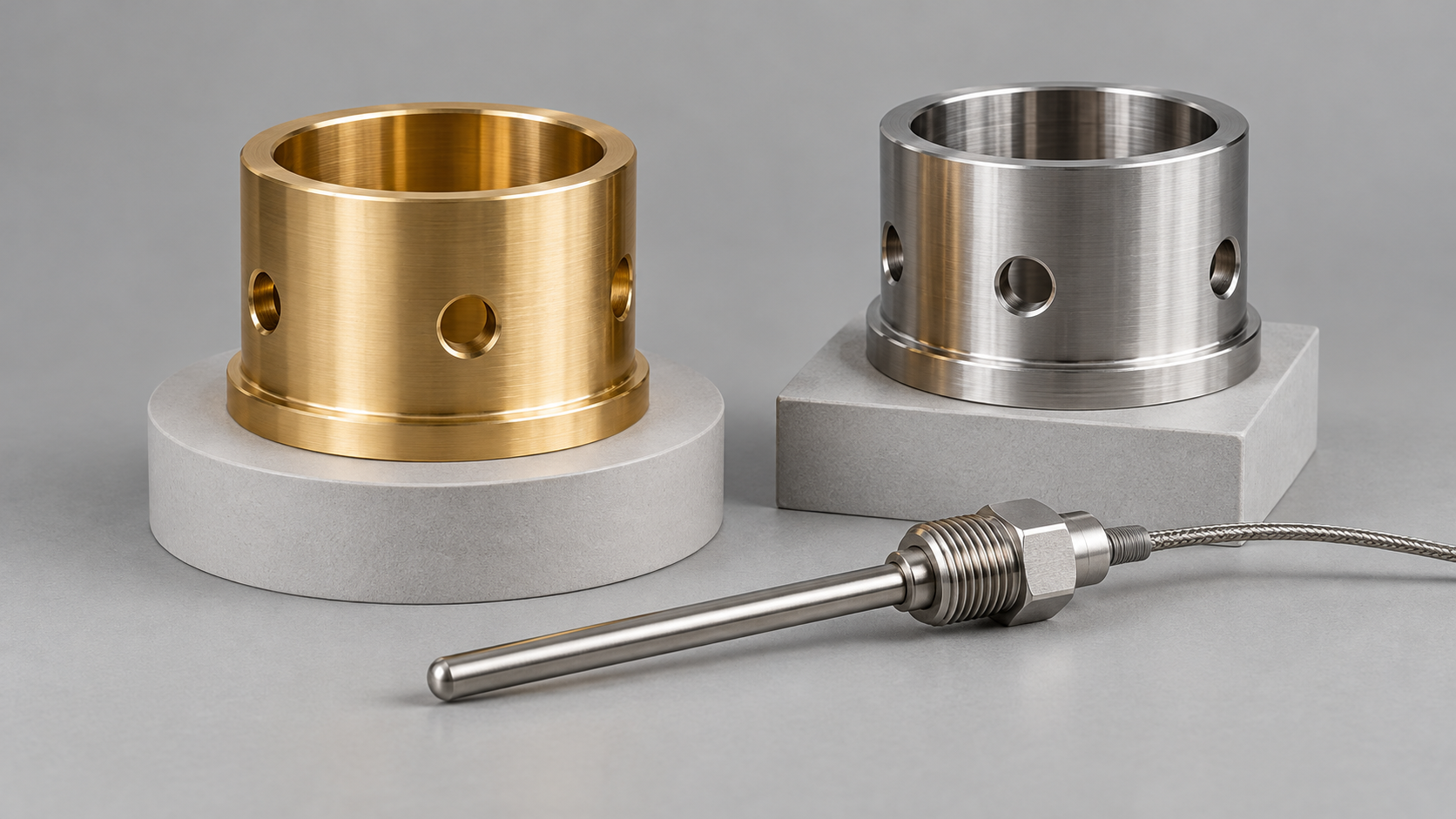
A brass part may help move heat even when the purchase description calls it a sleeve, support, or housing. Before changing that part to stainless steel, ask whether heat transfer belongs to its job. A replacement that fits mechanically can still change how the assembled product responds during use.
This does not mean every warm brass part must remain brass. It means the purchasing comparison needs the product function behind the material choice. Establish whether the part is intended to transfer heat, limit heat transfer, or simply tolerate the surrounding temperature, then have the responsible team evaluate the proposed alternative.
Describe what the temperature is doing
Ask the product owner where heat comes from, where it needs to go, and which components must remain within their requirements. Use an assembly photograph to identify the part's position. A loose sample on a desk cannot show the heat path through the installed product.
Distinguish continuous operation from starting, stopping, and intermittent use. Also explain the surrounding conditions and any cleaning or storage exposure relevant to the part. Purchasing does not need to calculate the result, but the supplier and product reviewer need enough context to understand the question.
Our use-environment brief gathers the wider application information. Here the specific decision is whether a material change alters an intended thermal function. Keep that question visible rather than assuming that a general operating-temperature statement answers it.
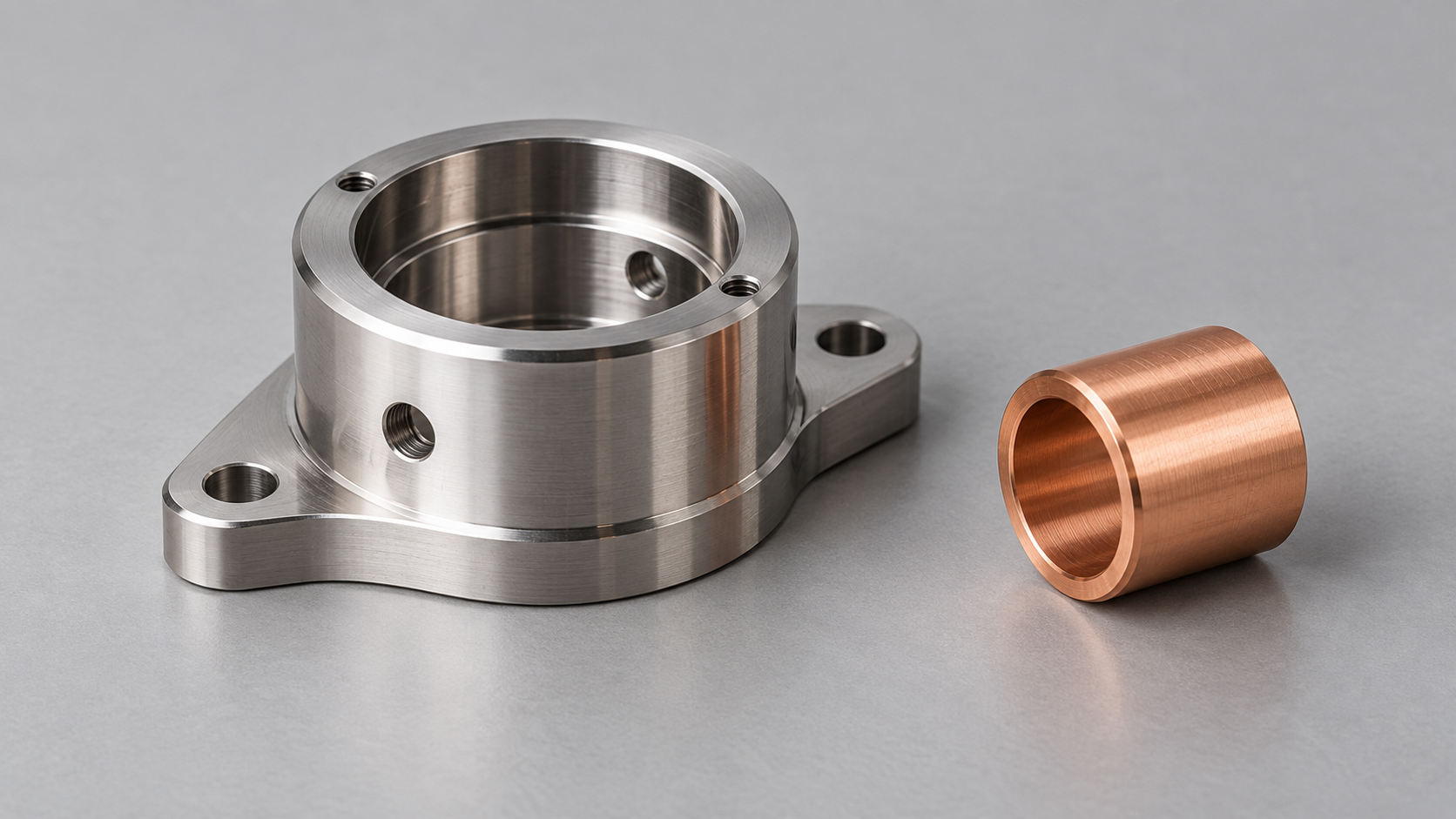
Conceptual illustration: silver structural carrier beside a separate copper-colored cylindrical insert.
Separate temperature resistance from heat transfer
A material being suitable at a stated temperature is different from it transferring heat in the way a product requires. The British Stainless Steel Association discusses thermal conductivity among properties relevant to working with stainless. Those properties deserve application-specific review when changing materials.
Ask the product specialist which characteristics matter for this component and which reference data are appropriate to its grade and condition. Avoid comparing unrelated handbook numbers without understanding their basis. Do not turn a familiar material name into a prediction of the temperature of the completed product.
For a hypothetical sensor support, the desired behaviour might concern response to a temperature change rather than simply surviving a hot environment. For a handle support, limiting heat reaching another area might be the relevant question. These are different functions even if both parts are described as operating near heat.
Include the shape and its neighbours
The proposed stainless component may have a different shape, attachment, or contact with surrounding parts. Record those changes alongside the material proposal. If several things change together, ask how the evaluation will distinguish their effects sufficiently to support the product decision.
Metal Injection Molding (MIM) shapes metal powder mixed with a temporary binder in a mold and processes that mixture into a metal component. BASF introduces the manufacturing route. The route may offer useful shape options, but it does not settle the thermal performance of the resulting assembly.
Have the supplier show the complete proposed part, including subsequent work and delivered condition. Preserve surfaces or interfaces that the product team identifies as important until changes have been reviewed. A manufacturing improvement should be assessed together with its effect on the job the part performs.
Define a useful comparison before requesting samples
Ask what evidence would support the next decision. The responsible team might need material information, a product assessment, or representative assembly evaluation. Record who defines that scope and which configuration the evidence must represent. An attractive sample is not, by itself, a thermal assessment.
Use the existing accepted arrangement as the comparison where appropriate. Identify both versions and the surrounding components used. If a sample is made differently from the proposed repeat supply, obtain a clear explanation of the difference and have the reviewer decide what conclusions remain valid.
Do not create improvised heating tests or operating limits from a supplier conversation. Arrange suitable evaluation through the people responsible for the product. Keep the outcome specific: what was checked, under which conditions, with which parts, and what remains to be decided.
Compare the cost of the workable solution
Include any additional component, operation, or evaluation required by the stainless proposal. A lower price for the bare body may not be the lower price for a product that performs the required thermal function. If the proposal retains a separate heat-carrying element, include that element and its attachment in the comparison.
Keep initial development costs separate from repeat purchases. Use realistic quantities and confirmed scope. Do not justify a conversion with an assumed energy saving, faster response, or longer life that has not been demonstrated for the actual product.
Our quotation comparison guide helps keep the commercial basis consistent. Here, the thermal review establishes which alternatives belong in that comparison at all. A price for an unqualified arrangement should remain conditional rather than being treated as a ready substitute.
Preserve the result for repeat supply
Record the accepted grade, configuration, finish, and relevant evaluation references together. State any restrictions on where the replacement may be used. If only one product configuration was assessed, avoid extending the result to other models because the component looks similar.
Make future changes visible to the product owner. A revised surrounding part, cleaning condition, or operating pattern can affect the original assessment even when the purchased component is unchanged. Clear records allow purchasing to recognize when an apparently routine reorder needs a question.
To begin, send LP MIM the component and explain its role near heat. Include the current material if known, the assembly context, quantities, and the improvement sought. The aim is a manufacturing proposal that preserves the required product behaviour, with cost opportunities assessed after the thermal function is understood.
Comments
Loading comments...