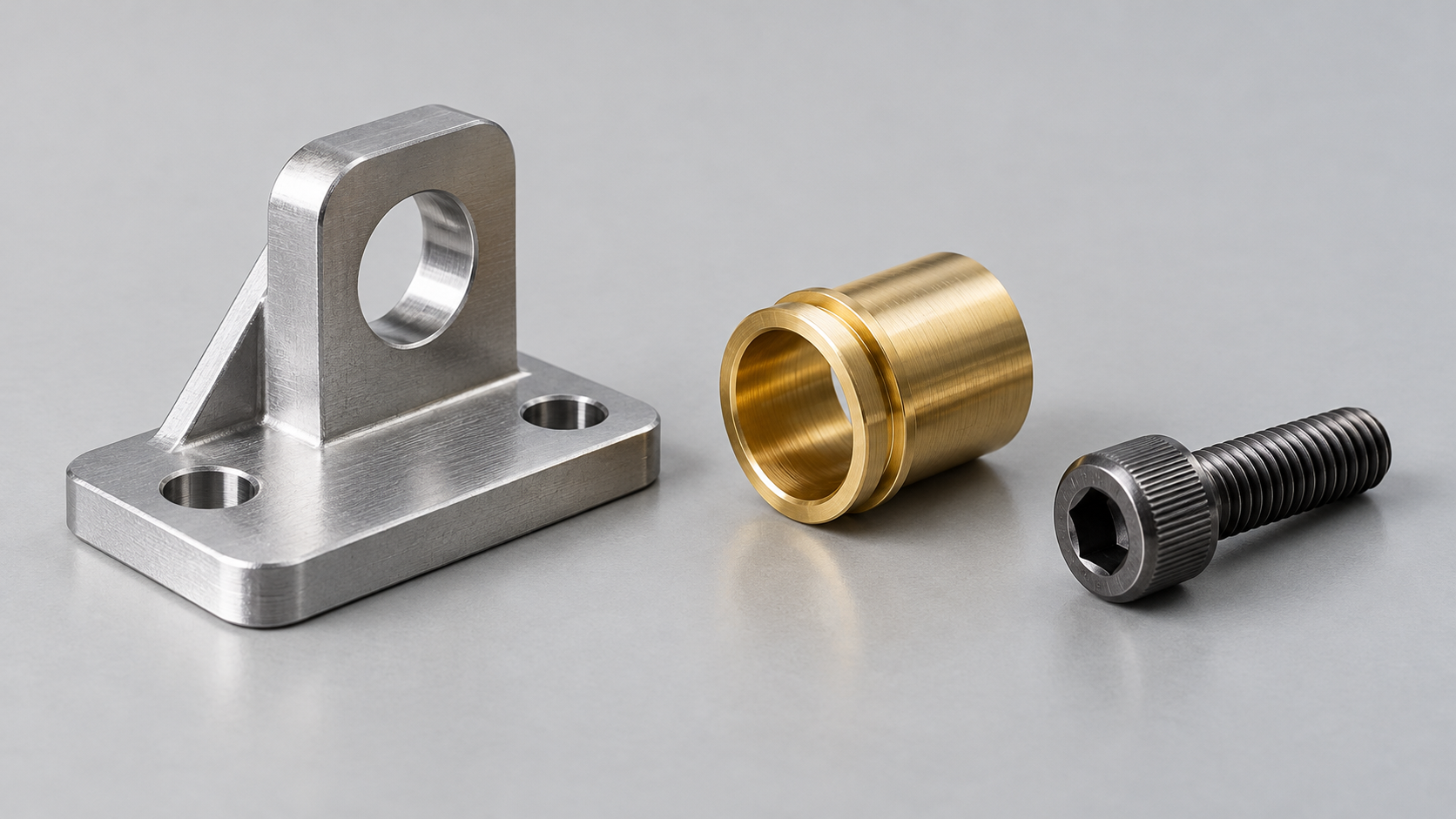
A stainless replacement does not operate alone. It may touch brass, aluminium, coated steel, fasteners, or another stainless part in the finished product. List those neighbouring materials before treating a component-level material change as a complete improvement in corrosion performance.
The objective is not to reject every mixed-metal assembly. It is to identify the actual contacts and exposure conditions so the responsible reviewer can judge the proposed arrangement. A stainless part can look unchanged while another piece in the assembly becomes the place where a problem appears.
Build a contact map the buyer can understand
Use an assembled photograph or drawing and mark each place where the proposed stainless component touches another part. Identify the neighbouring material and finish from available specifications. Where the information is missing, write unknown rather than assigning a material from its colour.
Include fasteners and small purchased items. They are easy to overlook when the quotation focuses on the largest body. Also show any insulating pieces or coatings already present, without assuming that their existence proves the complete arrangement is protected.
Our use-environment brief gathers exposure information. Add this contact map to that brief so the supplier and product team can consider the material change in the actual assembly rather than reviewing a detached sample alone.
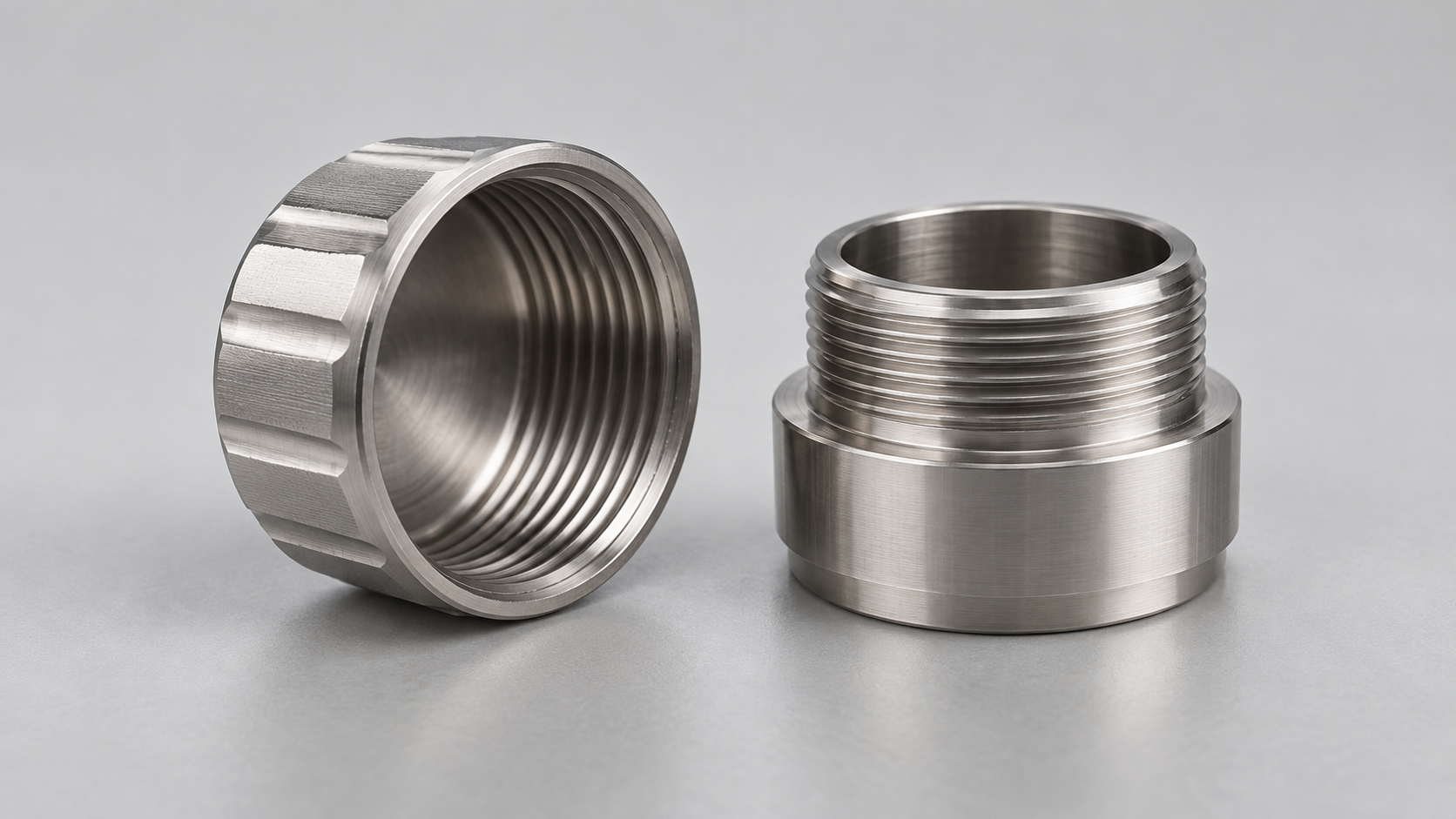
Conceptual illustration: separated silver threaded cap and matching metal housing.
Explain when moisture can reach the contacts
Describe normal use, cleaning, storage, and transport where they can leave the assembly wet. Include conditions such as condensation if they are relevant to the product. Avoid relying on a broad label such as indoor use when the actual part can encounter liquid during cleaning or operation.
BSSA explains that galvanic corrosion involves dissimilar metals in electrical contact with a conductive liquid connecting them. That general mechanism explains why contact and exposure information belong together. It does not provide an acceptance verdict for a particular product.
Ask the responsible materials or product reviewer to assess the actual combination. Avoid applying an online metal ranking as if it predicts a universal service life. The geometry, surfaces, environment, and intended use need to be considered in the relevant assessment.
Keep the neighbouring part in the review
A purchasing team may naturally focus on whether the new stainless component corrodes. Ask what happens to the parts touching it as well. Include their condition in the planned observations and evidence so a change does not appear successful merely because the newly purchased item still looks good.
For a hypothetical mounting assembly, the replacement body may meet its own material specification while a small fastener or surrounding bracket needs further consideration. That is an assembly question. It should not be lost between separate supplier certificates that each describe only one item.
If a supplier suggests changing a neighbour too, expand the proposal explicitly. Identify the new part, its other functions, price, and required review. A recommendation to improve one interface should not silently authorize unrelated changes to the product or supply arrangement.
Discuss a practical arrangement, not a loose safeguard
The product team may consider a different material combination, separation, protective treatment, or another design approach. Have it specify a complete workable arrangement and the evidence required. Purchasing should not choose an improvised washer or coating and assume the material question is closed.
Metal Injection Molding (MIM) forms a metal-powder mixture with a temporary binder in a mold, followed by processing into the finished metal. BASF introduces the process. A revised stainless shape may offer useful attachment options, but those options still need assessment in the assembled product.
Ask how the proposal will be assembled and maintained. If it relies on a separate piece being present or a surface remaining intact, include that condition in the review. Check whether ordinary installation or servicing could change the intended arrangement.
Request evidence for the real configuration
Identify the sample versions and the neighbouring parts used for evaluation. Explain any difference between the sample assembly and intended production. Have the responsible team choose appropriate checks and conditions; a brief dry fit is not evidence for performance in a wet environment.
Record the scope of the result. A finding for one product configuration should not be extended to another that uses a different fastener, coating, or cleaning method without review. Keep unassessed combinations visible instead of giving the entire part family one broad approval.
Our shared-component guide explains why product coverage needs a clear record. Apply the same discipline when a common stainless component touches different materials in different models. Sharing the purchased part does not necessarily make the surrounding conditions identical.
Compare the complete change
Include any additional parts, finishing, checks, assembly work, and maintenance implications in the quotation comparison. Keep the initial assessment and tooling costs separate from recurring purchases. An attractive price for one component should not hide a new cost elsewhere in the assembly.
Do not advertise the proposal as corrosion-proof or assign a service-life improvement without supporting evidence. Describe the accepted material and arrangement accurately, together with the intended conditions. This helps commercial colleagues present the change without expanding the technical conclusion.
To start, send LP MIM the current component, its neighbours, and the expected exposure. Include the known materials, finishes, normal quantities, and the improvement sought. A useful stainless proposal considers the contact map and the complete product, so the business can assess cost and manufacturing opportunities without overlooking the pieces that remain.
Comments
Loading comments...