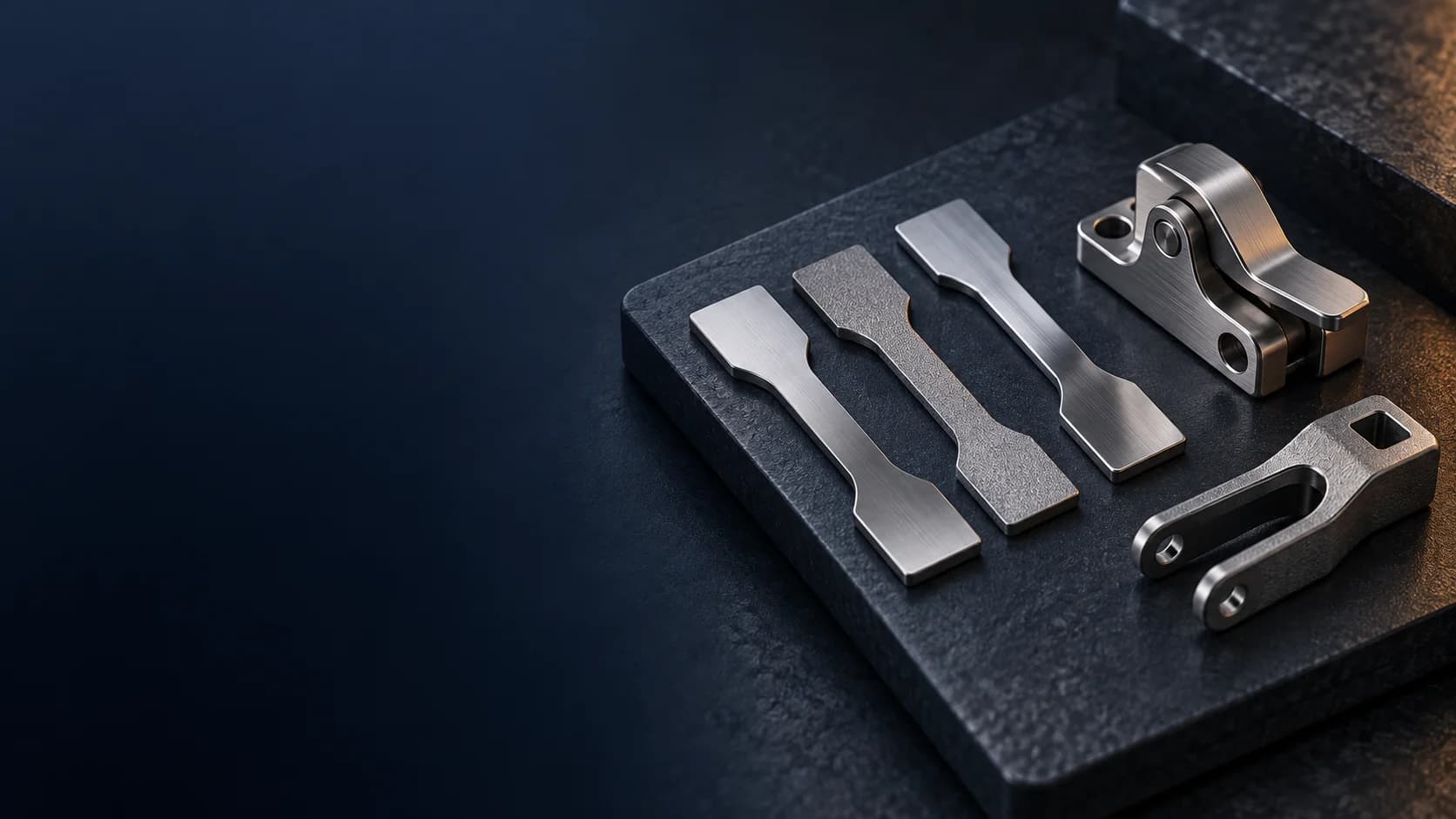
Compare the grade before specifying the part
| Material | Selection focus | Qualification question |
|---|---|---|
| 304 stainless steel | General corrosion resistance and structural components | Water chemistry, finish and density still require validation. |
| 316L stainless steel | Corrosion-focused designs; low-carbon austenitic stainless | Chloride exposure and surface condition determine suitability; it is not corrosion-proof. |
| 17-4PH stainless steel | Strength-focused components with precipitation hardening | Specify heat-treatment condition and resulting dimensional/property requirements. |
Corrosion depends on the environment and the finished surface
Water chemistry, temperature, crevices, chloride exposure, mating materials and surface processing can change corrosion behavior. Do not assume a stainless part is a drop-in replacement for brass, or that one grade is universally suitable for water service.
Reference values for wrought material are not automatically acceptance values for a MIM component. Agree a relevant test method and evaluate the processed part.
Specify condition, dimensions and verification together
- Record the exact grade and any required heat-treatment condition.
- Identify critical dimensions that must be verified after heat treatment or finishing.
- Agree composition, density and mechanical testing where required by the application.
- Review material and manufacturing availability with LPMIM before procurement release.
Technical references
- European Powder Metallurgy Association — MIM process fundamentals
- European Powder Metallurgy Association — Introduction to MIM: materials, design and properties
Published by LPMIM. External references explain general MIM principles; they do not certify a supplier or a specific component. Material properties, tolerances and acceptance criteria must be agreed for each project.