Precision cast parts needing cleanup
Components with excessive gate grinding, blending and dimensional correction.
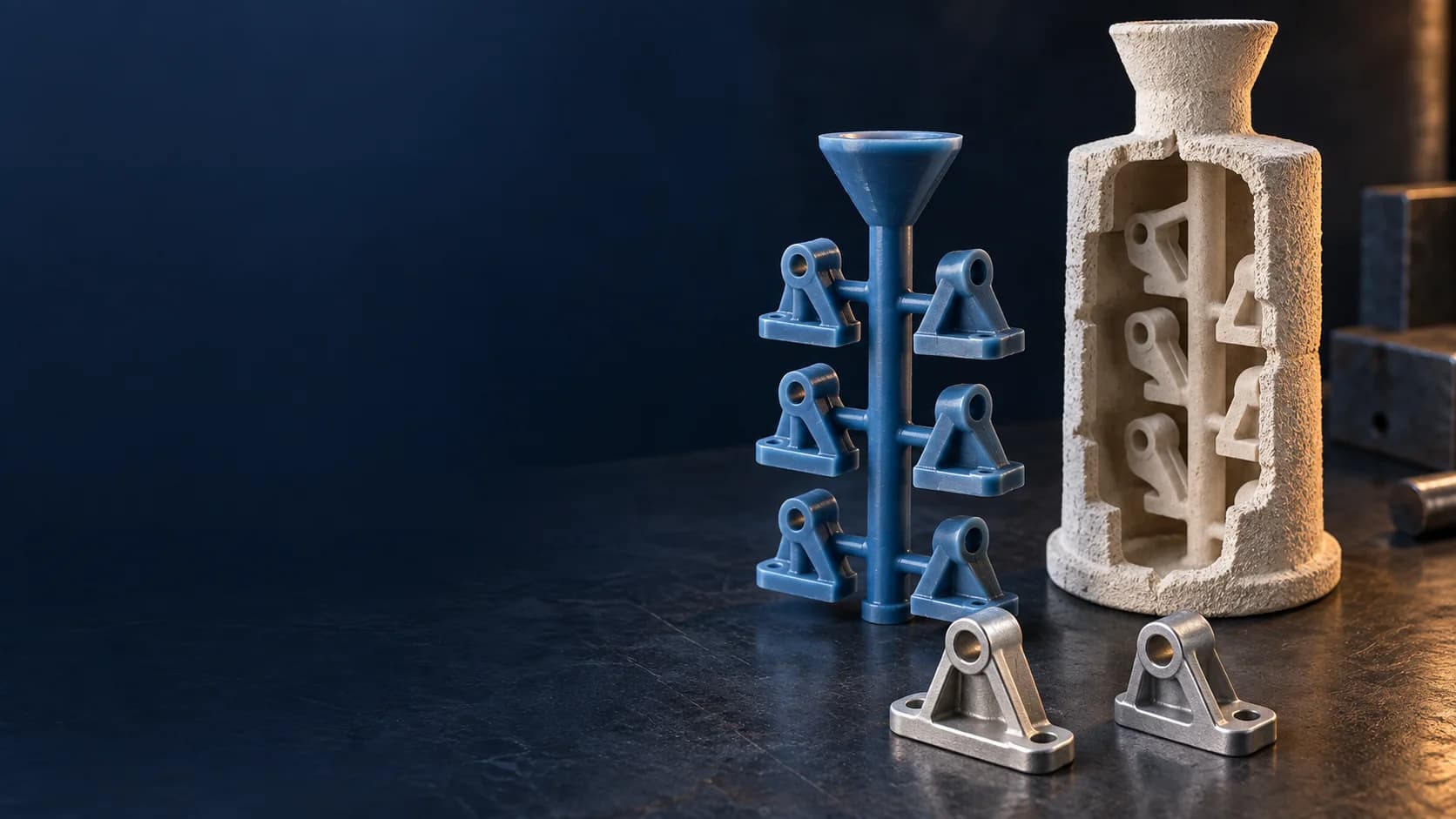
CASTING ALTERNATIVE
Investment casting suits many metal shapes, but cleanup, tolerance scatter and low yield on complex small parts can erode economics at volume. MIM can be a better path when geometry is small, repeatable and difficult to cast consistently.
Upload Cast PartCasting issues often appear as gate removal, dimensional scatter, porosity risk, finishing labor and inspection load. MIM is worth evaluating when annual volume is stable and the part needs tighter repeatability with less post-cast machining.
Components with excessive gate grinding, blending and dimensional correction.
Thin walls, internal features or asymmetric shapes with low casting yield.
Stable programs where tooling-based MIM can beat recurring casting variability.
Parts where post-cast machining multiplies cost to hold sealing or fit interfaces.
We review process fit before recommending a material or production change.
Stable annual demand
The design is mature enough for MIM tooling payback.
High casting cleanup load
Finishing and inspection are a major part of current unit cost.
Complex small geometry
Part size and feature density fit MIM processing windows.
Very large simple castings
MIM is optimized for smaller, complex components.
Prototype and low-volume work
Casting avoids hard tooling commitment for early designs.
Extremely tight all-over tolerances
MIM may need secondary machining or may not be suitable.
Compare tooling, casting yield, cleanup labor, machining, inspection, scrap and annual volume — not just quoted casting price per kg.
| Factor | What to evaluate |
|---|---|
| Casting yield and cleanup | Gate removal, blending and scrap drive true casting cost. |
| Tolerance and finishing | Secondary operations must be included in both routes. |
| Annual quantity | Volume determines MIM tooling payback versus recurring casting labor. |
| Geometry complexity | MIM becomes stronger when casting consistency is hard to hold. |
MIM can hold tighter typical tolerances on small complex parts, but critical features may still need targeted post-sinter machining on either route.
Review MIM when annual volume is stable, casting cleanup is expensive, and the part is small and complex enough to fit MIM DFM.
Usually not without redesign. Most conversions adjust wall thickness, draft and sintering support strategy.
A 3D model, 2D tolerance drawing, current casting spec, annual quantity and current finishing steps are best.
We will compare geometry, tolerance, cleanup load and volume to determine whether MIM is a practical alternative.
Upload Cast Part