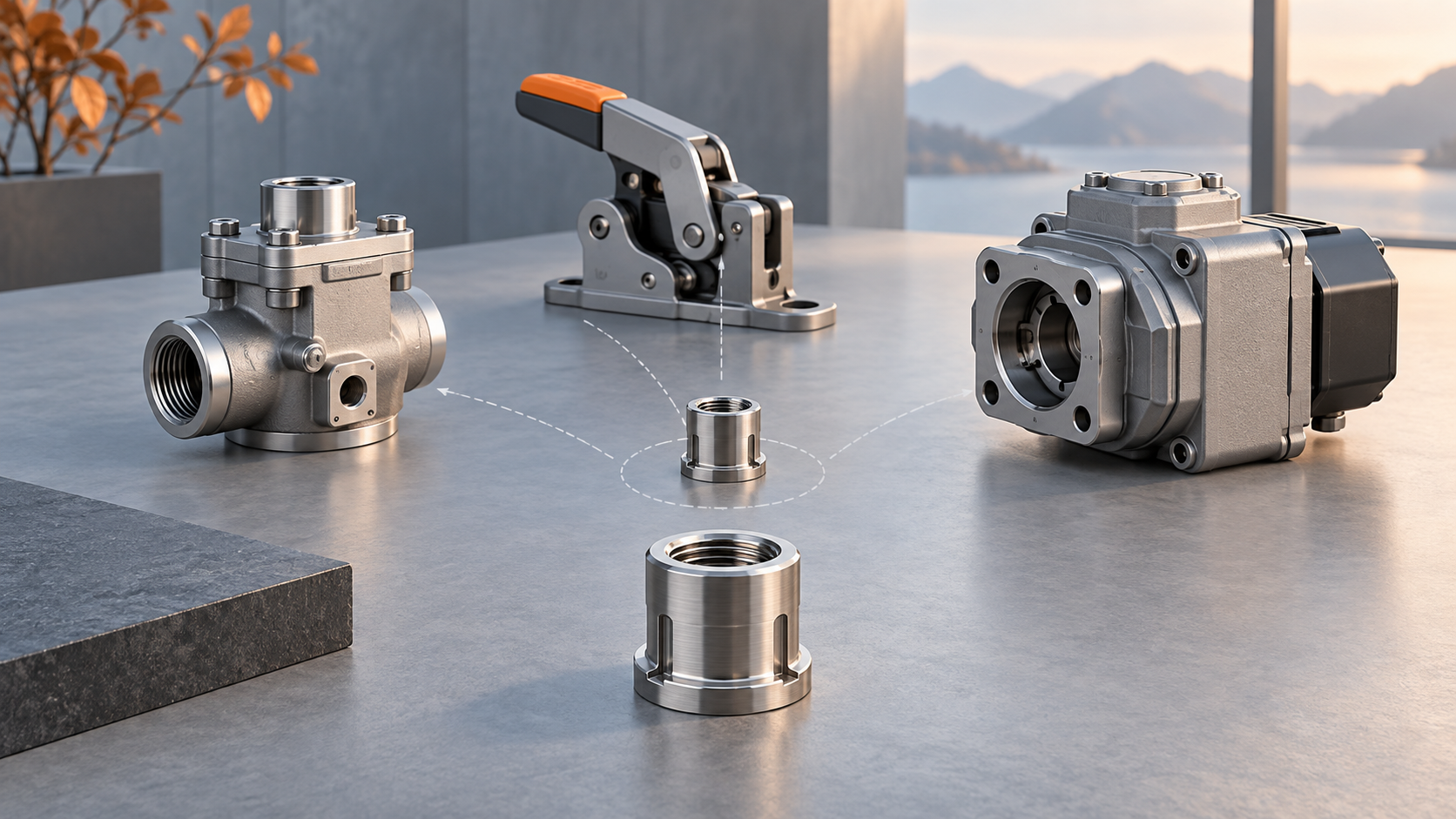
Several brass part numbers may look almost identical while supporting different products. Before requesting a stainless quotation for each one, ask whether some could share a common component. The opportunity is fewer distinct items to purchase and manage, provided the shared design genuinely works in every intended product.
This differs from combining several pieces inside one assembly. Here, the question is whether separate products can use the same purchased item. A shared part could simplify stock and ordering, but a forced compromise could add unnecessary features or make future changes harder to manage.
Put the family on one page
List the existing part numbers, the products that use them, and the reason each version differs. Place comparable photographs or drawings beside the list. Mark differences in connection, outline, finish, material, and the job the part performs.
Include actual demand for each version. Keep confirmed consumption separate from growth forecasts. Similar-looking parts with very different order patterns may still be worth reviewing together, but the supplier needs the real mix rather than a single combined number without explanation.
Ask colleagues why the versions were created. Some differences may reflect genuine product requirements; others may come from old supplier arrangements or design decisions that no longer apply. Record what is known and leave uncertain reasons open for review.
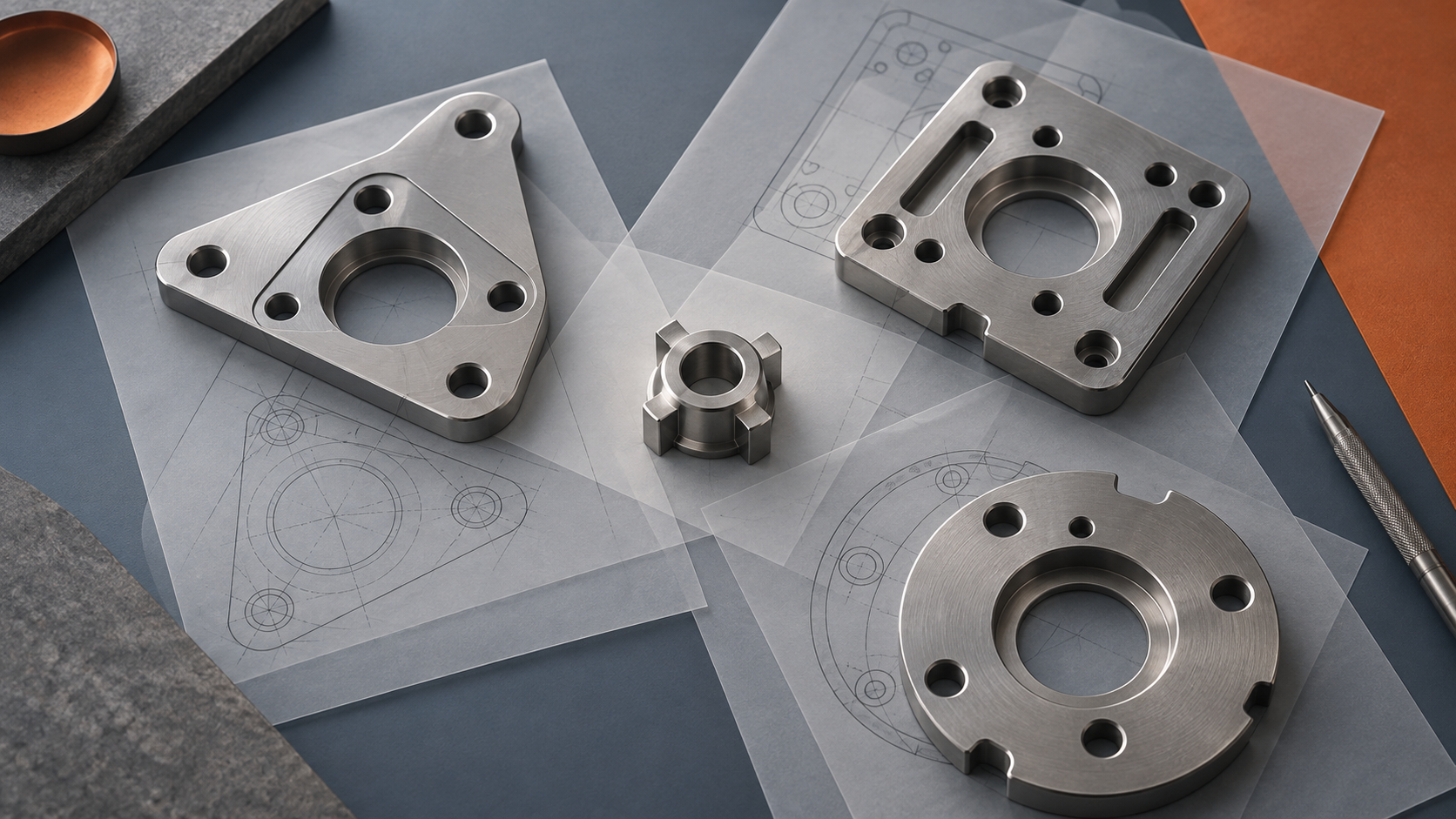
AI-generated conceptual editorial illustration; not a photograph of an actual product, factory or verified production result.
Separate common functions from different requirements
Describe what all versions must do. Then list requirements that belong to only one product: a different movement range, surrounding space, cleaning environment, appearance, or service arrangement. Do not let the most familiar product quietly define the whole family.
Metal Injection Molding (MIM) shapes metal powder mixed with a temporary binder in a mold, then processes it into metal. MIMA describes the scope for complex shapes. That gives suppliers options for a useful shared shape, but it does not establish that a common part suits every application.
For a hypothetical mounting component, two products might share the same base while needing different upper features. The sensible outcome could be one common part, a shared base with separate additions, or two distinct parts. Keep those options visible until their tradeoffs are understood.
Compare the whole family, not its busiest member
A shared component may carry features that some products never use. Ask whether those features add material, finishing work, handling difficulty, or interference. A lower combined purchasing price should be assessed against the effect on each finished product.
Also compare the parts that remain separate. If the common design requires an adapter for one model, include the adapter and its assembly work. Removing a part number from one list while creating two elsewhere is not a complete simplification.
Our small-assembly integration guide discusses combining functions within a product. Use that perspective alongside the family review, while keeping the two decisions distinct. Sharing across products and integrating within an assembly do not always lead to the same best design.
Ask how manufacturing would support the variation
A supplier may suggest a common molded shape followed by different finishing operations. CMG's guidance describes secondary operations as part of a MIM route. Ask which differences are created later and whether the resulting items still need separate purchasing identities.
A common starting shape is not necessarily one finished stock item. If holes, finishes, or other requirements differ at delivery, receiving and assembly must still distinguish the versions. Have the quotation explain exactly where common production ends and version-specific work begins.
Compare the proposed supply arrangement with separate complete parts. Include initial charges, recurring work, version quantities, and any unfinished stock commitments. Shared manufacturing may be useful even when the final components remain distinct; describe the benefit accurately.
Approve the intended product coverage
Build a simple applicability table showing which component can be used in which product version. Have the responsible product team define the checks needed for each combination. Similar dimensions or a successful fit in one model should not become approval across the range.
Choose representative assemblies deliberately. Include versions with restricted access, different operating conditions, or special appearance requirements where those differences matter. Record why the selected checks support the intended coverage and which combinations remain unapproved.
The service and spare-parts guide helps extend the review beyond factory assembly. A common new component may suit current products while older installed models still need a different spare. Keep that distinction in the service records.
Decide who controls future changes
Once products share a part, a proposed change affects more than one product owner. Name the person responsible for maintaining the applicability table and coordinating review. Make the shared status visible in the part record so it is not overlooked during a later redesign.
Ask what happens if one product needs a new feature. The answer might be a revised common component, a separate version, or a product-specific addition. Evaluate the family effect before approving the change for the product that requested it.
Keep demand updates connected too. A product being discontinued may change the buying pattern for the shared item. Purchasing should review the forecast with the supplier using the remaining applications rather than continuing to quote the original combined volume.
Start with a manageable comparison
Choose a small group of related components with well-understood uses. Prepare the version list, demand mix, and the differences that must remain. Ask for alternatives that make both the purchasing benefit and the product compromises clear.
To explore the opportunity, share the component family with LP MIM. The goal is a practical common design where it helps, with distinct versions retained wherever they protect function, service, or the customer's experience.
Comments
Loading comments...