A supplier asks how many stainless parts you need each year. Your answer helps assess the opportunity, but it does not tell them how you want to buy. Before comparing a stainless proposal with an established brass supply, explain both annual use and the size of each delivery.
The distinction matters when a competitive unit price depends on a production batch larger than your normal order. You may still have a workable arrangement, provided both sides agree who holds the remaining parts, when they are released, and what happens if demand changes.
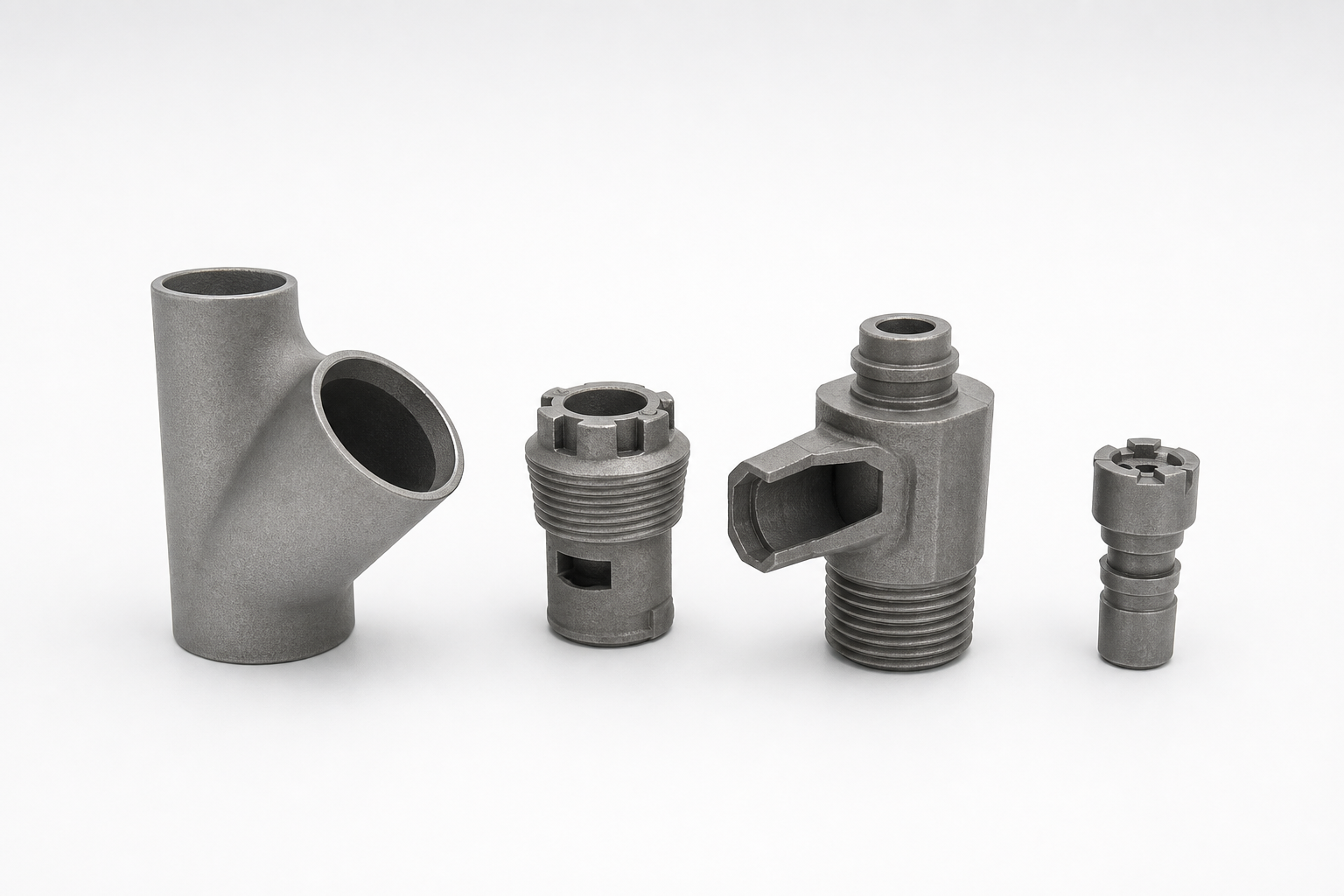
Metal Injection Molding (MIM) forms a metal-powder mixture in a mold and then processes it into a metal component. MPIF describes its use for complex shapes in repeated production. That background explains why quantity belongs in the discussion; it does not establish a minimum order for your part.
Bring a buying pattern, not just a forecast
Prepare a short record of recent consumption and orders for the brass component. Show whether demand was steady, seasonal, or driven by occasional projects. Include the quantities received each time and any periods when stock accumulated. Use records you actually have rather than making the forecast look more certain than it is.
Separate firm customer demand from expected growth. A new product launch may justify investigating a different manufacturing route, but its forecast is still an assumption. Mark the expected launch date and the point at which your team will review actual sales.
For a new component without history, describe the expected ordering pattern and its basis. The supplier can then price a realistic starting position and explain which changes in demand would require a fresh discussion.
Distinguish making, shipping, and paying
Ask whether the quoted quantity refers to one production run, one shipment, or your total commitment over an agreed period. These can be different numbers. A supplier might discuss producing a larger batch and shipping portions, but that arrangement needs an explicit commercial agreement.
Write down where the unshipped parts would remain, who owns them, and when payment becomes due. Also clarify the release schedule and the latest date for taking the balance. Do not assume that smaller deliveries automatically mean a smaller purchasing commitment.
Consider a hypothetical buyer who normally receives a modest carton each month. A quotation based on one large order may offer a lower unit price, while using more cash and storage. Compare the actual arrangement with the current brass supply before calling the difference a saving.
Keep the finished condition consistent
A quantity comparison is useful only if each delivery contains the same usable part. Confirm the material, finish, packaging, and any work that follows molding. CMG's design guidance discusses secondary operations and polishing; ask which operations apply to your particular component.
If the supplier proposes storing unfinished parts and completing them before release, request a clear description. Establish which version and finish have been priced, what lead time starts at release, and how changes would affect the remaining stock.
Our guide to comparing brass and stainless quotations covers the wider cost comparison. Here, keep the focus on whether the delivery pattern actually fits your purchasing operation.
Test a quieter demand period
Ask purchasing and sales to describe a realistic slower scenario. What would happen if releases were delayed, the product launch moved, or demand concentrated into fewer months? You do not need an elaborate forecast model to identify an order that would leave too much stock.
Discuss the relevant conditions before committing: revised delivery dates, storage charges if any, cancellation terms, and treatment of obsolete parts. Have the appropriate people agree the commercial terms. Record open questions separately from accepted arrangements.
Also test the opposite case. If orders grow faster than expected, how much notice would the supplier need? A statement that additional quantities are possible is different from an agreed delivery commitment. Keep contingency quantities visible rather than quietly adding them to the base forecast.
Check what changes between releases
Repeated releases should refer to an identifiable approved part. If your product team changes the design, tell the supplier before requesting the next shipment. Confirm whether old-version components already exist and where they are held.
Agree how cartons and delivery records distinguish revisions. This matters when old and new components look similar. The receiving team needs enough information to route each delivery correctly without reconstructing the history from purchase-order emails.
The same principle applies to finish changes. A new appearance approved for the next batch should not silently become a requirement for stock made under the previous agreement. Resolve the disposition of existing stock with the supplier and your quality team.
Make the quotation match the way you buy
Ask for a concise schedule showing the production quantity, delivery quantities, release notice, and payment milestones. Attach the assumptions used for annual demand. Compare the proposal with the current brass arrangement using the same period and finished condition.
A sensible answer may be larger production batches with controlled releases, a different starting quantity, or retaining the current route while demand develops. The useful outcome is a supply plan your business can use, not the smallest number on a unit-price sheet.
For a focused discussion, send LP MIM your part and buying pattern. Include annual demand, normal delivery quantity, forecast uncertainty, and the improvement you want from a stainless alternative.
Comments
Loading comments...