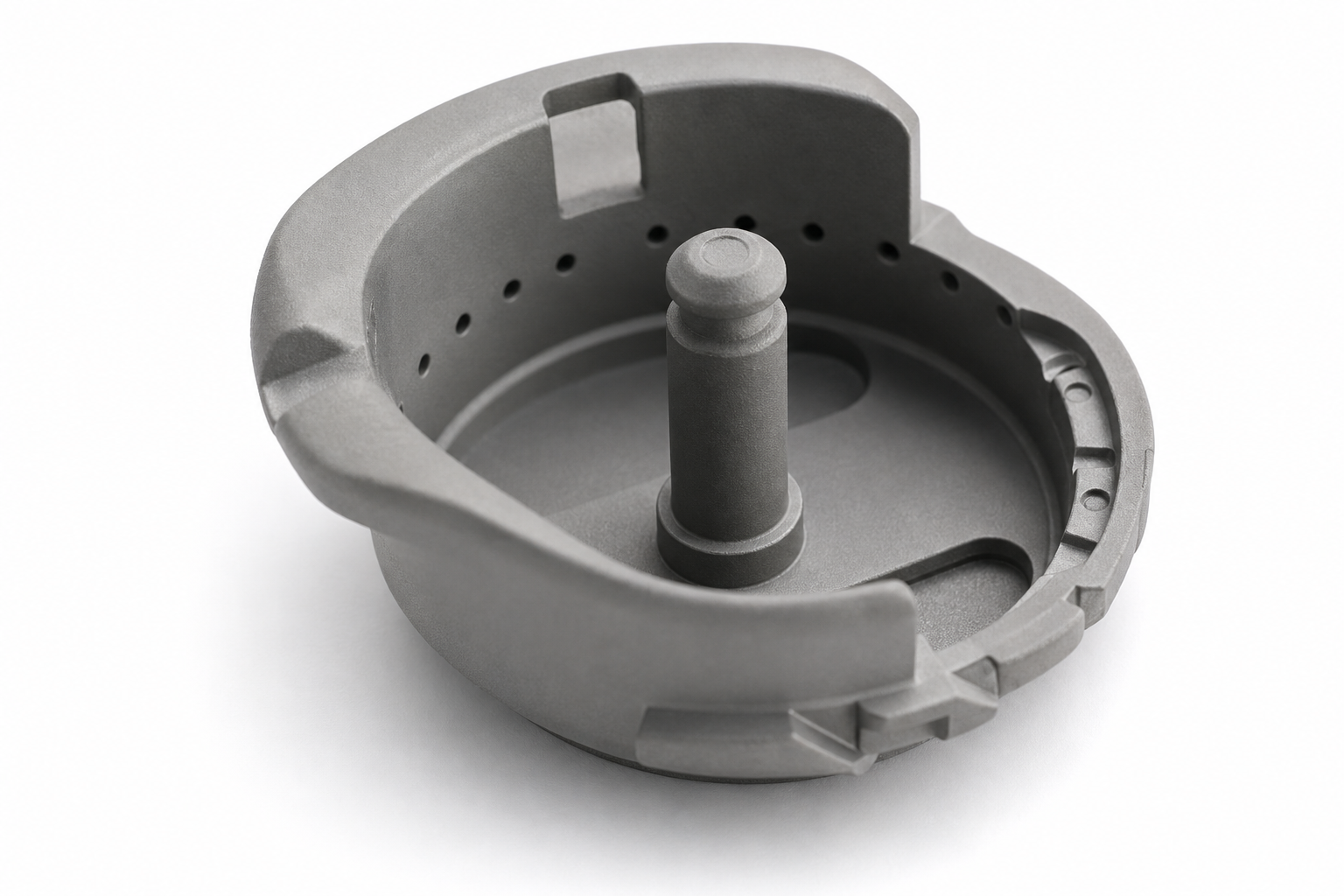
A supplier has quoted a stainless alternative to your brass component. Then the product team changes a hole, a mounting feature, or the finish. Before placing the order, ask what that change affects. The answer should cover the quoted part, the sample plan, and any work already underway.
A small visible difference can matter commercially, while another change may have little effect. Avoid guessing from the size of the red mark on the drawing. Give the supplier an identifiable new revision and request a response tied to that exact version.
Start with one current version
Choose a controlled reference for the part being discussed. This may be a drawing revision supported by a model and a written finish requirement. Make sure the quotation, sample request, and purchasing brief all identify the same reference.
If your team is working from photographs and a sample, label those clearly and explain what has changed. Do not use the phrase latest version without identifying which files or samples it means. The supplier should not have to compare several email attachments to infer the intended part.
Our sample-first review guide explains how to build a useful starting record when CAD information is incomplete. The same principle applies after a revision: keep the identity and open questions clear.
Describe the reason for the change
Explain what the revised feature needs to achieve. Perhaps an operator needs more room for a tool, a nearby component has changed, or a visible edge must match the rest of the product. The reason helps the supplier discuss alternatives that preserve the intended improvement.
Separate required changes from optional suggestions. If a preferred appearance can be achieved in several ways, say so. If an interface must remain compatible with an existing product, identify that constraint explicitly.
Metal Injection Molding (MIM) shapes a metal-powder mixture in a mold before processing it into metal. The BASF process overview provides background. Because the production route involves tooling and subsequent operations, ask the supplier how the particular revision fits the planned route.
Ask which commercial assumptions moved
Request a short written response covering initial charges, recurring part cost, and delivery timing. The supplier should explain whether the change affects tooling, finishing, inspection, or other planned work. Ask them to distinguish confirmed effects from items still being assessed.
CMG's design guidance describes additional operations that may follow shaping. A feature change could therefore affect work outside the mold as well as the mold itself. Avoid assuming that an unchanged outer shape means an unchanged manufacturing cost.
If the quotation remains valid, record that confirmation against the new revision. If it changes, retain the previous offer for comparison and identify what the new figure includes. This makes the purchasing decision traceable without turning the discussion into a long chain of informal corrections.
Check what already exists
Ask whether material, tooling, samples, or production parts have already been prepared for the previous version. Request the actual stage rather than assuming nothing happened before your purchase order or that everything is already complete.
Agree what will happen to any existing items. Some may remain useful for a limited trial; others may need rework or a different disposition. Record who approves that decision and any associated cost. Do not casually instruct the supplier to discard items before understanding what they are.
The objective is to avoid two versions moving forward accidentally. Keep the old version distinguishable until its disposition is settled, especially when parts look similar or share the same informal name.
Revisit the sample questions
A revised feature may change what the next sample needs to demonstrate. Ask your product team which earlier observations remain relevant and which checks should be repeated. Keep their decision with the sample identifier and revision.
For a hypothetical mounting feature, moving an opening could preserve appearance while changing installation access. A previous visual approval would not answer that access question. The revised sample request should make the new question explicit.
Also confirm whether the next samples will include the final material and finish or only demonstrate the altered shape. A sample description that matched the old plan may no longer be sufficient after the change.
Align the ordering documents
Before ordering, check the part reference on the quotation, drawing, sample record, and purchase request. Have the supplier acknowledge the same revision. Include any approved exceptions rather than leaving them in a separate conversation that the production team may never see.
Agree how labels and delivery documents will distinguish the revised part. If both versions must remain available, purchasing and receiving need a clear way to select and identify them. A date alone may be less useful than an explicit revision reference.
Keep future change responsibilities clear too. Name who can request a change, who can approve it, and how the supplier should report a proposal that affects the accepted part. This is practical coordination, not a reason to burden every routine message with unnecessary administration.
Close the change before releasing the next step
A complete change response identifies the agreed design, price basis, remaining work, and next sample or delivery milestone. Open questions should have owners. If an important point remains unresolved, keep that limitation visible in the purchasing decision.
For a component-specific review, send LP MIM both versions and the reason for the change. Include the current quotation reference and what has already been authorized. That gives the discussion a concrete starting point and helps prevent a revised design from being ordered against an outdated assumption.
Comments
Loading comments...