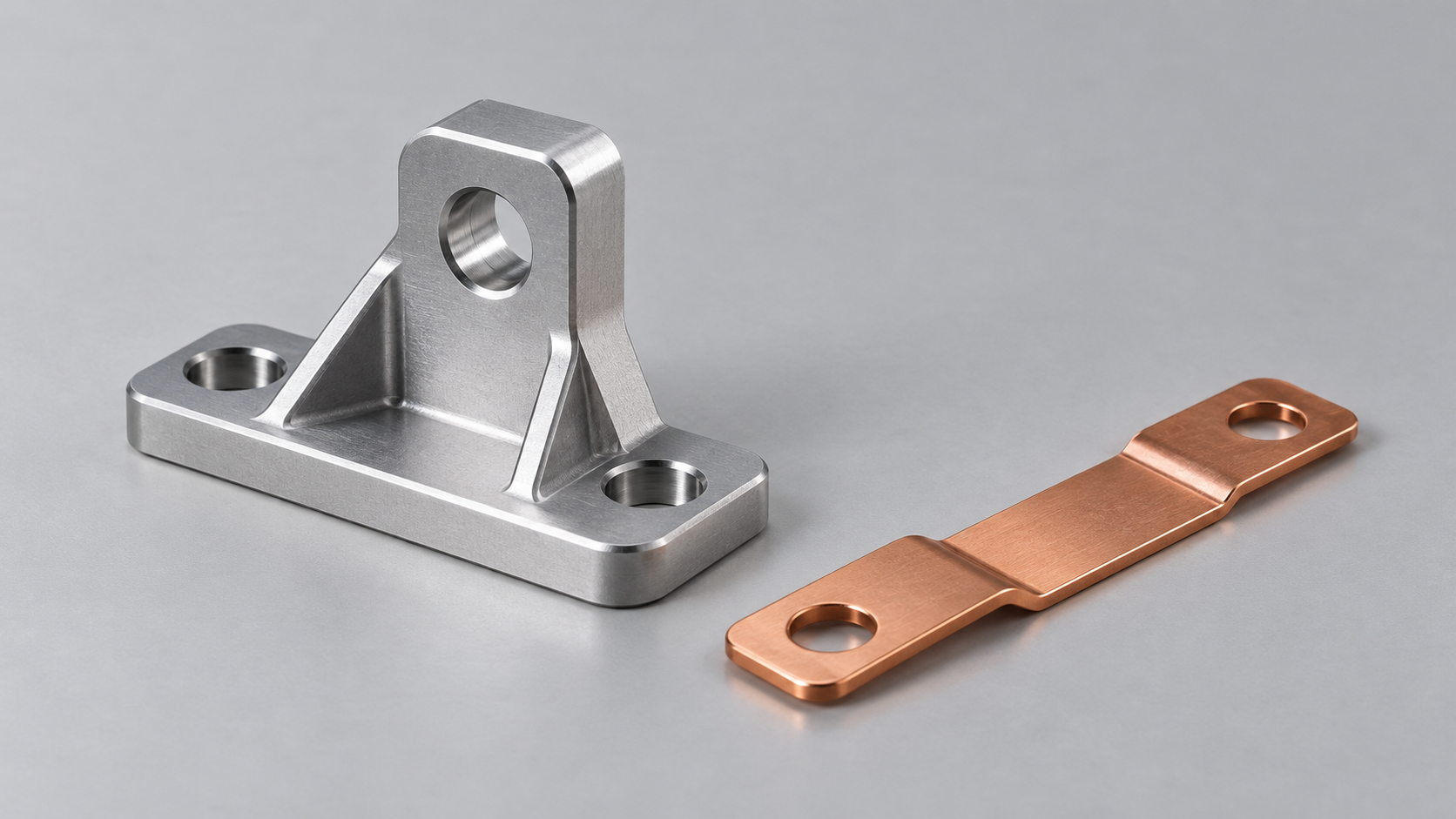
A brass component in an electrical product may carry current, hold a separate contact, or perform both jobs. Establish that distinction before requesting a stainless replacement. A shape that fits the product does not establish that it can perform the same electrical function, and the word metal is not a sufficient material specification.
For a buyer, this is an information-gathering task before it is a material-selection task. Ask the responsible product engineer where current is intended to flow and which pieces belong to that path. The answer can reveal a structural component worth reviewing for stainless, while keeping an existing contact material where its function is needed.
Ask someone to mark the current path
Provide an assembled photograph or drawing and ask the product owner to mark the intended electrical path. Identify each contact surface and the separate pieces involved. A purchasing description such as terminal support can hide a conductive function, while a brass housing may simply support another contact without carrying the operating current.
Include any protective connection or other electrical role in the review. Do not infer that a component has no electrical requirement because it is outside the main operating circuit. The person responsible for the product must define the functions that a replacement must preserve.
Our component-screening guide treats conductivity as a reason for careful review. This article turns that broad screening question into a clearer supplier brief: which function belongs to the proposed stainless part, and which belongs elsewhere in the assembly?
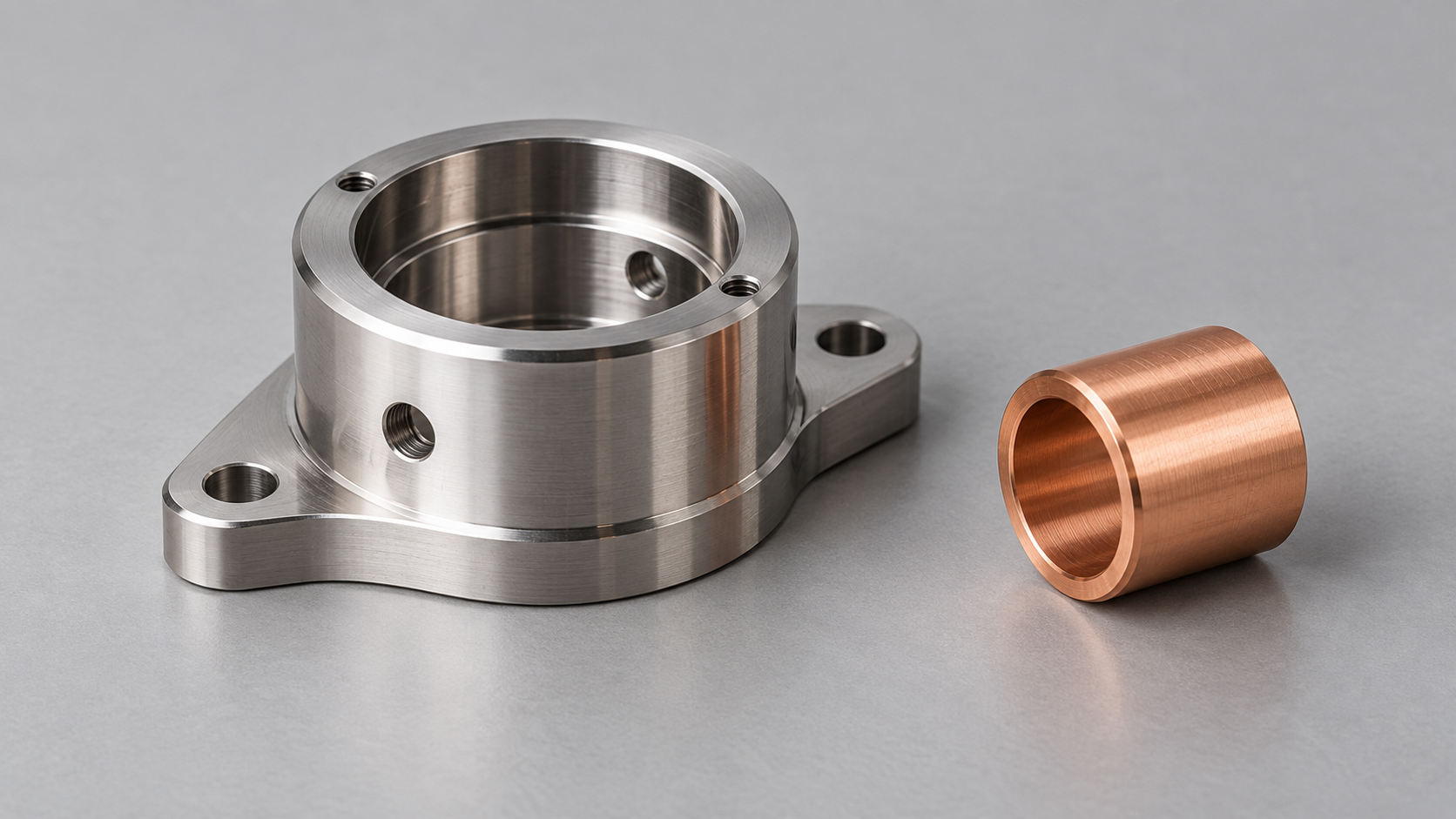
Conceptual illustration: silver structural carrier beside a separate copper-colored cylindrical insert.
Request the material requirement behind the part name
Ask for the current alloy, condition, and surface finish, together with the requirements they support. If the records are incomplete, identify the gap instead of naming an alloy from colour or appearance. Existing purchasing history can identify a source, but it may not explain why the original designer chose the material.
Request the product team's acceptance criteria for the proposed arrangement. Those may concern several aspects of electrical and mechanical performance. Purchasing should gather the requirement and arrange the evidence, rather than invent a conductivity limit or adopt an informal desk check as acceptance.
Keep a distinction between data for a material and results for an assembled contact. The geometry, contact arrangement, surface condition, and use can all be relevant to the product decision. A supplier's general material sheet should not be presented as a complete test report for your finished assembly.
Separate the manufacturing opportunity from the electrical decision
Metal Injection Molding (MIM) forms a metal-powder and temporary-binder mixture in a mold before subsequent processing produces the metal part. MIMA introduces the manufacturing route. A small structural body may be reviewed for combined supports, locating features, or a more useful shape.
CMG describes design features and secondary operations. These options concern how a proposed component is made. They do not establish that a stainless version is an electrical equivalent to the brass item it replaces.
Ask for separate answers to two questions: can the proposed body be made economically, and does the resulting product meet its electrical requirements? Keep the answers connected in the project record, but do not let a positive manufacturing assessment close an unresolved product question.
Consider retaining a dedicated contact
Where the architecture permits it, the product team may consider a stainless structural part with a separately specified contact. Ask which existing pieces remain and whether the attachment or contact arrangement changes. Treat that as a new complete proposal requiring review, not as a shortcut around qualification.
For a hypothetical contact support, an integrated mounting feature might remove a small bracket while the contact remains unchanged. The useful opportunity is the changed structural work. It should not be advertised as proof that stainless can replace the conductive element as well.
Identify who supplies and assembles the retained contact. Include its price, handling, installation, and checks in the comparison. A lower body price can be misleading if it excludes work previously included in the purchased brass assembly.
Make the sample request answer a defined question
Tell the supplier whether the first sample is intended for layout, assembly, or a specified functional evaluation. Ask how it differs from the proposed production part. A development sample can be useful without representing the final material, surface, or complete manufacturing route.
Have the responsible specialists define and conduct the necessary product checks under suitable controlled conditions. Do not energize an improvised sample merely because it appears to fit. Record the sample identity, test scope, result, and remaining decisions so a preliminary fit approval does not become an unrestricted production release.
Our prototype-evidence guide explains how to keep sample conclusions specific. Apply that distinction to the electrical arrangement, especially where the prototype uses a contact or finish different from the intended repeat supply.
Preserve the boundary in the quotation and order
Ask the quotation to identify the delivered scope, included contact components, materials, finishes, and required records. If the supplier proposes a substitute, route it to the responsible reviewer before treating it as an equivalent commercial alternative. Similar dimensions do not resolve a different functional requirement.
Once approved, keep the component and assembly references together. Future purchasing colleagues should be able to see which part was reviewed for stainless and which retained function depends on another specified material. That record also helps prevent later cost discussions from accidentally expanding the original approval.
To explore the structural opportunity, send LP MIM the component and its place in the assembly. Explain whether it carries current, supports a contact, or does both, and identify any unanswered questions. The first useful proposal protects the required function while showing where shape, manufacturing, and complete supply costs might improve.
Comments
Loading comments...