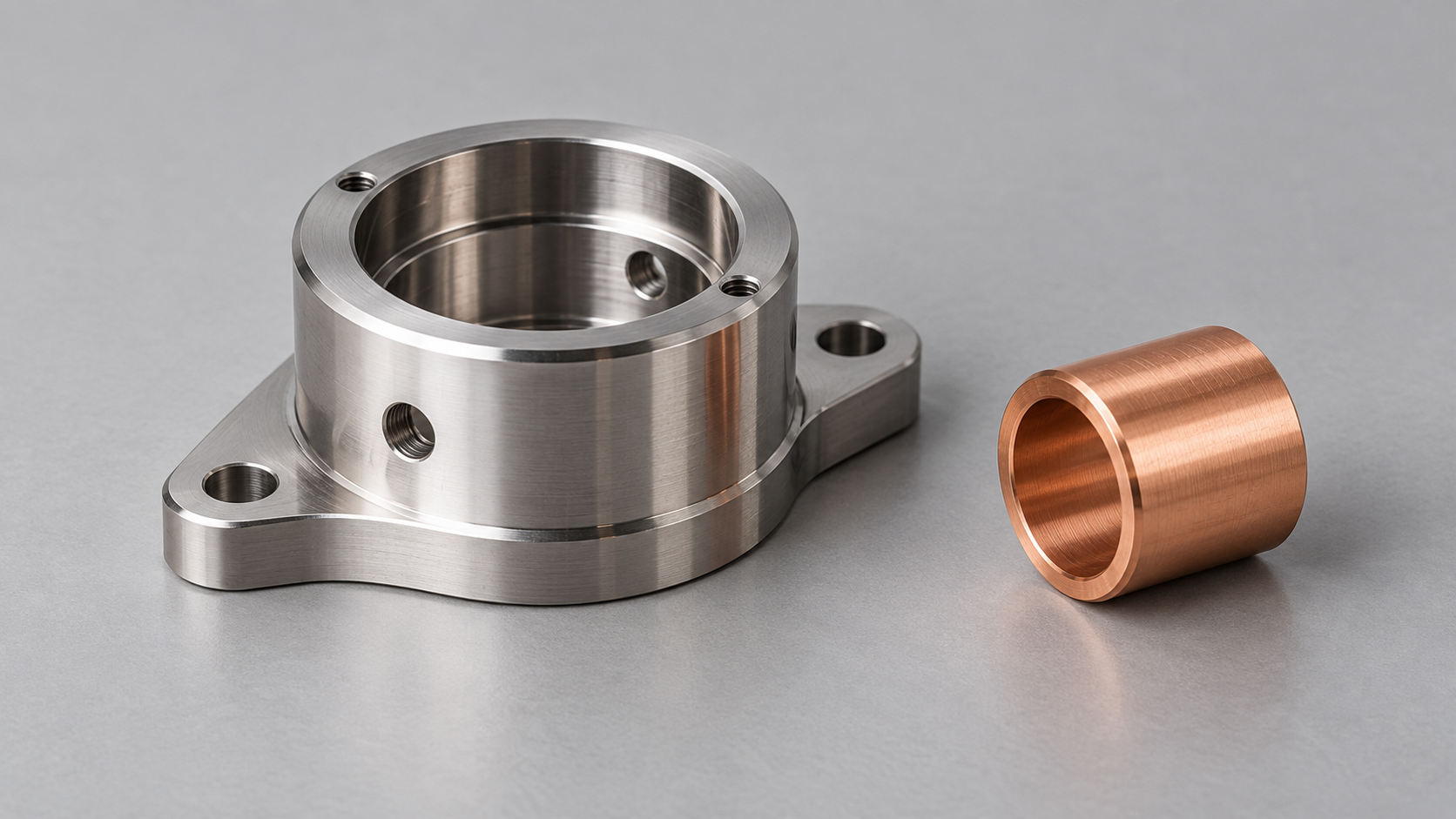
Replacing brass does not have to mean replacing every piece of copper alloy in a product. A stainless body with a separate copper-alloy contact, insert, or working element may be worth discussing when different parts perform different jobs. The useful purchasing question is which functions can move into the stainless shape and which should remain with a separately specified component.
This is an option to evaluate, not a promise that a mixed-material design is cheaper or suitable. It can preserve a valuable material function while opening a new manufacturing route for the surrounding body. It can also introduce another joint, assembly step, or supplier responsibility. Compare the complete alternatives before selecting one.
Divide the jobs before dividing the drawing
Start with a photograph of the assembled product. Ask the product owner to identify what the brass component does: carry a load, hold another part, conduct electricity, move heat, flex, or provide a working surface. One familiar item may perform several of these jobs without those functions appearing in its purchasing description.
Mark the region responsible for each function. Do not assume that a small contact area means the function is unimportant. Equally, do not assume that the whole body needs the same material simply because it has always been purchased as one piece. The first review should establish the function, not choose an attractive replacement shape.
Our brass-to-stainless redesign guide explains the wider conversion decision. Here the narrower question is whether a useful material function can stay separate while the surrounding structure changes. Keep that boundary explicit in the request for a proposal.
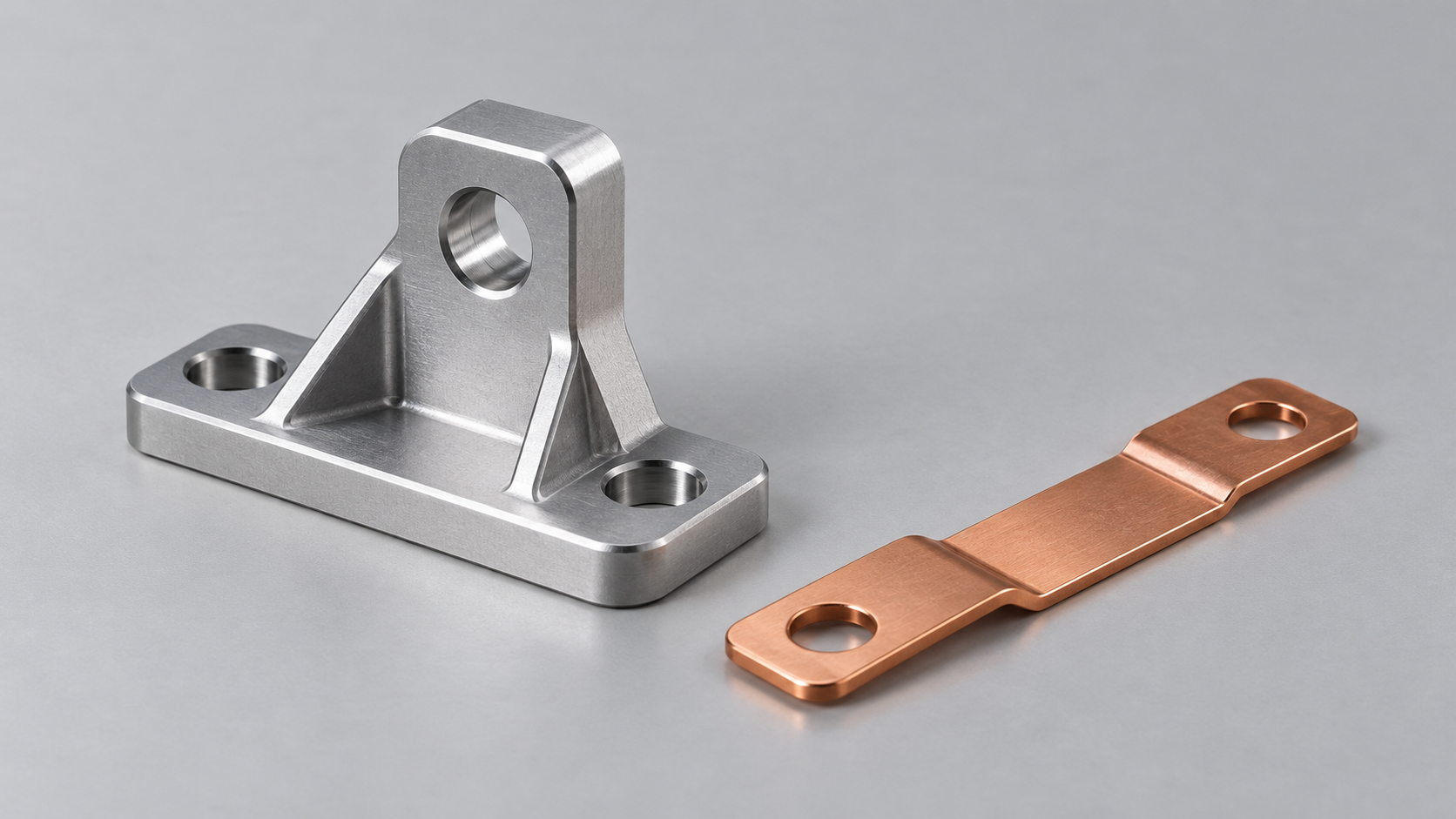
Conceptual illustration: silver support bracket beside a separate copper-colored contact strip.
Ask for a complete proposed arrangement
Metal Injection Molding (MIM) shapes metal powder mixed with a temporary binder in a mold, then removes the binder and heats the powder into a metal part. MIMA describes the process. It may offer a way to combine useful features in a small stainless body.
Ask the supplier which supports, locating features, or attachment details could be formed together. CMG's design guidance discusses complex features and subsequent operations. That manufacturing background supports a discussion; it does not prove that your particular insert can be retained or that an additional operation disappears.
Request a sketch showing the proposed delivered assembly and the separate pieces that remain. Have the product team define how those pieces would be held and what needs verification. A buyer should not choose a joining method solely from the lowest quoted assembly charge.
Keep the retained component fully specified
Identify the retained item by its material, condition, finish, dimensions, and required function. An existing supplier part number can help, but confirm what that number actually controls. Do not reduce a functioning copper-alloy component to a generic description such as brass insert during the redesign.
Decide whether the current item can be used unchanged. A different surrounding body may change installation, contact conditions, or service access even if the insert itself stays identical. Ask the responsible reviewer which existing evidence remains applicable and which checks must be repeated in the new arrangement.
For a hypothetical housing with a separate working insert, the insert may need replacement during service. Show the intended removal sequence as well as initial assembly. A proposal that makes factory installation easier could make later replacement impractical, so both sequences belong in the decision.
Compare three alternatives where they are feasible
Keep the existing brass arrangement as the baseline. Compare it with a complete stainless replacement and a mixed-material proposal if the product team considers both worth investigating. State any unresolved function questions beside each option rather than hiding them inside a low price.
Include the stainless body, retained item, joining or assembly work, checks, packaging, and delivery. Show initial tooling and evaluation costs separately from repeat purchases. If one option moves assembly to the supplier, obtain a price for that complete delivered scope instead of subtracting internal labour while leaving supplier assembly unpriced.
Our small-assembly integration article considers removing separate pieces. This decision may deliberately retain one. Fewer parts is useful only when the resulting product and supply arrangement improve; part count alone should not determine the choice.
Assign responsibility at the interface
Clarify who purchases the insert, checks it, installs it, and accepts the combined item. If your business supplies the insert, establish the information the body supplier needs and how the supplied quantity will be tracked. If the supplier purchases it, specify whether substitutions require review.
Ask who investigates a problem that appears only after assembly. Agree the component references and records needed to connect a finished assembly to its parts. Without that connection, separate suppliers can each report acceptable components while the product still fails its intended job.
Keep change control shared. A change to the retained insert or the stainless body should trigger review of their interaction. Neither supplier should assume that its own unchanged drawing proves the complete assembly remains acceptable when the neighbouring component has changed.
Choose the proposal that earns its complexity
Have the responsible team evaluate representative assemblies against the intended functions, use conditions, and service needs. Record what the evidence supports and any remaining limits. Only then compare the complete commercial result with the existing supply.
To begin, send LP MIM the current assembly and the function you want to preserve. Include the separate-part information, annual demand, usual order quantities, and the cost or assembly problem. A useful outcome may be a simpler stainless body, a carefully retained copper-alloy element, or confirmation that the current design remains the better choice.
Comments
Loading comments...