
A second supplier can give your purchasing team another option, but an available quotation is not yet an approved second source. Before relying on an alternative for a stainless component, establish what it must demonstrate and how its supply will remain identifiable.
This matters whether you already buy a stainless MIM part or are considering stainless alongside an established brass route. The new supplier needs a clear requirement and a defined qualification path. Similar appearance, an identical material name, or possession of a sample does not establish equivalent performance in your product.
State why you need another source
Describe the problem you want to solve: additional capacity, continuity during an interruption, a different delivery pattern, or a commercial comparison. These objectives lead to different starting quantities and readiness expectations. A supplier held for occasional contingency orders may need a different arrangement from one sharing regular production.
Ask what ready means to your business. Does it mean a reviewed quotation, accepted samples, or an approved route that can supply within an agreed notice period? Give those stages different names so a supplier list does not overstate the actual options available.
Include the expected demand split and its uncertainty. Avoid promising the full programme to each supplier when you intend to divide it. Both need a realistic basis for discussing tooling, quantities, and delivery commitments.
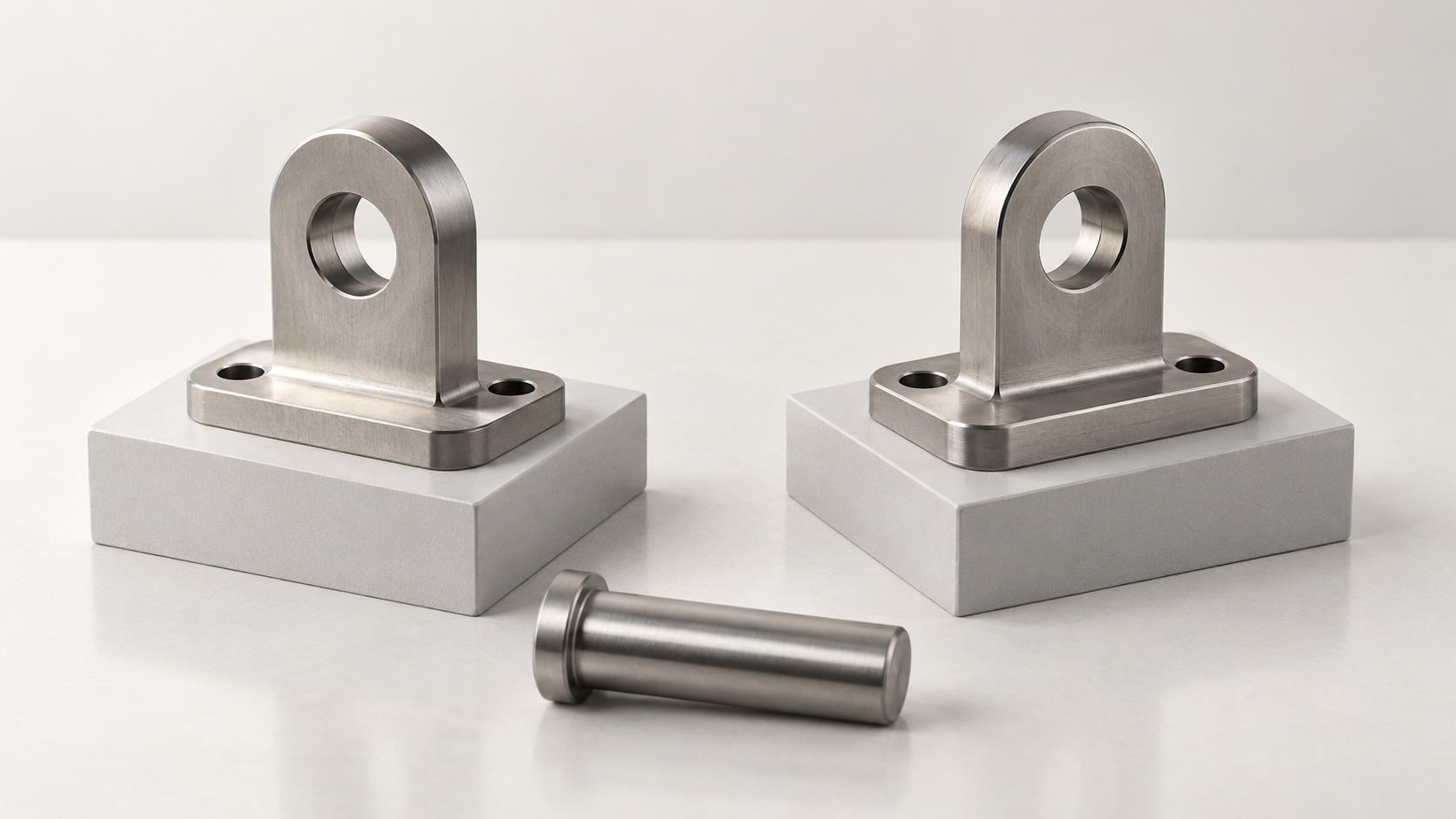
Conceptual illustration: two metal mounting lugs on separate stands with a pin placed in front.
Provide the current requirement you can share
Assemble the approved component specification, product-use information, finished condition, and required acceptance records. Confirm that the files are current and that your business is entitled to share them. Do not assume access to another supplier's confidential production instructions or proprietary tooling details.
Use an identifiable reference sample to support the specification. State which purpose it serves and any limitations. Ask the proposed source to list gaps or assumptions before quoting so those questions are resolved deliberately.
Metal Injection Molding (MIM) shapes metal powder mixed with a temporary binder in a mold, then processes it into metal. MPIF describes the route. A supplier offering MIM still needs to assess your particular component and requirements.
Review the proposed route independently
Ask the new supplier to describe the complete delivered part and the work included. CMG's design guidance discusses additional operations after shaping. Identify any finishing or machining assumptions that differ from the current supply, without assuming a different route is automatically unacceptable.
Have the responsible product and quality teams assess which differences require evidence. The objective is to establish the required result for the intended application. Purchasing should not equate matching process labels with matching outcomes or insist on undisclosed process details merely for familiarity.
Treat tooling as a separate question. New equipment, transfer of existing equipment, and supplier-owned equipment involve different practical and commercial arrangements. Confirm availability, permissions, condition, and qualification needs before building a continuity plan around a presumed transfer.
Define qualification before requesting samples
Agree the questions the new samples must answer and who will review them. Include the required product versions, surrounding parts, material evidence, appearance, and functional checks as appropriate. The review should follow the actual application rather than a generic list copied from another component.
Record whether the samples represent the intended repeat-production route and finishing steps. Our prototype guide explains why a useful fit sample can still leave production questions unanswered.
Keep the approval scope precise. Acceptance for one product version does not necessarily cover another, and a limited trial does not authorize unrestricted repeat supply. Make remaining questions visible to the people planning orders.
Check how the second source stays usable
Discuss the ordering pattern after qualification. If the supplier receives no repeat work for an extended period, ask what must be reconfirmed before an urgent restart. Material availability, equipment condition, current requirements, and delivery timing should remain subjects for review rather than permanent assumptions.
If both sources will supply regularly, establish how changes are communicated to each. A drawing revision sent only to the busiest supplier can leave the other working from an outdated requirement. Assign one owner for maintaining the current approved package.
Ask how the business will review readiness. Use evidence appropriate to the arrangement, such as current acknowledgements, representative deliveries, or agreed restart checks. The correct method depends on the product and the role of the alternative source.
Preserve source identity through receiving
Decide how records distinguish deliveries from each approved source. Keep part and revision identity consistent with your business system while preserving the supplier and lot references needed for review. Similar packaging should not erase that connection once parts reach stores.
Have quality define whether stock can be combined and under what conditions. Do not improvise a mixed inventory arrangement just because both sources use the same purchasing description. Receiving and assembly need clear instructions before parallel supply begins.
Review actual performance against the reason for adding the source. A second supplier may improve flexibility while introducing extra coordination or qualification work. Keep those costs and responsibilities visible in the commercial assessment.
Build an option supported by evidence
A useful second-source record identifies the approved scope, remaining conditions, ordering arrangement, and the evidence behind readiness. It should let another buyer distinguish a prospective supplier from one genuinely available for the intended production need.
The repeat-order checklist supports the final handover. To discuss a new source, send LP MIM the current component requirement and sourcing objective. Explain whether you need regular shared supply or a contingency option so the proposal can address the actual decision.
Comments
Loading comments...