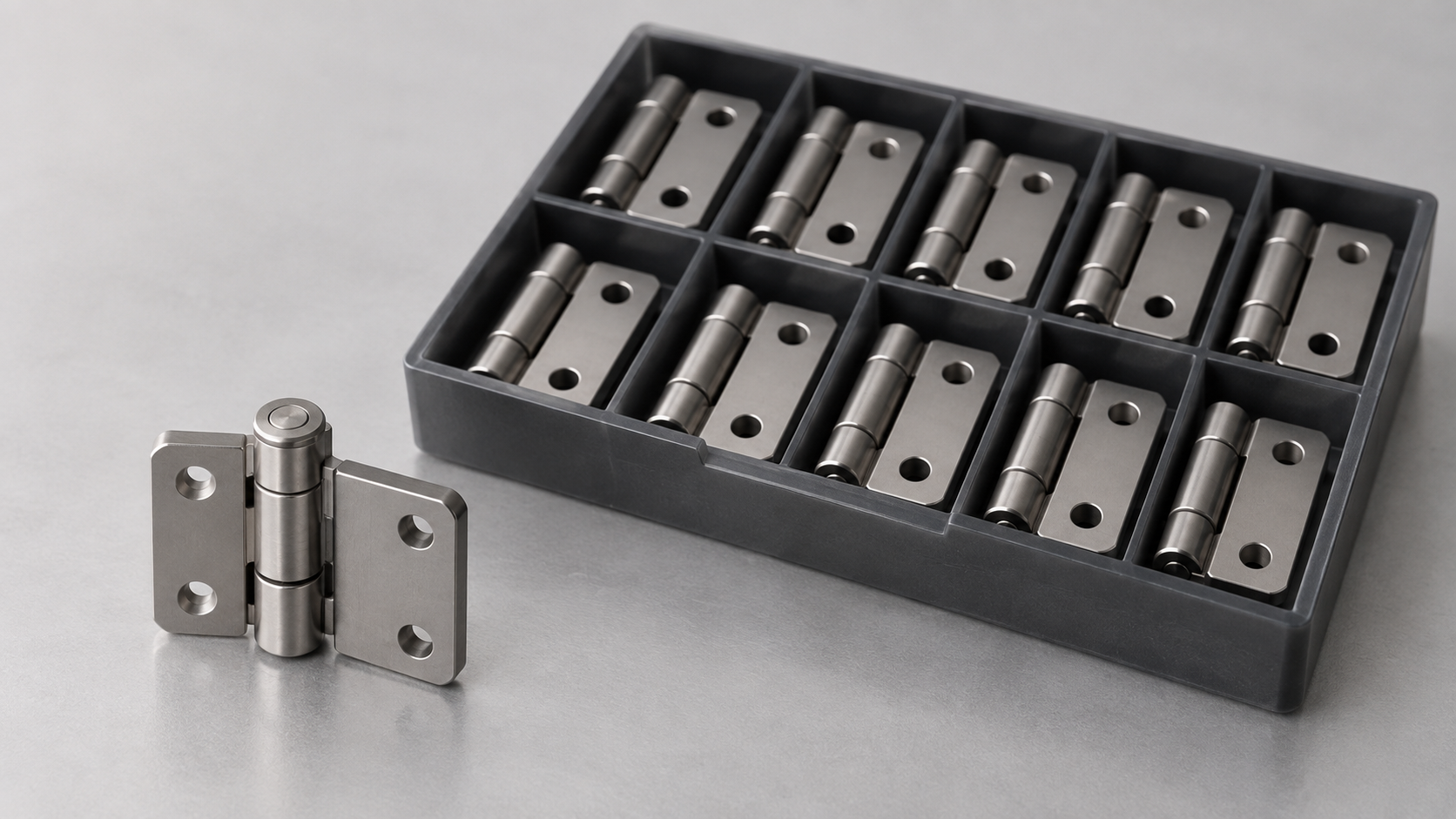
A product stops appearing on the production schedule, but customers may still need replacement components. Before the final regular order, decide how service demand will be supported. The arrangement that worked for steady assembly orders may not suit occasional spare-part requests years later.
For a stainless replacement introduced during a product's life, keep older brass versions in view too. The task is to support the correct installed products with an agreed component and supply plan. It is not simply a decision to buy another carton while the existing price is available.
Define the products still being supported
List the product versions that remain in use and the component each requires. Ask the service team which replacements have actually been requested and what information identifies the correct version. Use available service history, while marking gaps and uncertain demand openly.
Distinguish parts needed for current assembly from parts reserved for installed products. A new stainless version may suit later products without being approved for earlier ones. Have the responsible product team confirm the intended coverage instead of relying on visual similarity.
Our repair and integration guide examines what unit can be replaced. Once that unit is defined, the next question is how purchasing will make the correct spare available after normal production stops.
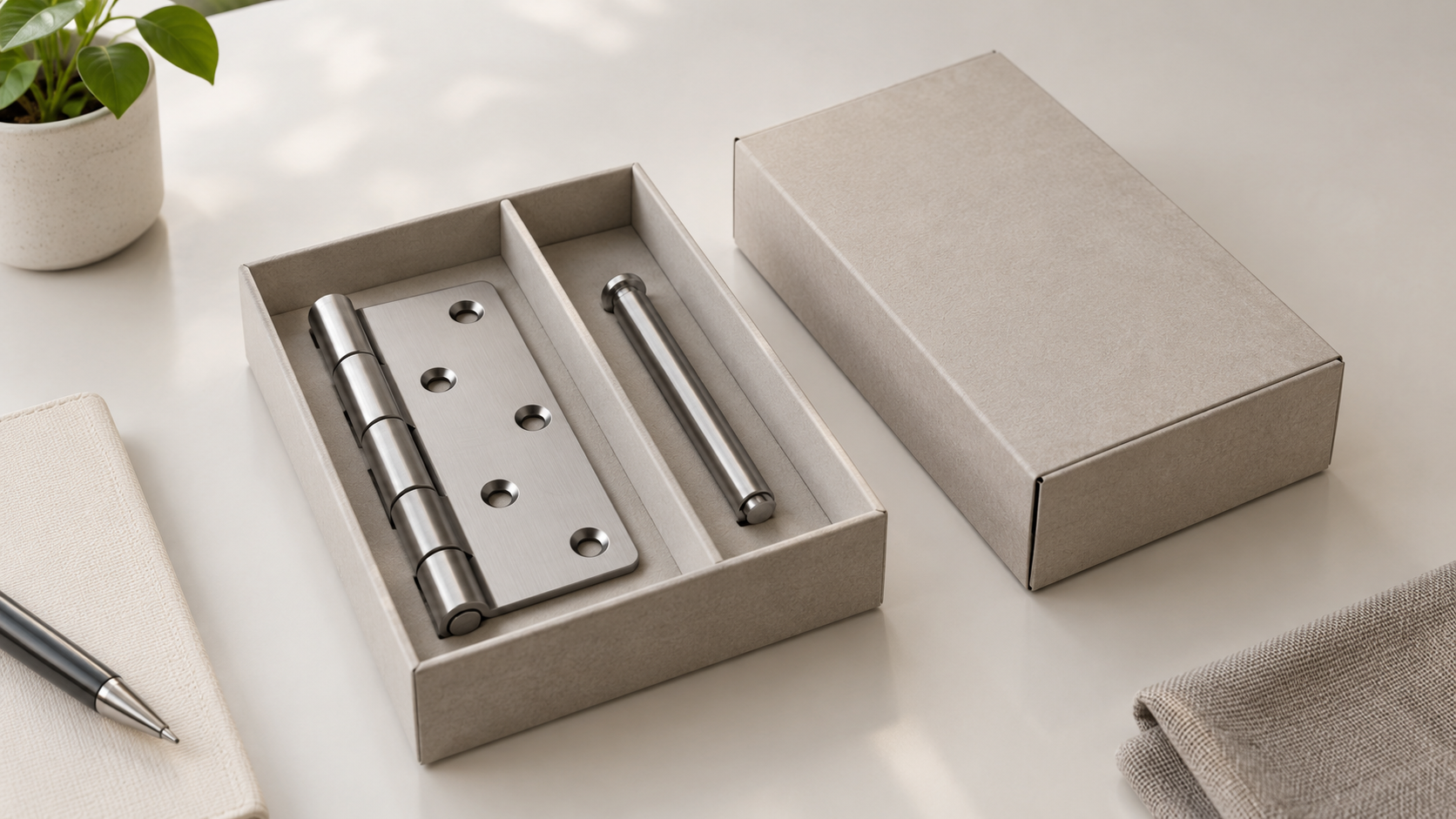
Conceptual illustration: a metal hinge and separate pin protected in a divided storage box.
Review the demand pattern honestly
Collect the information your business has: recent service usage, installed product groups, known support arrangements, and remaining stock. Separate confirmed requirements from estimates. A small amount of historical use may be useful context without supporting a precise long-term forecast.
Ask what could change demand. A product revision, a different repair method, or a customer support agreement may affect which items are needed. Have the relevant team review those assumptions before treating the last production forecast as a service forecast.
Name a review owner and review point. Service demand should not disappear from the purchasing conversation simply because the main product no longer has a production planner. The appropriate review interval depends on your actual support arrangement.
Compare available supply approaches
Discuss a final purchase, periodic small orders, and a future production restart where those options are genuinely available. Ask the supplier to explain the quantity, timing, price basis, and conditions for each. Do not assume every route remains commercially practical at service volumes.
Metal Injection Molding (MIM) shapes a metal-powder mixture in a mold and processes it into metal. MIMA introduces the route. For a part using dedicated equipment, future production needs more discussion than simply retaining an old order number.
A final purchase reduces reliance on future manufacturing but creates a stock commitment. A restart may reduce stock held today while leaving future readiness to be reconfirmed. Compare those tradeoffs using your own requirements instead of assuming either choice is universally cheaper.
Confirm what a restart would require
Ask which equipment and records must remain available. Clarify tooling storage, condition review, current material supply, finishing arrangements, and the checks required before new service parts are released. Record the supplier's confirmed scope and any unresolved conditions.
CMG's design guidance describes operations beyond initial shaping. A retained mold does not by itself explain how the complete finished component would be supplied later. Include the other necessary work in the restart discussion.
The tooling continuity guide addresses care of equipment. Service planning adds a commercial question: who will review readiness when demand returns, and what must be confirmed before a delivery date can be promised?
Plan for stored parts as well as stored tools
If your business chooses to hold finished spares, have the appropriate team define storage, packaging, identification, and any review needed before issue. Preserve the approved component's condition and its link to the relevant product version. Do not invent a universal storage life for stainless parts.
Consider how packs will be opened over time. A carton that once served a full assembly order may now be split repeatedly for individual repairs. Keep identity with the remaining stock and define how returned or unlabelled items are handled.
Ask service colleagues what additional information the recipient needs. A correct metal component can still be misapplied if the product coverage or installation instruction is unclear. Keep those records controlled alongside the stock reference.
Preserve the knowledge needed to reorder
Build a compact service file containing the approved specification, component and product coverage, reference samples where useful, supplier contacts, and the agreed supply approach. Identify who owns the file and where future updates belong.
Keep obsolete versions accessible as history but distinguish them from the current ordering instruction. A future buyer should not have to decide between two old email attachments without knowing which product each supports. Record any restrictions on substitution explicitly.
If another route or supplier is proposed later, treat that as a new assessment where required. The fact that parts are intended for service does not remove the product's acceptance needs. Have the authorized team define what evidence supports the alternative.
Make the final regular order a review point
Before placing it, confirm remaining production demand, service stock, open commitments, and the supplier's future support conditions. Record the decision and the next review responsibility. Avoid presenting an unconfirmed future availability discussion as a guaranteed supply commitment.
To explore a service arrangement, send LP MIM the component and expected support needs. Include the applicable product versions, current stock, known demand, and any likely quiet period. A useful proposal makes the choices and conditions clear enough that the next buyer can continue the plan.
Comments
Loading comments...