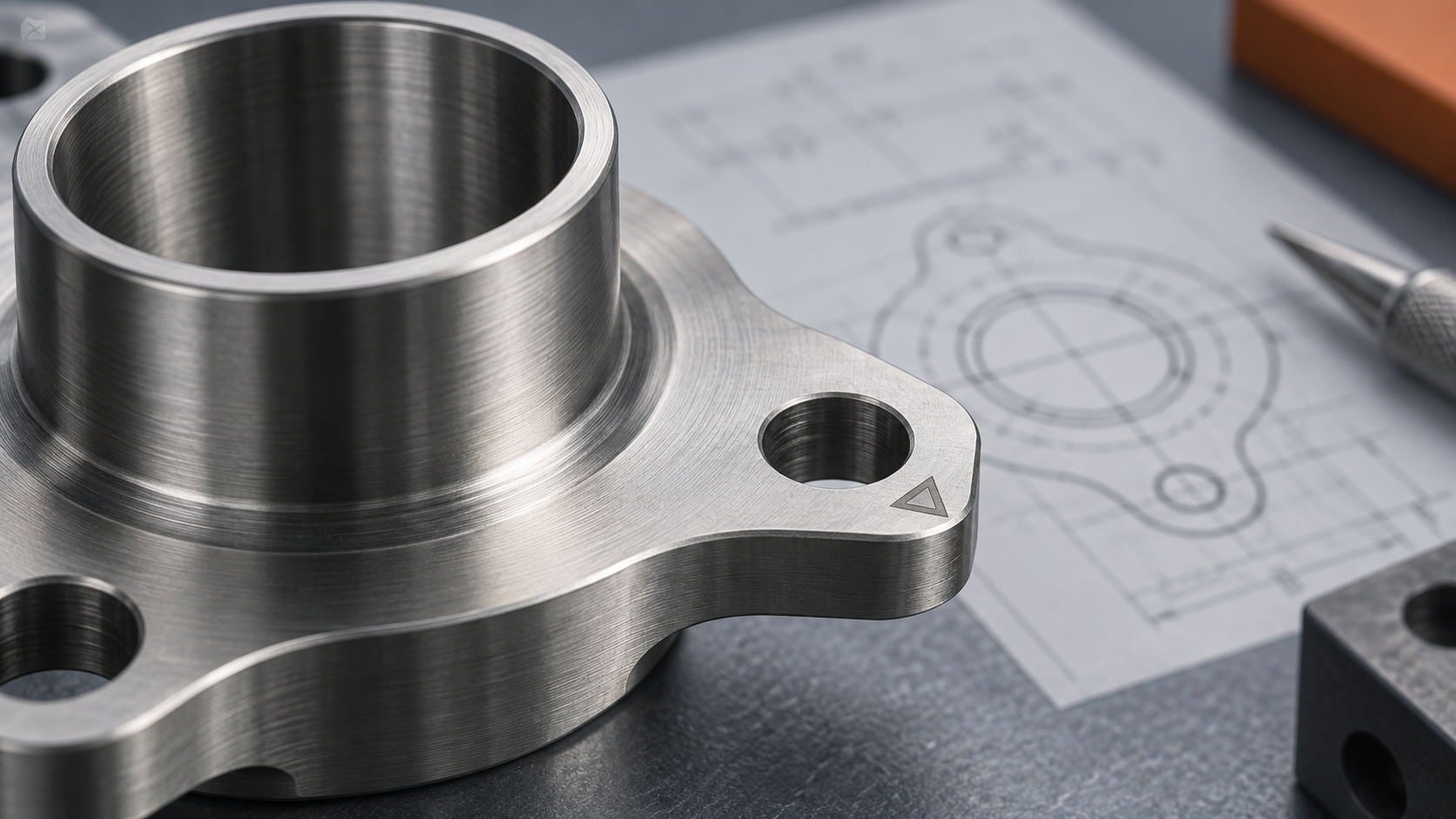
A small metal component can be easy to recognize in its original carton and difficult to identify after assembly or servicing. When considering a stainless replacement for a brass part, ask whether the part itself needs a mark. Begin with the person who must read it and the decision that person needs to make.
The useful result might be an orientation cue, a part reference, or a connection to a production record. These serve different purposes. Adding a logo alone will not necessarily solve a version mix-up, and a permanent part number will not identify a particular delivery unless the record system supports that link.
Define the job of the mark
Describe the problem in plain language. Does an operator need to distinguish left from right? Does service staff need to select a replacement? Does incoming inspection need to connect a component to supplied records? Choose the information needed for that task before discussing a marking method.
Ask where the mark will be read. A feature visible on the loose part may disappear behind a housing after installation. If identification is needed during service, review the mark with the product assembled in its normal position.
Also ask who reads it and with what equipment. A human-readable reference and a machine-readable code need different practical checks. Avoid requesting more data simply because a marking method can accommodate it; unnecessary information can make a small mark harder to use.
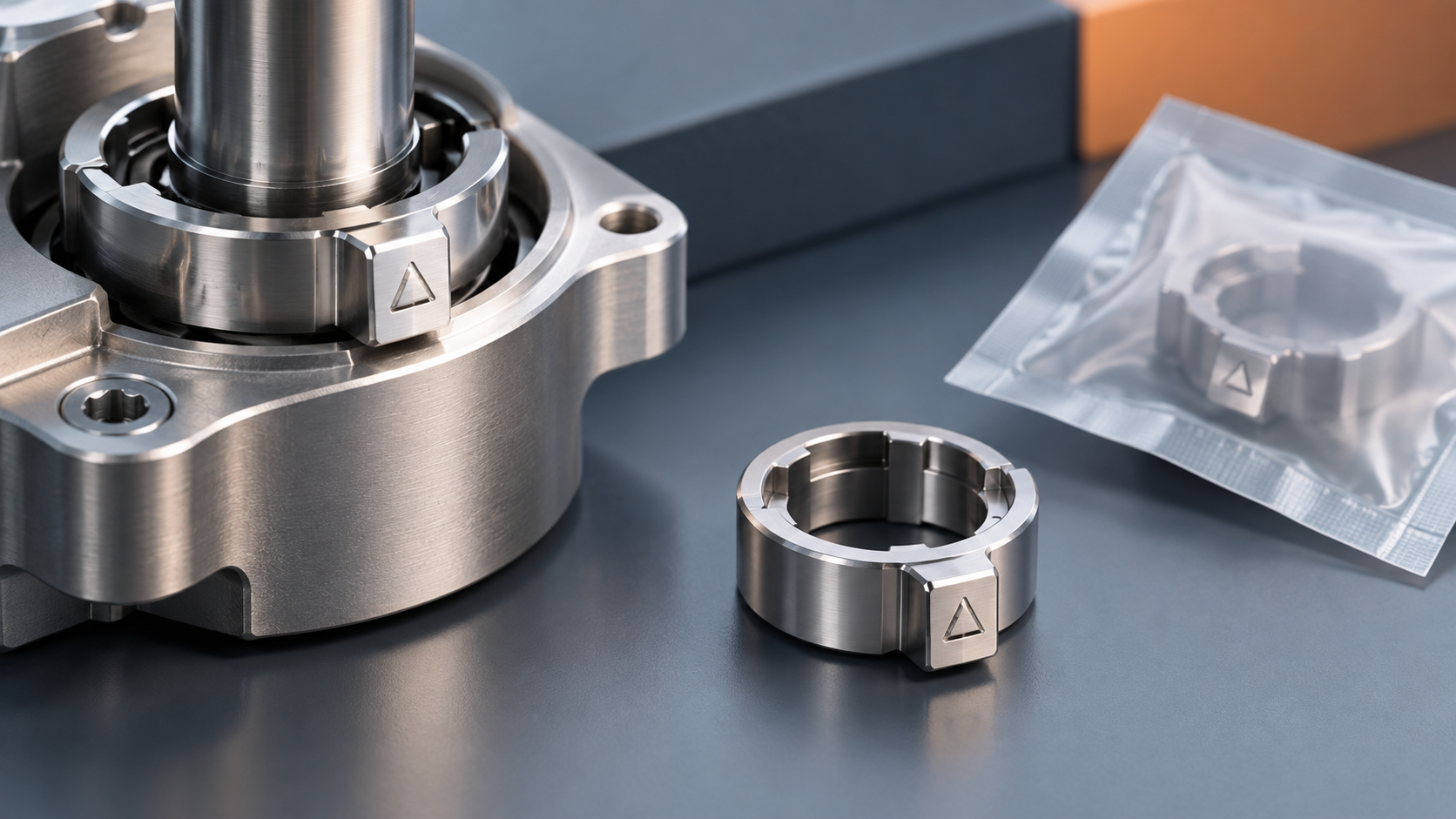
AI-generated conceptual editorial illustration; not a photograph of an actual product, factory or verified production result.
Separate fixed information from changing information
A fixed mark could show a brand, orientation, or part family. Changing information might identify a batch or another controlled record. Decide which is needed and how it will be maintained when the design or supply arrangement changes.
Metal Injection Molding (MIM) shapes a metal-powder mixture in a mold and processes it into metal. CMG's design guidance notes the possibility of forming logos and text. A formed mark may be useful for information intended to remain consistent, subject to review of the particular component.
Changing information may require a separate operation or another identification approach. Ask the supplier to describe the proposal and its limitations. Do not assume that all desired information should become a permanent feature of the mold.
Choose a location that preserves function
Have the product team identify a suitable area. The location should support reading without interfering with fit, movement, cleaning, appearance, or the component's intended job. A convenient blank patch in a photograph is a starting suggestion, not an approved location.
Show the supplier the surrounding product and the surfaces that must remain unchanged. A hidden mark might protect appearance but fail the service need; a prominent mark might help identification while conflicting with a visible finish requirement. Review that tradeoff with the people responsible for both.
The complex-shape guide explains how useful features can be discussed together. Marking belongs in that conversation early enough that its location and purpose are considered as part of the whole component.
Review the finished mark, not just its artwork
An artwork file does not show how the mark will read on the finished metal surface. Ask for a representative sample of the proposed method, location, and finish. Evaluate it under the conditions where the actual reader will use it.
Check the part after relevant finishing steps. Reflections, curvature, and surrounding features can affect practical readability. If the mark must be read after installation or normal handling, include those conditions in the review rather than approving only a close-up photograph.
MIMA's process introduction provides manufacturing background. It does not establish a universal character size or readability limit for your product. Let the supplier propose a workable detail and let the responsible team judge the representative result.
Connect the reference to a usable record
A mark becomes valuable when someone can use it to find the correct information. Decide where the reference leads: a parts list, approved revision, service instruction, or controlled batch record. Name who maintains that connection.
Test the lookup with a colleague who was not involved in development. Can they identify the part and find the current instruction using the mark alone, or do they need information from the packaging too? Document the intended combination instead of expecting the mark to do everything.
Keep different meanings separate. A company logo identifies a source or brand only as defined by the arrangement; it should not be presented as proof of a specific material, inspection result, or approval. Those claims require the relevant supporting records.
Keep packaging and part identity consistent
A part mark complements the labels on cartons and inner packs. Agree how the references relate so receiving does not encounter two unexplained naming systems. If a short code is necessary on the component, keep its meaning accessible in the purchasing and service records.
Our packaging guide covers preservation of identity through receiving. Consider what happens when packs are split, parts are returned from assembly, or a service item arrives without its original carton.
Also plan a marking error response. Ask who can authorize rework, how affected parts are held, and how corrected records remain distinguishable. An unclear mark should lead to a controlled decision, not an improvised interpretation at the workstation.
Make identification part of the purchasing brief
Record the mark's purpose, content, location, method, approval reference, and the conditions in which it must be readable. Include any additional operation in the delivered-part quotation. Keep responsibility for future content changes clear.
To discuss an identifiable stainless component, send LP MIM the part and its handling sequence. Explain when its identity is currently lost and what the reader needs to know. A small, well-chosen mark can be more useful than a large amount of information without a clear purpose.
Comments
Loading comments...