Your stainless component is approved and repeat orders are running. Then the supplier proposes a different material source, finishing arrangement, or production location. Ask for a clear change description before assuming the existing approval covers the revised supply.
The right response depends on what could affect the agreed component and your product. Some changes may need limited review; others may require new evidence. Purchasing's role is to make the proposal, affected orders, responsibilities, and release decision visible so the change does not arrive unnoticed in a carton.
Ask what is changing and why
Request a comparison between the current arrangement and the proposal. The supplier should identify the component references involved, the reason for the change, and the intended timing. Avoid accepting a general reassurance that nothing important will change without enough detail for your team to assess it.
Ask which features or agreed conditions could be affected and which the supplier expects to remain unchanged. Keep the explanation proportional to the proposal. Your team needs a basis for review, not necessarily every confidential detail of the supplier's operation.
Distinguish a proposal from a change already implemented. If affected parts have already been made or shipped, tell the responsible quality team and follow your established procedure. Do not backdate an approval to make the records appear orderly.

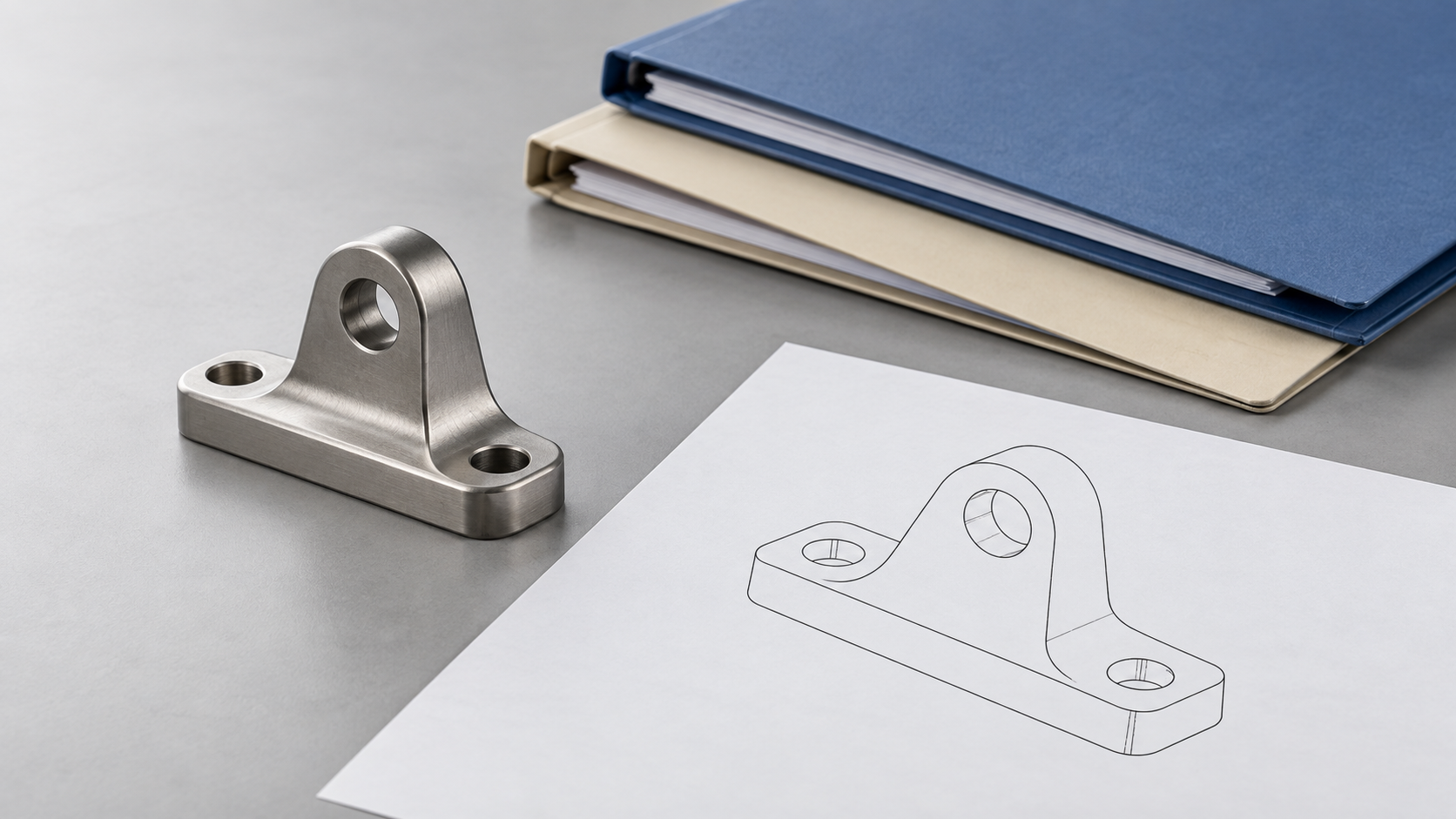
Conceptual illustration: two ribbed metal brackets on separate mats beside an outline drawing.
Check the scope of the existing approval
Locate the current specification, sample approval, and relevant supplier agreement. Identify which conditions formed the basis of acceptance. The review should begin from those records rather than one person's recollection of how the first samples were made.
Metal Injection Molding (MIM) shapes a metal-powder mixture in a mold and processes it into metal. BASF describes the process sequence. A change within the overall route can deserve attention even when the part number and drawing remain the same.
The repeat-order guide covers the initial handover. Supplier change review protects the connection between that approved basis and the component your business will receive next.
Let the responsible team define the evidence
Ask product and quality colleagues to assess the proposed effect and choose the required checks. They may request supporting records, representative samples, or a specific product evaluation. The scope should follow the actual uncertainty, rather than repeating every earlier test automatically or waiving all review by default.
Agree what the evidence must represent. A sample made before the proposed change cannot demonstrate the outcome of the changed route. Likewise, a partial trial may answer one question while leaving the final delivered condition unconfirmed.
MPIF's standards guidance emphasizes agreement on material and process conditions relevant to an application. Use the specification and acceptance plan appropriate to your component; do not convert a general process statement into approval of the supplier's particular proposal.
Identify the affected orders and stock
Ask the supplier to show where the transition would begin. An identified lot, order, or other controlled reference is more useful than a vague promise to change next month. Clarify the status of work already in progress and parts made under the current arrangement.
Determine whether both conditions will exist at the same time and how they will remain distinguishable. Receiving needs a practical way to connect each delivery to the applicable approval. Preserve the references needed for any later investigation.
If the proposed timing affects a committed delivery, separate the schedule discussion from technical release. Ask what alternatives are available within the approved arrangement. Urgency should be visible to the decision makers without silently becoming permission to use unreviewed parts.
Review commercial effects separately
Request confirmation of any change to price, quantity assumptions, lead time, packing, or included records. A technically acceptable proposal can still change the purchasing arrangement. Keep those effects beside the proposal so the final decision addresses the complete supply.
Ask who carries out and pays for agreed qualification work where that needs clarification. Have the appropriate commercial colleagues settle the arrangement. Avoid assuming that a supplier's stated efficiency benefit automatically becomes a price reduction or that every review expense belongs to the buyer.
Our post-quotation design-change guide discusses changes requested by the buyer. Here, the supplier initiates the proposal, so the starting point is its effect on an already accepted supply basis and the evidence needed to retain that acceptance.
Record the decision with its limits
The decision should identify the proposal reviewed, the evidence considered, the authorized approver, and the affected scope. If acceptance is conditional, record what must happen before release. If the change is declined or deferred, make that outcome equally clear.
A limited evaluation should remain limited. Identify trial quantities and their intended use, and preserve any restrictions when the parts move between teams. Do not let a sample review become approval for all future deliveries through an ambiguous email subject.
Ask the supplier to acknowledge the final instruction. Update controlled purchasing and receiving references where needed, while retaining the prior condition as history. The next person placing an order should be able to see which arrangement applies.
Verify the first affected delivery
Connect the first delivery under the accepted change to the agreed transition reference. Have the responsible team complete the checks defined in the review and record the result. Escalate unexplained differences instead of assuming that a signed change form proves the delivered outcome.
To establish a clearer repeat-supply arrangement, send LP MIM your component and change-notification requirements. Explain who reviews proposals and what information your business needs. A useful process lets improvements be considered while keeping the approved product and purchasing decision under control.
Comments
Loading comments...