
Once a stainless replacement enters repeat supply, compare the result with the reason you approved the change. The quotation estimated an opportunity. Actual deliveries show what your business pays and what work your team performs. A short review can explain where the expected benefit appeared and where assumptions need updating.
For a brass-to-stainless project, avoid judging success from one invoice alone. The delivered component price is important, but packaging, handling, assembly, initial expenses, and the ordering pattern may also have changed. Keep the review tied to equivalent usable output over an identified period.
Recover the original decision basis
Find the approved comparison used before the switch. Identify the component revision, quantity assumptions, finished condition, and expected changes in work. If those assumptions were not recorded clearly, reconstruct what you can and mark gaps instead of presenting a precise result from uncertain inputs.
Choose a review period that contains meaningful supply experience. Separate early trials from routine orders where their conditions differ. The aim is to understand the recurring arrangement while keeping the cost of getting there visible.
Ask purchasing, assembly, and quality to contribute the records they already hold. Use invoices, receiving information, production observations, and issue records. A practical review should be possible to repeat without relying on one person's memory of the project.
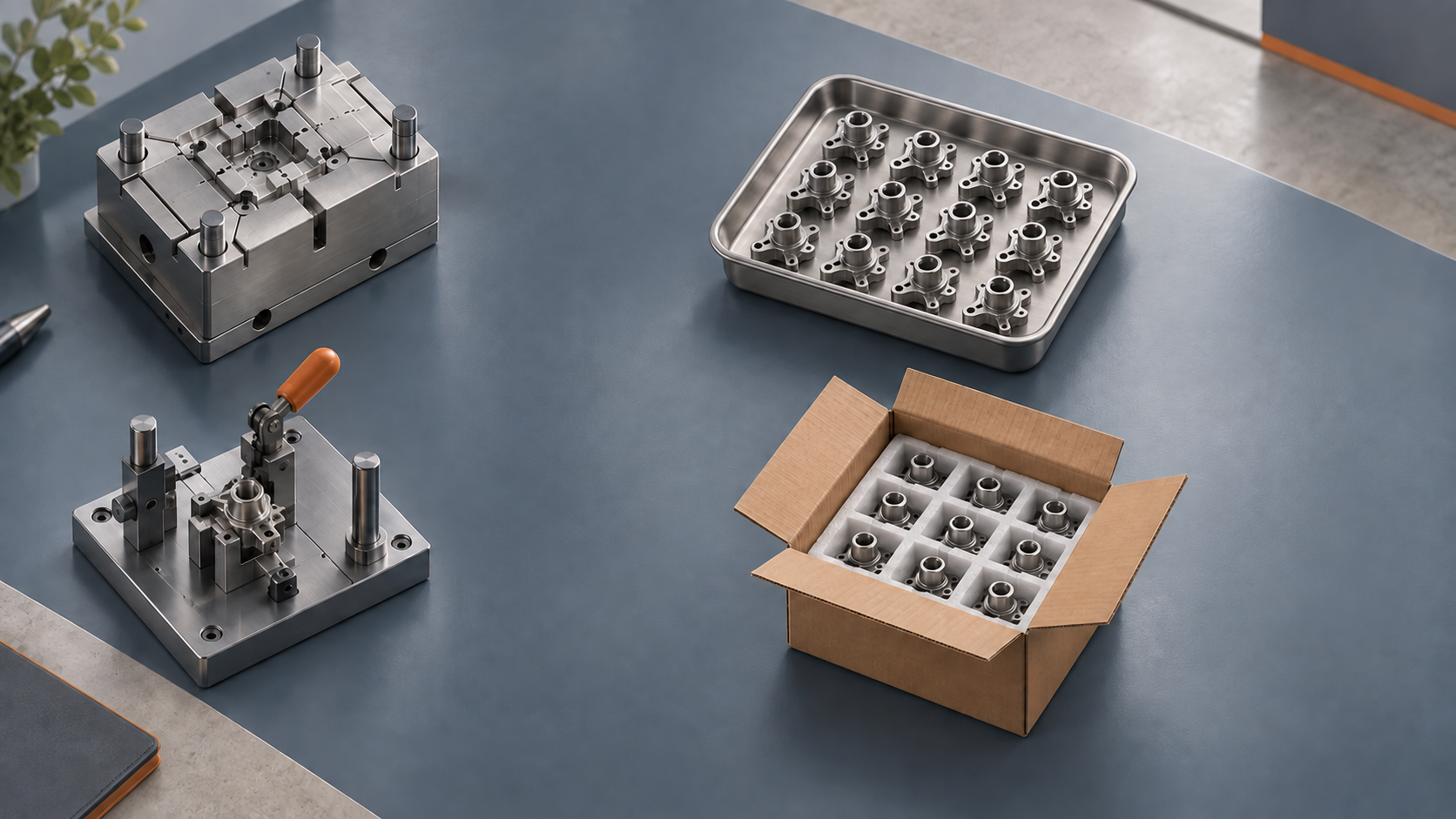
AI-generated conceptual editorial illustration; not a photograph of an actual product, factory or verified production result.
Compare the same usable result
Confirm that the brass baseline and stainless supply meet the same agreed product need. If the design now combines several purchased pieces, compare the complete old assembly with the new arrangement, including any items that remain separate.
Metal Injection Molding (MIM) shapes a metal-powder mixture in a mold and processes it into metal. MIMA describes its use for complex components. Those manufacturing possibilities explain the original opportunity; the cost review must use your own actual result.
Our quotation comparison guide establishes the initial common basis. Revisit that basis now. If quantities, finish, or product coverage changed, show the difference explicitly rather than attributing the whole price movement to the material switch.
Separate initial expenses from recurring work
List the actual initial charges associated with development and introduction. Keep them separate from recurring delivered-part costs. If your business allocates tooling expense across units, show the method and volume used so the comparison can be understood when demand changes.
Avoid counting the same expense twice. A supplier may have included an agreed initial recovery in the part price or charged it separately. Confirm the arrangement from the purchasing records rather than assuming that every tool-related payment belongs in both categories.
Also separate transitional work from expected routine work. Extra inspection during introduction may have been planned for a limited period. If it continues, ask why and determine whether it should now be treated as part of the ongoing supply cost.
Check which operations actually disappeared
Return to the expected changes in assembly or finishing. Did the joining step disappear? Are fewer items ordered? Did the new part require extra unpacking or a different handling sequence? Record added work as carefully as removed work.
CMG's design guidance describes additional operations that may follow MIM shaping. A cost attributed to machining or polishing may remain in the finished component price even if your factory no longer performs that operation. Distinguish a transfer of work from its elimination.
Use observations from normal production where available. A quick demonstration during sample review may not represent the recurring workflow. The assembly trial guide explains the earlier test; this review asks whether its expected benefits persist in routine use.
Separate price effects from purchasing-pattern effects
Compare quantities and delivery patterns used in the review. A larger order may reduce the quoted unit price while increasing stock and cash commitments. Record that change rather than treating the new invoice rate as a like-for-like result automatically.
If currencies, delivery terms, or freight arrangements differ, have the appropriate purchasing or finance colleague put the figures on a consistent basis. Keep the assumptions visible. The purpose is a fair operating comparison, not a claim that one manufacturing route controls every commercial variable.
Include relevant extra charges found in the records. Expedite fees, additional packing, or repeated small shipments can explain a gap between quoted and actual cost. Investigate the reason before deciding whether the expense is temporary or part of the intended arrangement.
Record supply and quality observations separately
A cost review should preserve information about usability and supply performance. Record issues that affected receiving or assembly, together with their scope and resolution. Avoid translating every observation into a guessed financial value simply to produce one total.
Likewise, do not claim improved reliability from a short period without issues. State what was observed and over which deliveries. Longer-term product performance may require a different review and should remain with the responsible team.
If a recurring problem adds handling or sorting, identify the activity and its actual impact where records allow. Agree a corrective next step with the relevant people. A lower purchase price should not hide work that makes the complete arrangement less useful.
Turn the review into a decision
Summarize confirmed benefits, differences from the original assumptions, and unresolved questions. Name the action needed for each material gap: clarify a charge, improve a pack, revise an order pattern, or investigate a recurring issue. Keep ownership and the next review point clear.
The outcome may confirm the stainless route, identify a useful adjustment, or show that the original brass arrangement remains preferable for some applications. To prepare a component discussion, share your part and actual purchasing experience with LP MIM. Use the evidence to guide the next decision without turning a possible saving into a universal promise.
Comments
Loading comments...