A delivery note says stainless steel, and a document arrives with the carton. Before treating that as complete material evidence, check what the document actually describes and how it connects to the delivered parts. The useful purchasing question is which agreed requirement each record supports.
For a buyer replacing brass, the paperwork should follow the new specification rather than inherit an undefined request for a certificate. Ask product and quality colleagues what evidence is required, agree it with the supplier before ordering, and make sure receiving knows how to check the connection.
Define the requirement before naming the document
Start with the approved material specification and the condition required for the component. Include the relevant revision and any application-specific requirements already established by your team. Avoid selecting a document name first and hoping its contents will answer every question later.
Ask which properties or identity statements need evidence, who should provide it, and how it will be reviewed. A purchasing declaration, a material analysis, and a finished-component inspection report can serve different purposes. Do not treat them as interchangeable merely because each carries a supplier logo.
MPIF's standards guidance calls for purchaser–manufacturer agreement on relevant material conditions. Use your responsible specialists to choose the actual specification and evidence; a general webpage does not define the acceptance requirements for your order.

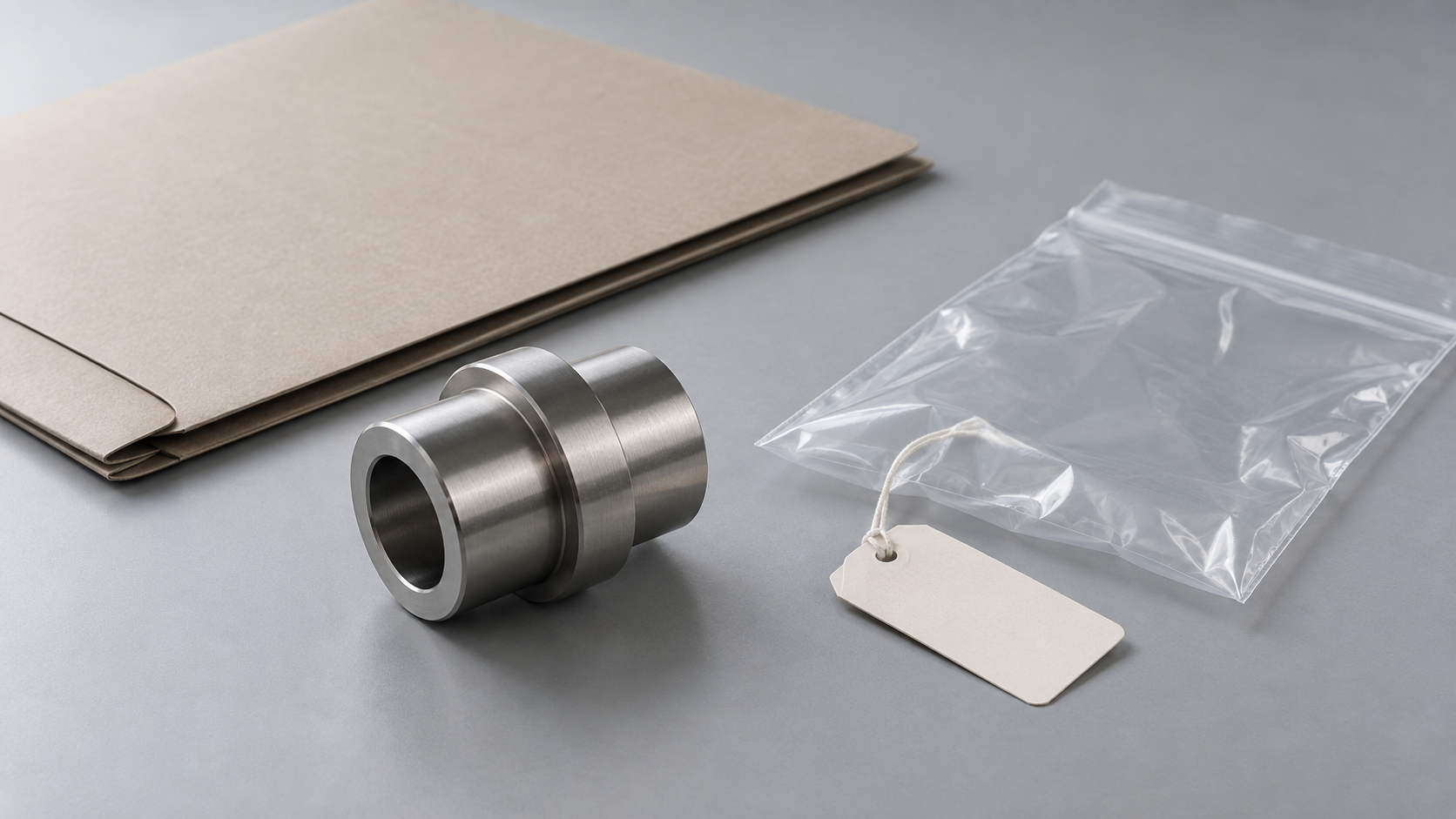
Conceptual illustration: a stepped metal bushing beside material samples and an open document folder.
Ask what item was examined
Read the report's description of the material or specimen. Does it concern incoming material, a separately prepared test piece, or a delivered component? Ask the supplier to explain any relationship that is not clear from the record.
Metal Injection Molding (MIM) shapes a metal-powder mixture in a mold and processes it into metal. BASF outlines the manufacturing sequence. Because the finished part has passed through processing, evidence about starting material should not be assumed to demonstrate every finished-part requirement.
This does not make an incoming-material record unhelpful. It means its purpose and limits should be understood. Let the quality owner decide what additional evidence is appropriate to the property, component, and agreed production controls.
Connect the document to the delivery
Identify the references used on the purchase order, carton, delivery note, and supporting records. They should provide an understandable connection between the received parts and the evidence supplied. If the supplier uses a different internal code, ask for its relationship to your part and revision.
Where a report covers a batch that supplies several deliveries, request enough information to understand which deliveries it supports. If a shipment combines batches, ask how the records distinguish them. Avoid assuming that one attachment covers every item in a mixed carton.
Our component identification guide explains why a mark needs a usable record behind it. The same principle applies to paperwork: a reference has value when receiving can follow it to the relevant component without guessing.
Check the scope of the result
Have the responsible reviewer compare the reported characteristics with the agreed requirements. Where a result needs a method, unit, specimen description, or test condition to be meaningful, confirm that information is available. Purchasing should escalate missing context rather than invent a technical interpretation.
Keep material evidence separate from product approval. A document supporting material identity does not automatically establish fit, surface appearance, or performance in an assembled product. Those questions may require their own checks and records.
Also distinguish a typical value from a result obtained for the identified material or component. A brochure can help explain a proposal, but it should not be presented as the test report for a particular delivery. Ask for clarification whenever the document's role is ambiguous.
Agree delivery of the records in advance
State which records should accompany each shipment and which are retained under an agreed arrangement. Confirm the format, contact, and timing. A useful requirement is one that the supplier can prepare and the receiving team can actually review when the parts arrive.
Ask for a sample document format during qualification where that helps reveal gaps. It can show whether the necessary identifiers and fields are present without pretending to be evidence for future production. Mark example records as examples in your internal review.
Our repeat-order handover guide covers the wider acceptance pack. Put the document requirement inside that pack so it remains connected to the approved specification when a different buyer places the next order.
Handle a missing or mismatched record deliberately
If required evidence is absent, follow your receiving process and ask the supplier for the specific missing item. Describe the delivery and the discrepancy clearly. Keep the parts' status visible while the authorized reviewer determines the next step.
Do not substitute a convenient report from an earlier order without establishing that it applies. Likewise, a corrected file should retain enough reference information to explain what it replaces. The aim is a reliable connection to the delivered parts, not simply a full attachment folder.
If the requirement was unclear in the original order, resolve that gap for future deliveries. Agree the necessary evidence with the appropriate people rather than adding new technical obligations informally after every shipment.
Make the record useful at receiving
A practical material-record plan identifies the requirement, evidence type, subject of the result, delivery connection, and review owner. It should help a colleague decide whether the agreed information is present and when a specialist must resolve a question.
To prepare a stainless sourcing discussion, send LP MIM your component specification and required delivery records. If the evidence requirement is still being defined, state that openly. A clear discussion before ordering is more useful than an impressive-looking document that nobody can connect to the parts.
Comments
Loading comments...