A threaded part that is tightened once and left in place has a different use story from one opened repeatedly for adjustment, cleaning, or servicing. When replacing brass with stainless, include that story in the enquiry. An acceptable first assembly does not establish that repeated opening and closing will remain practical.
The commercial opportunity may still be attractive: a small stainless body could combine useful features or simplify supply. The purchasing decision should include the mating part and the actual assembly method, so the quoted component is assessed as part of a working connection rather than as an isolated shape.
Describe who opens the connection and why
Ask whether the connection is assembled only in the factory or also handled by installers, service staff, or customers. Describe the normal tools and the conditions in which it is opened. Include planned cleaning, adjustment, and replacement activities where they involve the threaded part.
Record whether the mating item stays the same or changes with the stainless proposal. Identify its material and finish from the specification rather than appearance. The same new body can encounter different combinations across a product range, and each intended combination should be visible to the reviewer.
Our serviceability guide considers replacement access. Here the question is narrower: can the proposed connection be assembled and released as required through its intended use? That needs more than confirmation that two loose parts screw together once.
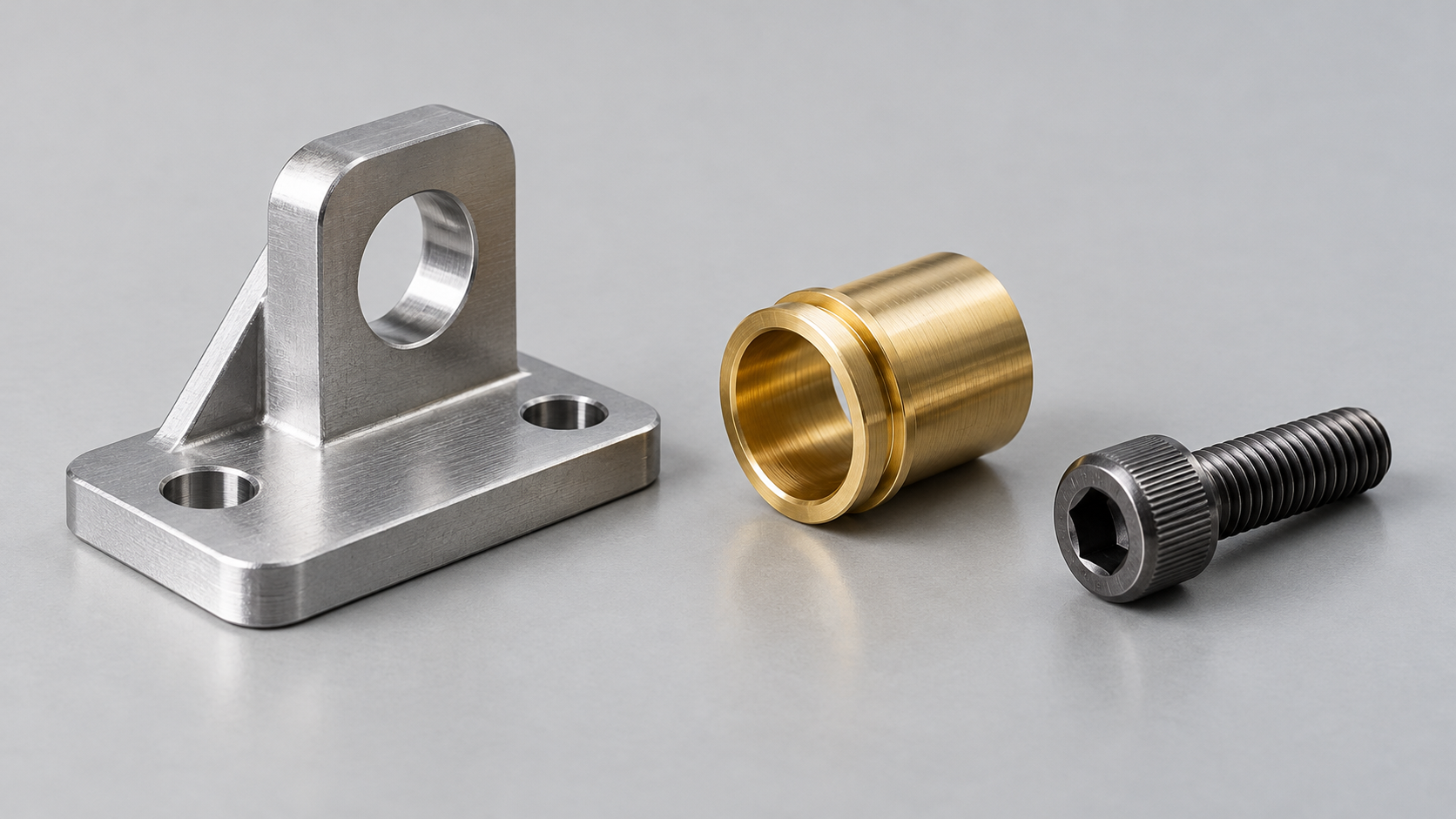
Conceptual illustration: silver bracket, brass-colored sleeve and dark screw placed separately.
Know why sticking deserves a specific question
Stainless threaded combinations can experience galling, a form of surface damage that can cause parts to seize during relative movement. BSSA's guidance describes the issue and factors affecting resistance. This is a reason to assess the actual combination, not a prediction that every stainless connection will fail.
Ask the product specialist and supplier what arrangement they propose and what evidence supports it. Avoid selecting a lubricant, coating, grade combination, or tightening setting independently from a general article. Such choices can affect other product requirements and should be reviewed together.
Keep any proposed assembly instruction connected to the component specification. If the solution depends on a particular surface condition or controlled method, that dependency belongs in the delivered scope and operating documentation. It should not remain an informal tip known only to the person who demonstrated the sample.
Specify the finished component
Metal Injection Molding (MIM) shapes metal powder mixed with a temporary binder in a mold, then processes it into a metal part. CMG discusses design and secondary operations for this route. Ask which operations produce the finished connection your product requires.
A quotation for an unfinished body should not be compared with a fully usable brass part without including the remaining work. Clarify the supplied material, finish, relevant connection requirements, and any separately purchased pieces. Let the responsible technical team define the detail necessary for the application.
For a hypothetical service cap, a lower body price may be attractive while a changed assembly instruction adds work during every service visit. Include that effect in the evaluation instead of limiting the comparison to factory purchasing and first installation.
Evaluate the intended sequence
Have the product team define a suitable assessment using representative components and the intended method. Include the relevant opening and closing sequence, surrounding access, and use conditions. Keep the evaluation within the product's established procedures rather than improvising limits from a single successful sample.
Record sample identity and manufacturing differences. If a prototype's connection is made or finished differently from repeat supply, ask what the observation actually establishes. A useful development result can justify further work without becoming approval for the complete production arrangement.
Our prototype-evidence guide helps distinguish those stages. Document any sticking, damage, extra work, or need for changed tools, and have the responsible reviewer decide the next step. Purchasing should preserve the findings accurately rather than diagnose the cause from a brief demonstration.
Include the people who will use the instruction
A method that works for one experienced developer may be difficult to repeat on the assembly line or during service. Ask the intended users to review the instruction and identify missing information. Check whether the required tools and approved materials are available in the relevant setting.
If the proposal requires something that customers cannot reasonably control, raise that constraint with the product owner. The solution might need a different design or combination rather than a longer instruction. Do not assume an internal factory procedure can simply be copied into field use.
Keep approved supplies identifiable and substitutions controlled. A general description such as assembly compound can conceal a meaningful change. The technical owner should define what is permitted and how a later proposed replacement is assessed.
Make the commercial decision on the complete arrangement
Compare the finished parts, extra operations, assembly effort, tools, approved consumables where applicable, and service implications. Show the initial evaluation and tooling costs separately. Do not claim reduced maintenance or longer life unless the actual evidence supports that conclusion.
Retain the accepted component and mating-part references with the agreed instruction and evaluation record. Future purchasers should be able to see that the approval concerned a combination and method, not stainless steel in general. Changes to either side need an appropriate review.
To begin, send LP MIM the threaded part and its normal opening sequence. Include the mating component, current specification, use conditions, and quantities. A useful proposal makes both the manufacturing opportunity and the repeated-use requirements clear before the material change reaches production.
Comments
Loading comments...