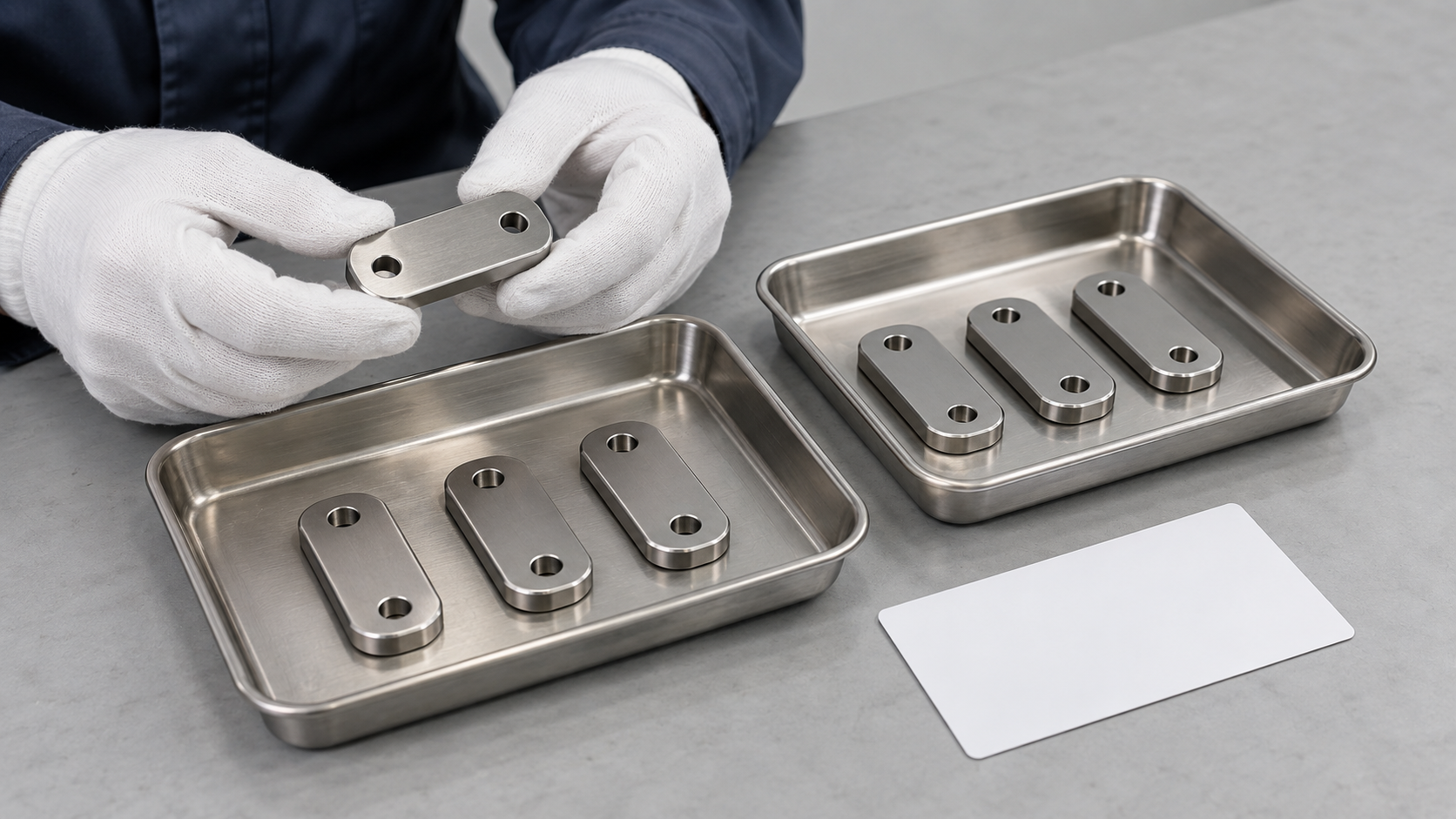
A carton of stainless components arrives and something differs from the agreed reference. The useful first response is to preserve the evidence and obtain a controlled decision. Avoid letting an urgent assembly requirement turn an unexplained difference into an informal acceptance.
For a business replacing brass, this is part of making the new supply repeatable. The issue may concern appearance, identity, dimensions, records, or packaging. Those questions need different checks, but they benefit from the same clear starting record: what arrived, what was expected, and what remains uncertain.
Keep the affected parts identifiable
Follow your receiving and quality procedures to hold the suspect items where they cannot be issued accidentally. Preserve the part reference, delivery number, pack labels, and quantities. Ask the responsible team to define the scope of the hold rather than assuming one observed difference affects every delivery.
Record where the items have already moved. Some may still be in their carton, while others may have reached stores or assembly. Give the quality owner that information promptly so they can decide the appropriate containment and follow-up for the actual product.
The packaging and receiving guide explains the normal handover. An exception needs its own identifiable record so the investigation does not become separated from the physical items.
Conceptual illustration: camera positioned to photograph a metal plate in a separate inspection tray.
Describe an observation before assigning blame
Photograph the part and pack as received where practical, keeping the relevant identification in the record. Describe the observed difference in plain language. “A visible mark on this face” is more useful than an unsupported conclusion about the manufacturing cause.
If a measurement is involved, have the appropriate person use the agreed method and record the result. Identify the particular items examined. Do not present the number inspected as the number affected unless the evidence supports that conclusion.
Separate known facts from possible explanations. A different appearance might reflect lighting, finish, handling, or another cause. The receiving report should give the supplier enough information to investigate without declaring a technical finding that has not been established.
Compare against the agreed requirement
Locate the current drawing, purchase specification, approved reference, and relevant delivery requirements. Confirm they refer to the same part and revision as the shipment. If the records themselves disagree, make that a separate issue to resolve.
A sample photograph can help explain appearance, but it cannot establish every material or functional requirement. MPIF's standards guidance highlights the importance of purchaser–manufacturer agreement on relevant conditions. Use the actual agreed criteria for this component when deciding what evidence is missing.
Distinguish a confirmed departure from an unanswered question. Both deserve attention, but the supplier's response and the authorization needed may differ. Keep the comparison specific enough that another reviewer can understand why the items were held.
Send one complete issue report
Bring together the part and revision, delivery reference, quantities examined, observed difference, supporting evidence, and expected requirement. Name the contact coordinating the response. Include the production timing concern without treating urgency as a technical acceptance criterion.
Ask the supplier to acknowledge the report, identify the investigation owner, and explain what further evidence or samples are needed. Agree arrangements before returning parts. Retain suitable records and reference items under your own procedure so the original observation remains available.
Metal Injection Molding (MIM) shapes a metal-powder mixture in a mold before processing it into metal. BASF describes the sequence. That manufacturing background alone cannot identify the cause of a delivery issue; the response must address the particular evidence.
Separate immediate recovery from permanent correction
Your business may need replacement stock or an agreed sorting plan while the cause is investigated. Ask for a clear description of the proposed immediate action, its scope, and the evidence required before affected parts can be used. Have the authorized product and quality people decide.
Keep any permitted exception limited and documented. Identify the quantities, product coverage, approval owner, and conditions. Purchasing should not convert a one-time decision into a revised repeat-order requirement by copying it into the next order.
Also ask how recurrence will be addressed where an actual supply problem is confirmed. A replacement shipment solves an immediate shortage only if it meets the required checks. It does not, by itself, show that the underlying cause has been understood or controlled.
Verify the recovery against the original issue
When replacement or corrected items arrive, connect them to the original report. Ask the quality owner to verify the relevant requirements and any additional checks agreed for recovery. Preserve the link between the received items and the supplier's explanation.
Record whether the action answered the original concern. If an issue remains, describe the gap precisely instead of opening a disconnected conversation. A consistent record helps both parties see whether the work has progressed from observation to evidence and an authorized disposition.
Review practical lessons for the next order. A clearer pack label, document requirement, or appearance reference may prevent confusion. Update controlled purchasing instructions only through the appropriate review; do not quietly relax a requirement to make the report disappear.
Close with a usable decision record
The closing record should show what was found, which items were affected, the decision made, and how the outcome was verified. Keep commercial arrangements connected but separate from technical acceptance. A credit or replacement promise is not evidence that a component is suitable for use.
For a new stainless sourcing discussion, share your component and receiving requirements with LP MIM. Agree the issue-response contact and necessary records before the first delivery. That makes it easier to handle an unexpected difference without losing either the evidence or the purchasing objective.
Comments
Loading comments...