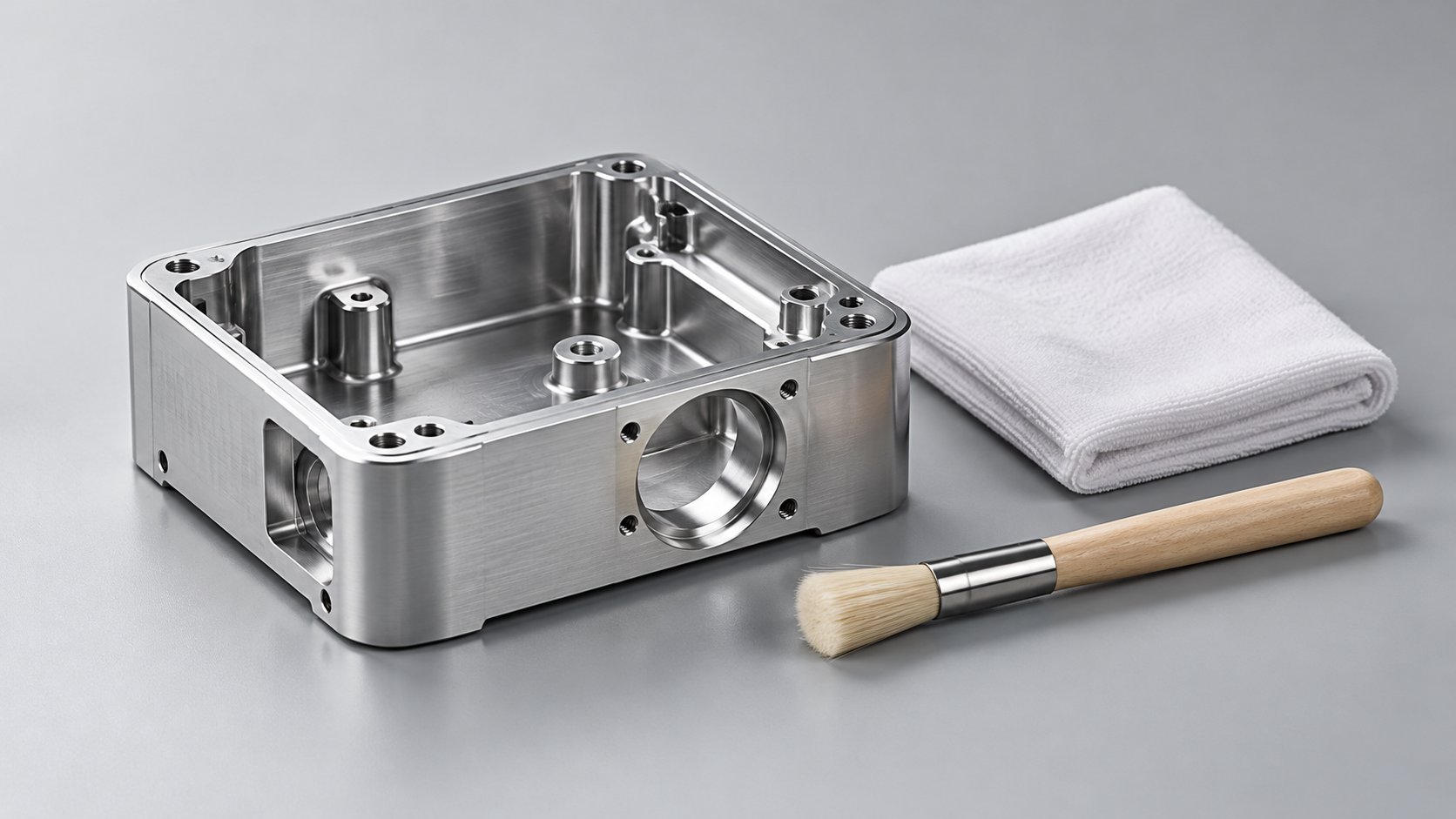
Changing a brass component to stainless steel is a reason to review the cleaning routine, not to assume that every existing chemical or method remains suitable. The relevant question is what will actually contact the finished part, for how long, at what temperature, and how the product will be rinsed or dried where required.
For purchasing, the first task is to collect the real routine. A brief statement such as easy to clean or suitable for washdown does not identify the conditions a supplier needs to assess. A clear description helps the product owner judge the proposed material and shape before approving repeat supply.
Obtain the routine used in practice
Ask the people responsible for cleaning to identify the products and methods actually used. Collect the applicable product information and current work instruction. Note any differences between factory cleaning, customer use, and service work, because a component may encounter more than one routine during its life.
Include the applied concentration, temperature, contact duration, frequency, and subsequent steps where those are specified. If information is unknown, record the gap. Do not guess a value or copy one from an unrelated process simply to complete the supplier form.
Our use-environment brief covers the wider application. This review focuses on a repeated exposure that can be missed when the normal operating environment looks mild. Cleaning conditions belong in the material discussion, even if cleaning occurs only after the machine has stopped.
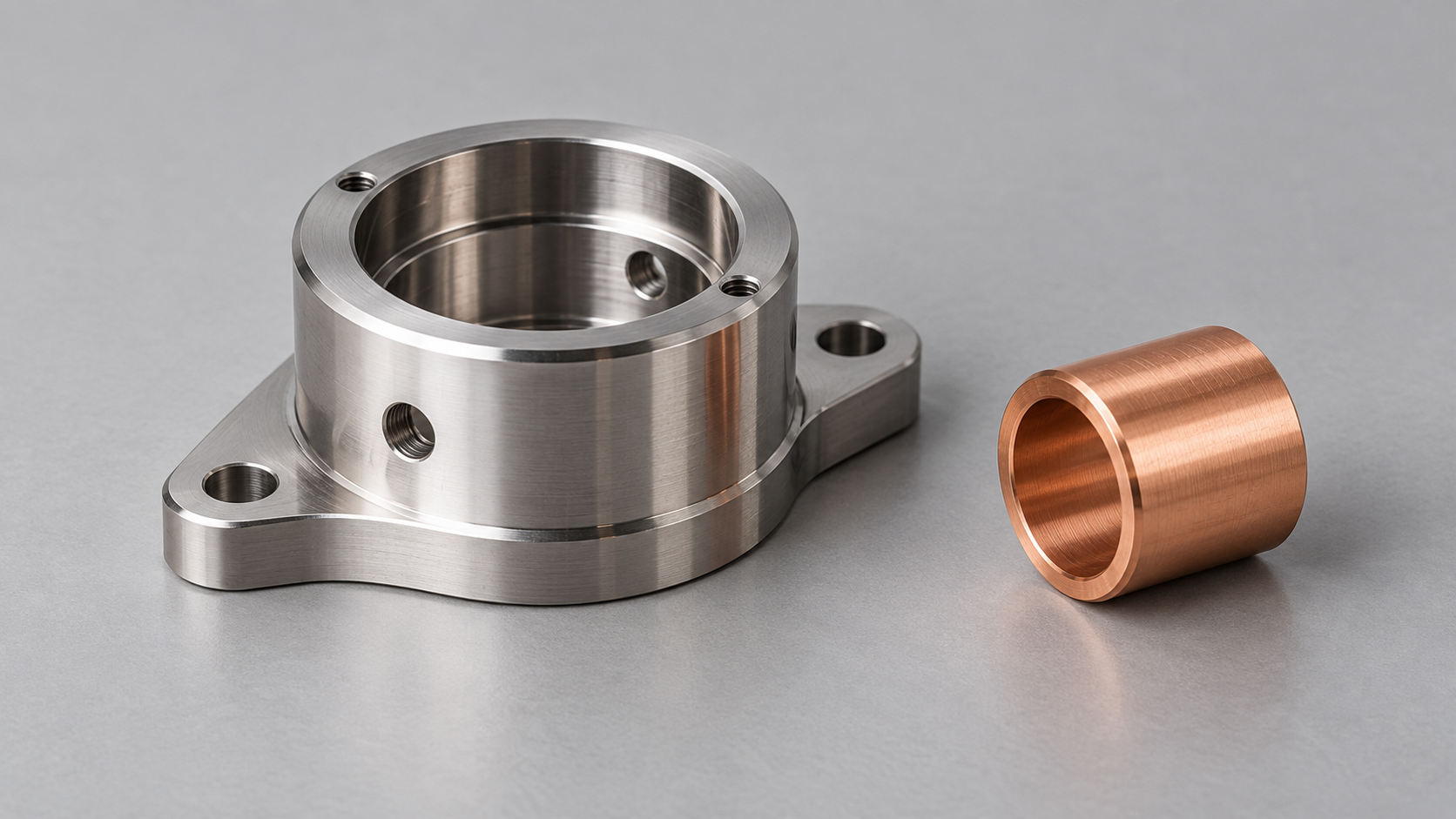
Conceptual illustration: silver structural carrier beside a separate copper-colored cylindrical insert.
Do not treat stainless as a chemical guarantee
Stainless steel describes a family of materials. Suitability depends on the actual grade, condition, environment, and application. Ask the responsible reviewer to assess the proposed finished component against the identified routine rather than accepting a general statement that stainless is resistant.
BSSA's guidance on sodium hypochlorite explains that it can attack stainless steel. This is a specific reason to identify cleaning chemistry and exposure conditions. It is not a recipe for changing the dilution or using a chemical outside its approved instructions.
Have the appropriate product and chemical-safety owners determine the permitted method. Purchasing should obtain and preserve that decision rather than improvise a new cleaning procedure. Compatibility with the metal and effectiveness of the cleaning process are separate requirements that both need the relevant evidence.
Review access as well as the material
A replacement shape may add a recess, combine pieces, or change how a surface can be reached. Ask the people who clean or service the product to review the proposed assembly. A smooth-looking loose sample cannot show whether the installed part is accessible using the intended method.
Metal Injection Molding (MIM) shapes metal powder mixed with a temporary binder in a mold, then processes the mixture into a metal component. MIMA introduces the route. Its shape possibilities can be useful, but a proposed detail still needs to suit the product's cleaning requirements.
For a hypothetical support body, combining features might remove a separate joint while changing access behind the component. Have the product team compare the complete arrangements. Do not assume that fewer pieces automatically means easier cleaning or that an attractive finish proves hygienic performance.
Clarify the finished condition being quoted
Specify the intended delivered material and finish, including further work required by the product specification. Ask whether the sample represents that condition. A sample supplied before final finishing may be useful for layout while leaving cleaning compatibility or appearance questions unresolved.
Our surface-finish discussion distinguishes the purpose of a finish from its name. For this review, explain what the finish must withstand and what the routine must achieve. The supplier should know whether the concern is appearance, function, product cleanliness, or several requirements together.
Keep initial cleaning before delivery separate from cleaning in use. Confirm who performs each required operation and what records or acceptance evidence accompany the shipment. A supplier's statement that parts are clean at dispatch does not establish compatibility with the customer's later routine.
Evaluate representative parts through the intended process
Have the responsible team define a suitable evaluation and acceptance basis. Identify the sample version, finish, surrounding materials, and routine used. Follow the approved procedure and relevant safety requirements; do not create an improvised chemical exposure to accelerate a purchasing decision.
Record observations and the limits of the evidence. If only appearance was checked, do not describe the result as proof of every functional or cleanliness requirement. If the sample differs from production, have the reviewer determine which conclusions need confirmation with representative supply.
Ask what would trigger another review. A change of cleaner, concentration, temperature, equipment, finish, or component design may matter even if the purchasing part number stays the same. Include the appropriate owners in that change process instead of leaving compatibility as a one-time verbal assurance.
Include changes to the routine in the business case
If the stainless proposal requires a different permitted method, assess the practical implications with the operating team. Include equipment, consumables, time, training, and verification where applicable. These are proposal-specific costs; do not assume either an automatic saving or an unavoidable increase.
Compare the workable complete arrangements using confirmed information. Keep any claimed reduction in maintenance or cleaning effort conditional until evidence supports it. A lower component price does not settle a proposal that depends on an unapproved change to how the product is used.
To begin, send LP MIM the component, current cleaning information, and intended use. Include the available specification and usual quantities. The aim is a stainless manufacturing proposal that fits a known, acceptable cleaning routine, with any necessary changes identified and reviewed before the purchasing decision becomes repeat production.
Comments
Loading comments...