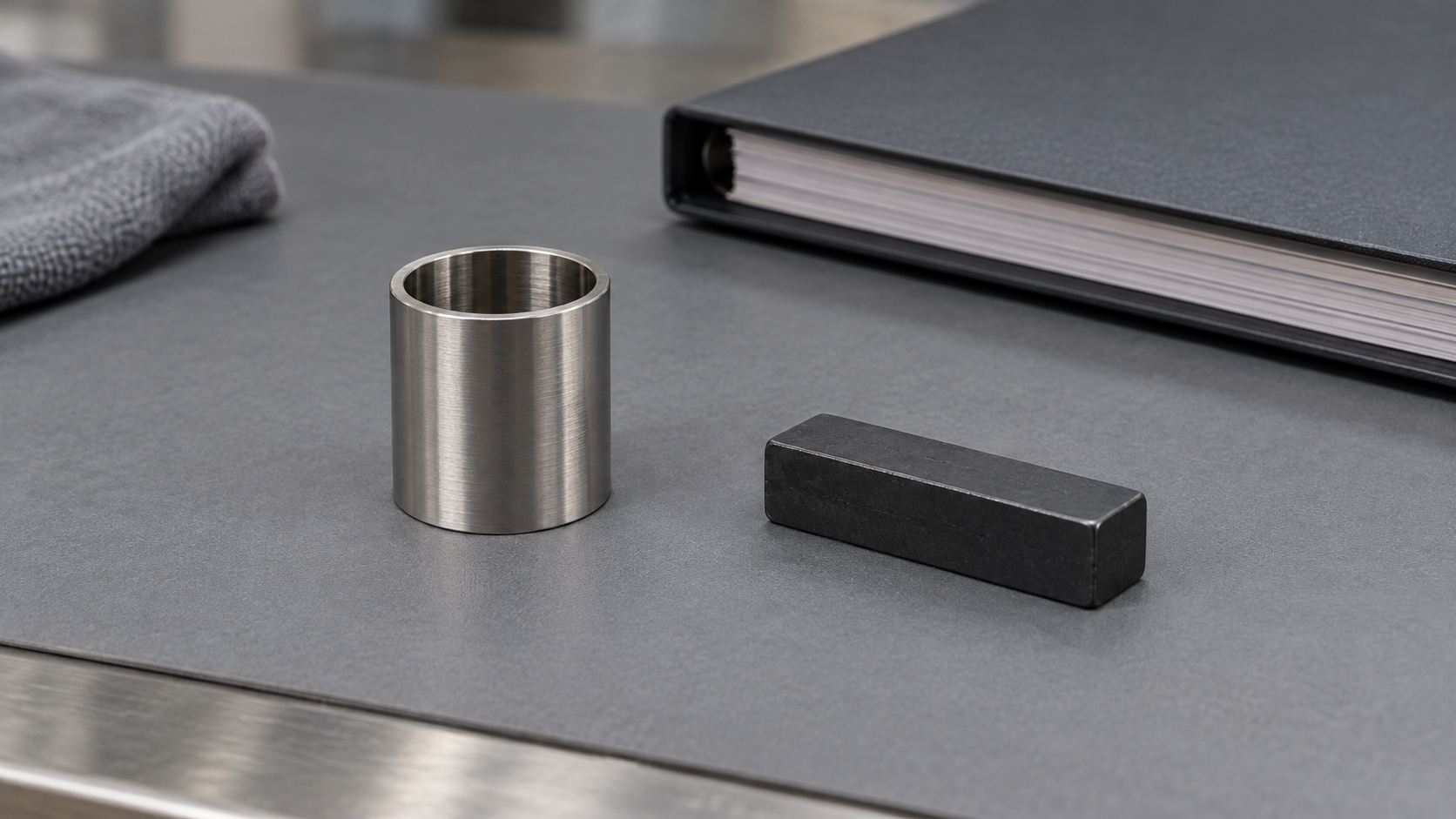
A magnet sticking to a sample does not, by itself, prove that the part is the wrong material or that it is not stainless steel. Stainless steels include different material families, and their magnetic behaviour differs. Treat the observation as a question to investigate against the specified grade and condition, not as a complete material acceptance test.
This is useful for a buyer moving from familiar brass components to stainless alternatives. A quick demonstration can feel convincing, especially when someone has heard that stainless should never attract a magnet. Before rejecting a sample or approving a delivery, establish what the observation can support and what evidence the order actually requires.
Start with the grade that was specified
Find the material requirement in the current specification and quotation. Stainless steel is a broad description, not one grade with one set of properties. If the agreed material is unclear, resolve that gap before interpreting a hand-held magnet test. A supplier and buyer can otherwise be answering different questions.
The British Stainless Steel Association's magnetic-properties guidance distinguishes magnetic stainless families from austenitic types with low magnetic permeability. The practical implication is limited but important: attraction alone is not a reliable yes-or-no test for membership of the stainless-steel family.
Keep the material name connected to the delivered condition and application. A proposed grade needs review for the function the part performs. The magnet observation does not establish corrosion resistance, strength, or suitability for replacing the existing brass component in your product.
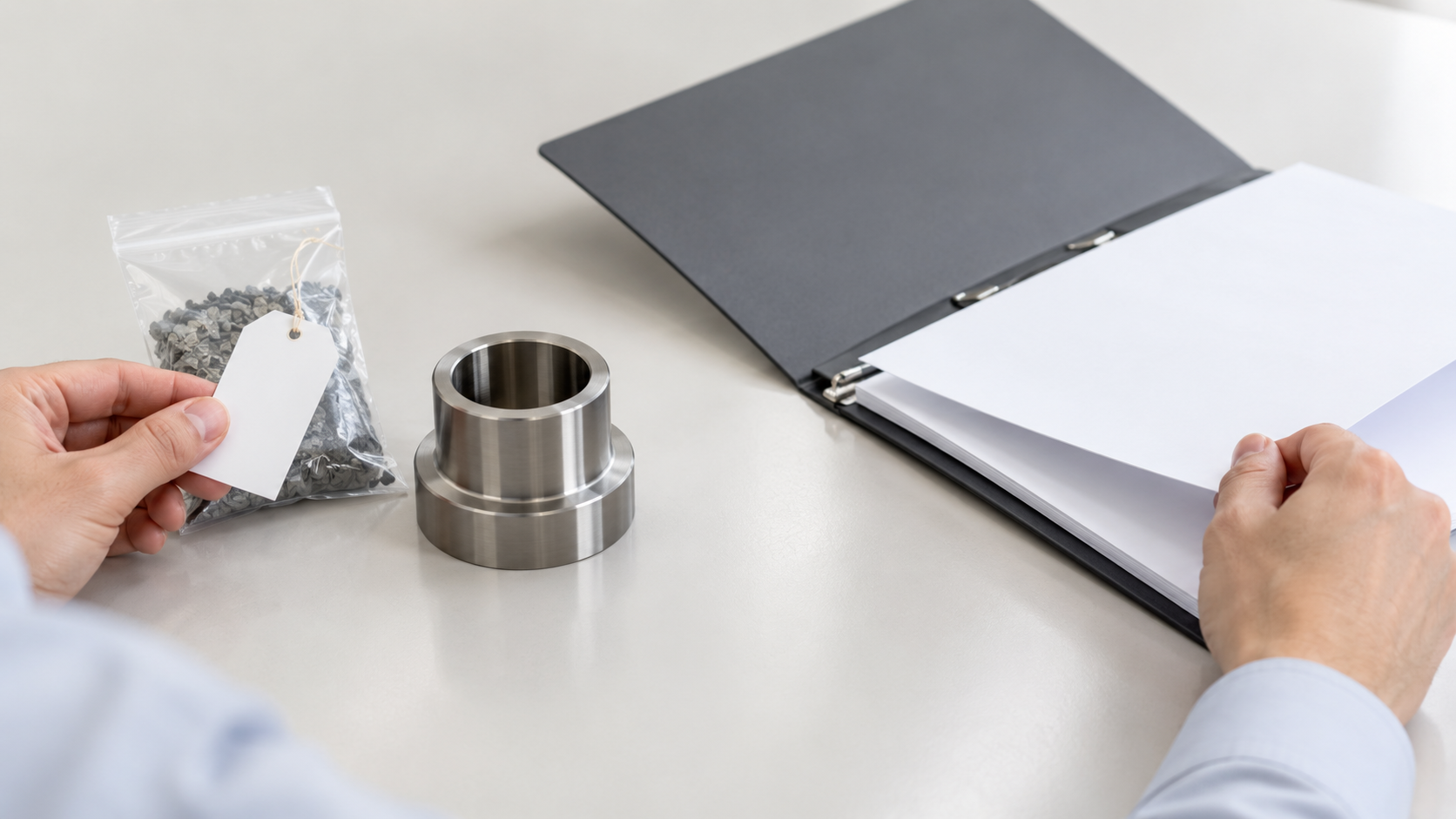
Conceptual illustration: a stepped metal bushing beside material samples and an open document folder.
Understand why a simple rule can mislead
Processing can also influence the magnetic response of some stainless steels. BSSA explains that cold working can make austenitic stainless show magnetic attraction. That is a reason to ask about grade and condition; it is not a reason to assume every unexpected sample is acceptable.
Avoid trying to infer an exact alloy from the strength of a casual pull. The observation depends on how the check is made as well as the material. If magnetic behaviour itself matters to the application, ask the responsible specialist to define a suitable requirement and measurement method for the finished part.
For a hypothetical metal sleeve, a purchasing colleague might notice attraction near one area and none that feels obvious elsewhere. Record the observation and sample identity. Do not turn the demonstration into a grade certificate, a corrosion prediction, or an instruction to change the manufacturing route.
Ask what the sample represents
Confirm how the sample was produced and whether its material and processing represent the proposed repeat supply. Metal Injection Molding (MIM) shapes metal powder mixed with a temporary binder in a mold, then removes the binder and heats the powder into a solid metal part. Samples made by a different route may serve a limited development purpose, which should be stated clearly.
Ask the supplier to identify that purpose and any differences from the intended delivered component. An early fit sample can be useful while leaving material or production questions open. A sample's appearance or magnetic response should not silently extend the scope of what your team has actually evaluated.
If the supplier offers an explanation, request the supporting material and process references relevant to the sample. Have the quality or materials owner assess them. Purchasing can organize the question and preserve the evidence without having to diagnose the sample's metallurgical condition from a desk demonstration.
Use the agreed material evidence
Review the documents required by the purchasing specification. Check whether they identify the relevant material, sample, batch, or delivery and what characteristics they actually report. If the connection is unclear, ask the supplier to explain it before treating the document as evidence for the item in hand.
Our material-records guide explains how to connect evidence to delivered parts. A record of incoming material and a report about the finished component may answer different questions. The appropriate evidence depends on the requirement and the assessment defined by the responsible team.
Where further identification or testing is needed, let that team choose a method capable of answering the specific question. Do not replace the agreed acceptance plan with an improvised test simply because it is quick. Equally, do not ignore a genuine inconsistency because someone says stainless can be magnetic.
Keep magnetic function separate from material identity
Some applications care about how a component interacts with magnets or nearby equipment. In that case, the requirement must be discussed explicitly. Stating a grade may not completely express the permitted magnetic behaviour of the finished part under the conditions that matter to the product.
Explain the use, surrounding equipment, and the problem a magnetic response could cause. Ask the product specialist to define the acceptance criteria and the supplier to confirm how the proposed component will be evaluated. Avoid publishing or purchasing against a universal threshold taken from an unrelated application.
Our use-environment brief helps collect application information. Include magnetic behaviour alongside other relevant functions when needed, rather than allowing a familiar material label to stand in for the full product requirement.
Resolve the concern with a clear record
Keep the sample reference, observation, specification, supplier explanation, and review outcome together. State whether the evidence confirms acceptance, requires more investigation, or identifies a discrepancy. Follow the appropriate receiving or development process while that question remains open.
To start a stainless review, send LP MIM your component and required material information. Mention any magnetic-function requirement or unexpected sample observation. A useful conversation replaces a simple magnet myth with the right question, the relevant evidence, and a decision made against the actual application.
Comments
Loading comments...