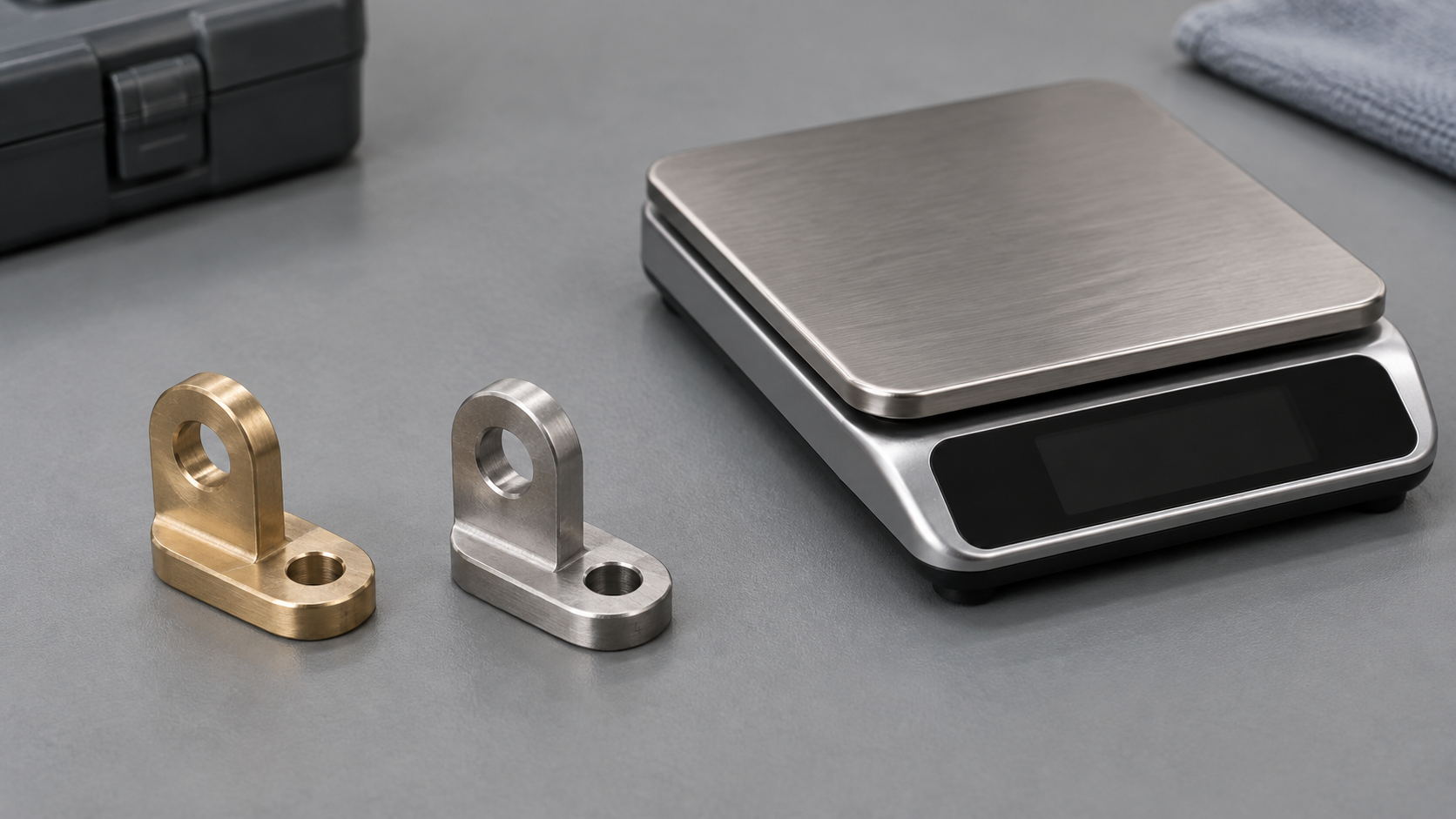
A lighter stainless sample does not automatically mean a cheaper component, an inferior part, or a successful brass replacement. Weight is one observation about the item in hand. To interpret it, confirm that you are comparing the intended designs in equivalent finished conditions and understand why the difference matters to the product.
For purchasing, a weight comparison can support questions about handling, product feel, packing, and cost. It cannot replace the material specification or functional review. Start by separating those questions so a single reading does not become evidence for several conclusions it cannot establish.
Define the comparison before weighing
Identify the current brass component and the proposed stainless sample by part number and revision. Confirm whether each item is a bare component, a finished part, or an assembly containing other pieces. A comparison is easily distorted when one sample includes a pin, insert, coating, or attachment that the other does not.
Record whether the proposed design has the same geometry. A stainless conversion may change walls, features, or the number of pieces used. Our redesign guide explains why a conversion should be reviewed as a product proposal rather than assumed to be an identical shape in another material.
If the samples differ intentionally, list the differences beside the readings. That makes the comparison useful to the product team. Without the context, a lighter sample may be attributed to the material when the main difference is actually the revised shape or the removal of another component.
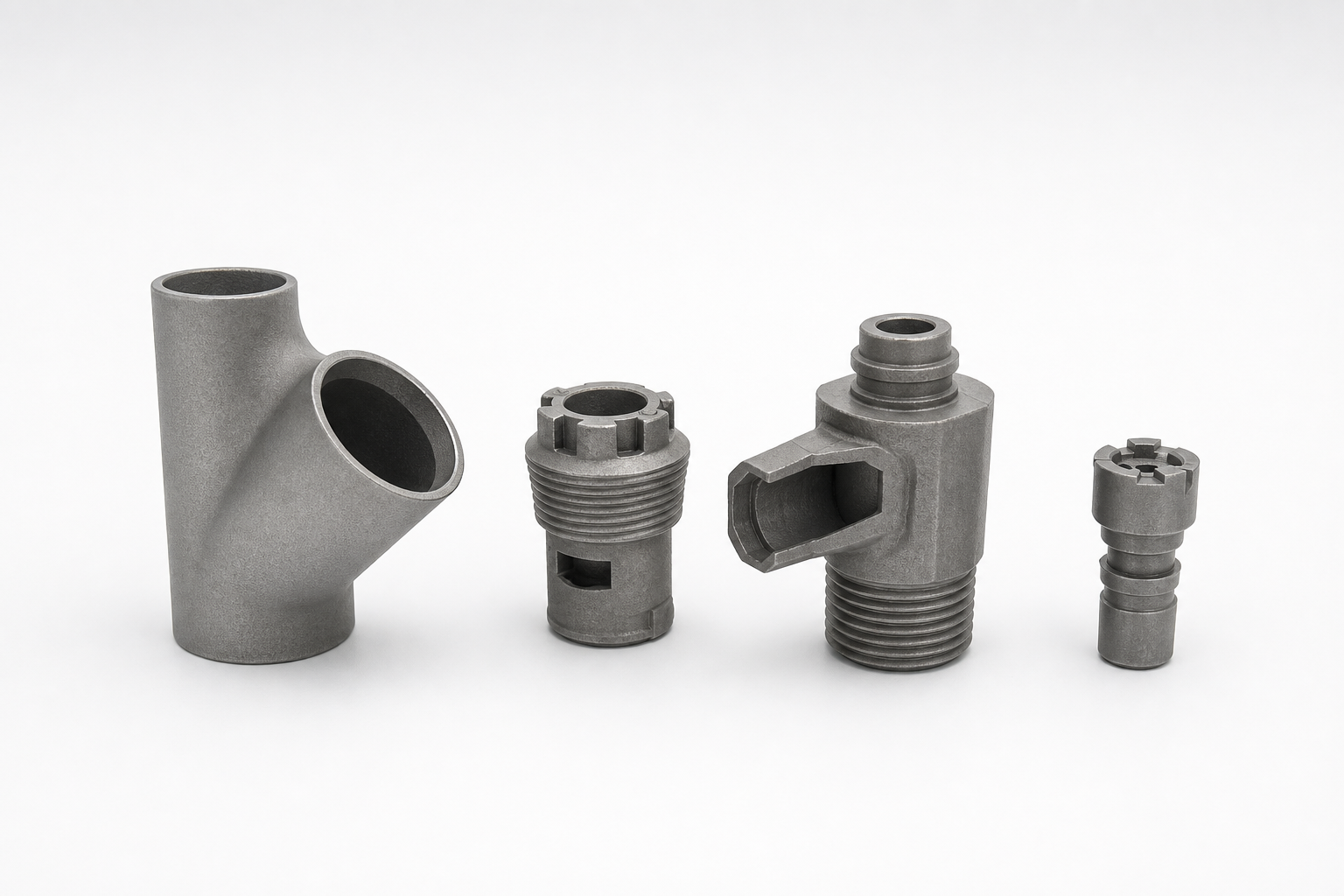
Conceptual illustration: four metal components with different outlines, openings and wall configurations.
Establish whether the sample is representative
Ask how the sample was made and what it represents. Metal Injection Molding (MIM) shapes metal powder mixed with a temporary binder in a mold, then removes the binder and heats the powder into a solid metal part. BASF outlines that sequence. An early development sample may not represent every detail of the intended finished supply.
CMG's guidance describes secondary operations and finishing. Confirm which operations are included in the sample being compared. A component weighed before final work should not be treated as the definitive mass of the ready-to-use part unless that relationship has been established.
If weight is a purchasing requirement, ask the responsible team to define the relevant condition and acceptable range. Use appropriate equipment and a repeatable method. Do not create an acceptance limit by copying the reading from one convenient sample without considering what the requirement is meant to control.
Ask whether weight serves a product function
Discuss the effect of the difference with the product owner. The mass of a small component may be unimportant in one assembly and relevant to balance, handling, or user perception in another. Identify the actual concern rather than assuming that lower weight is always a benefit.
For a hypothetical small lever, a lighter replacement might feel different even if it fits correctly. The team could review handling in the assembled product and decide whether the difference is acceptable. That is a product decision, not something purchasing can settle by comparing the two parts on a scale alone.
If strength, durability, or another function matters, evaluate it through the agreed evidence. Weight by itself does not demonstrate those properties. Preserve the distinction between an observable difference and proof that the replacement meets the intended service requirements.
Compare prices per usable component
Request quotations for equivalent finished and accepted components. A price per kilogram can be useful within a supplier's calculation, but it does not describe every cost of making the part. Shape, tooling, additional work, quantity, inspection, and delivery still belong in the purchasing comparison.
Our quotation comparison guide provides the wider framework. Use the actual offered price for the component your factory can use. Do not calculate a guaranteed saving by multiplying a weight difference by an unrelated metal price and ignoring the rest of the supply.
Where a supplier says reduced material use contributes to the proposal, ask which design and production assumptions support that statement. Keep it separate from the final commercial offer. A plausible explanation of one cost element does not establish the complete saving your business will achieve.
Review packing and handling on actual quantities
If transport or handling is part of the business case, compare the packed shipment rather than the individual component alone. Include the confirmed packing arrangement and normal delivery quantity. Protective materials, cartons, and handling units can affect the result and should not be guessed from the sample's weight.
Ask whether the revised component changes how operators pick, position, or feed it. A mass difference may interact with an existing handling method, but that needs assessment in the actual process. Involve assembly colleagues before claiming a productivity improvement based only on a lighter item.
Keep any calculated benefit tied to a stated scenario. Record the quantity, packaging, delivery basis, and source of the figures. If those inputs are not yet known, mark the estimate as incomplete instead of presenting an attractive percentage that cannot be reproduced later.
Treat an unexpected difference as a question
If a repeat delivery weighs differently from the accepted basis, preserve identity and ask the responsible reviewer to investigate. Check the specification, configuration, and measurement conditions before reaching a conclusion. Follow the agreed process for suspect deliveries rather than using weight as an informal substitute for all receiving checks.
To prepare a comparison, send LP MIM the current component and proposed use. Include the finished configuration, any weight requirement, and the purchasing problem you want to solve. A useful assessment connects the reading to the design, product function, and complete quotation, with each conclusion supported by the right evidence.
Comments
Loading comments...