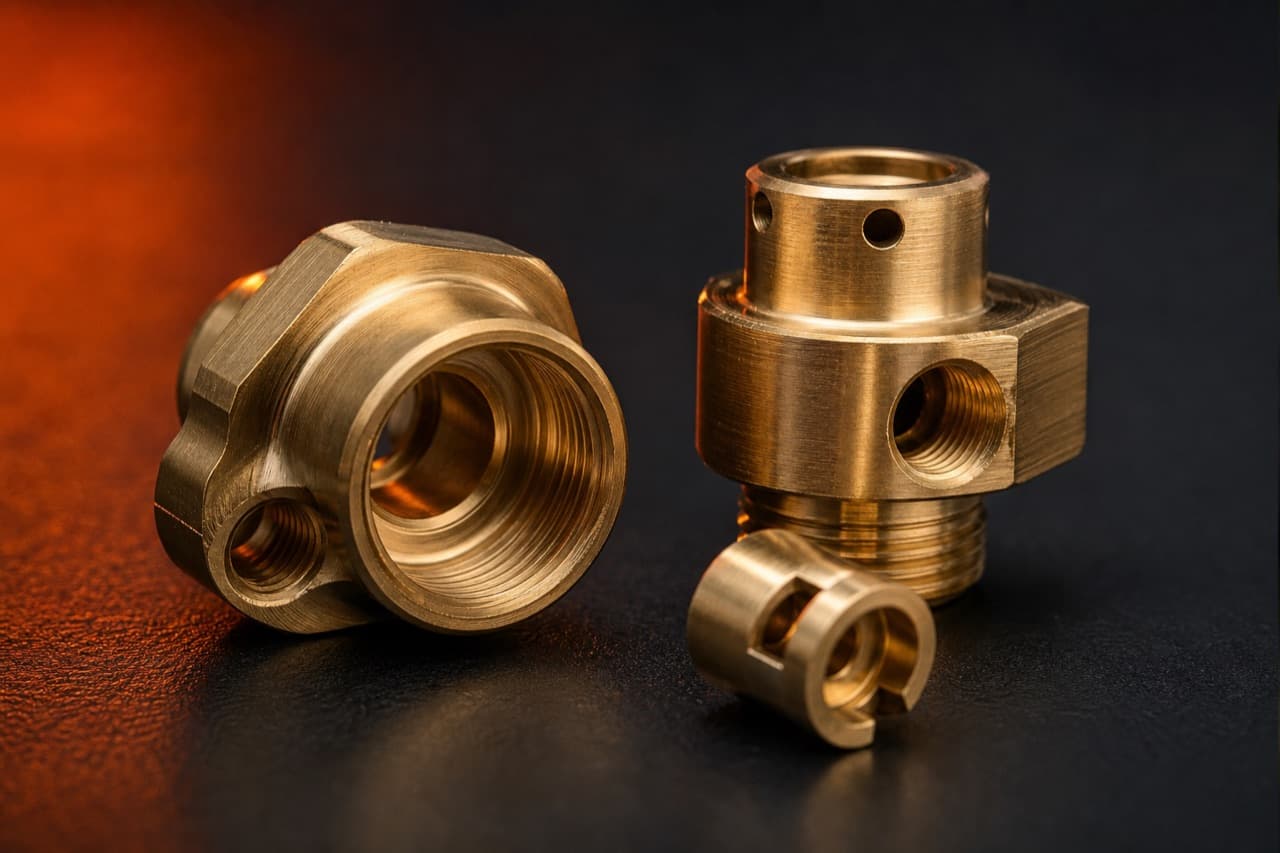
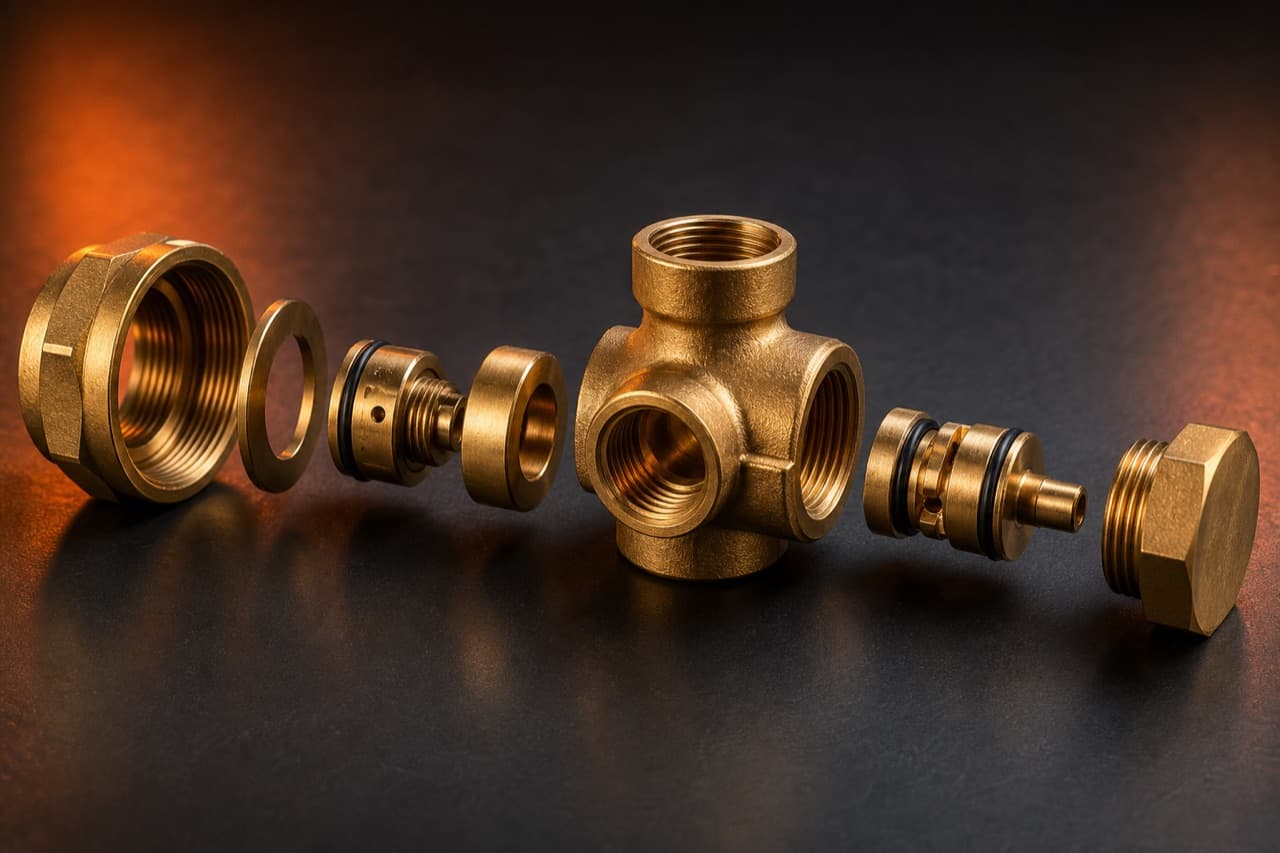
Small machined brass fittings
Parts with repeated milling, drilling or internal features that create scrap and long cycle time.
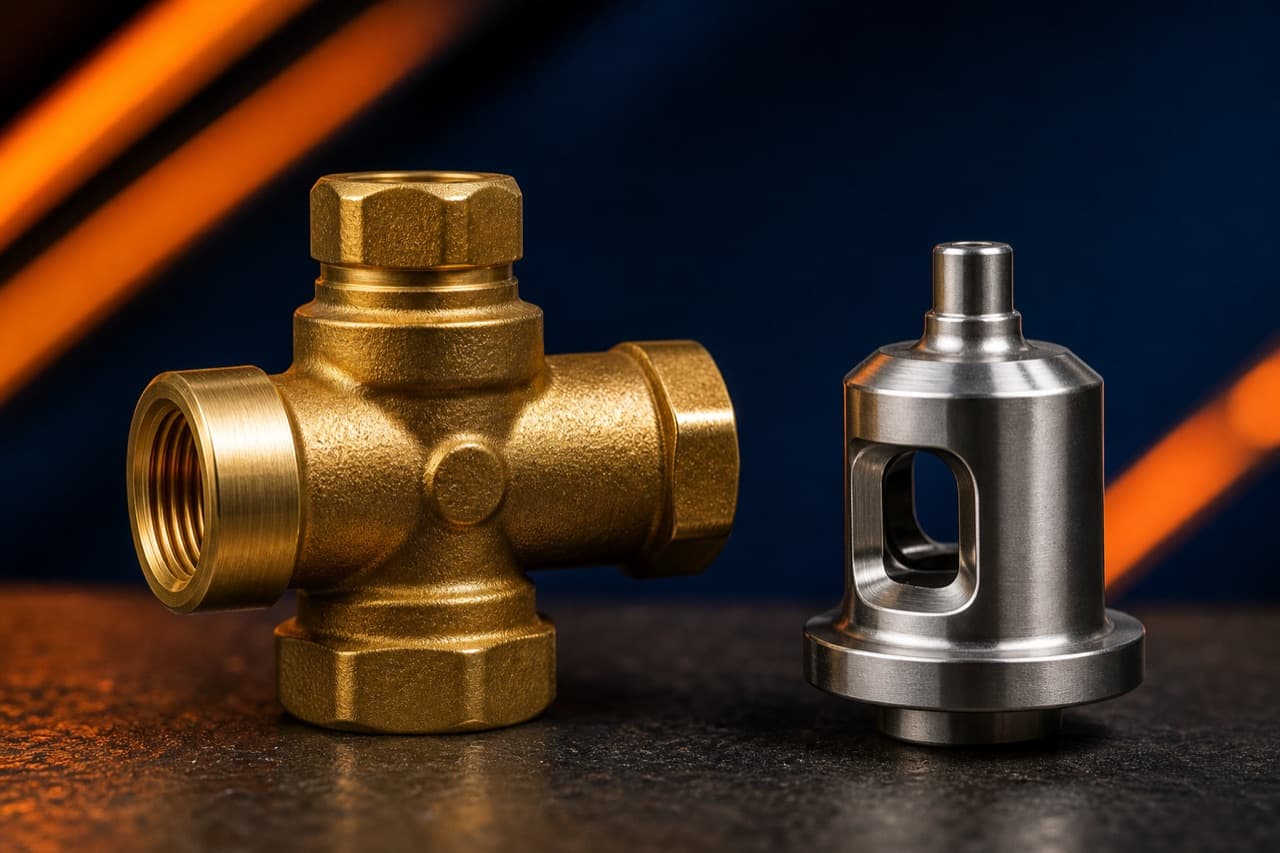
BRASS MACHINING ALTERNATIVE
Machined brass parts often become expensive when geometry is complex, chip waste is high, or annual volume grows beyond efficient CNC production. LPMIM reviews your drawing, material function, tolerance and volume to determine whether MIM is a practical replacement path.
Upload Your Brass PartBrass may be selected for machinability, corrosion resistance or legacy design reasons, but high material exposure and multi-step machining can make small complex components difficult to scale. MIM can help when the part can be redesigned around moldable geometry and validated performance requirements.
Parts with repeated milling, drilling or internal features that create scrap and long cycle time.
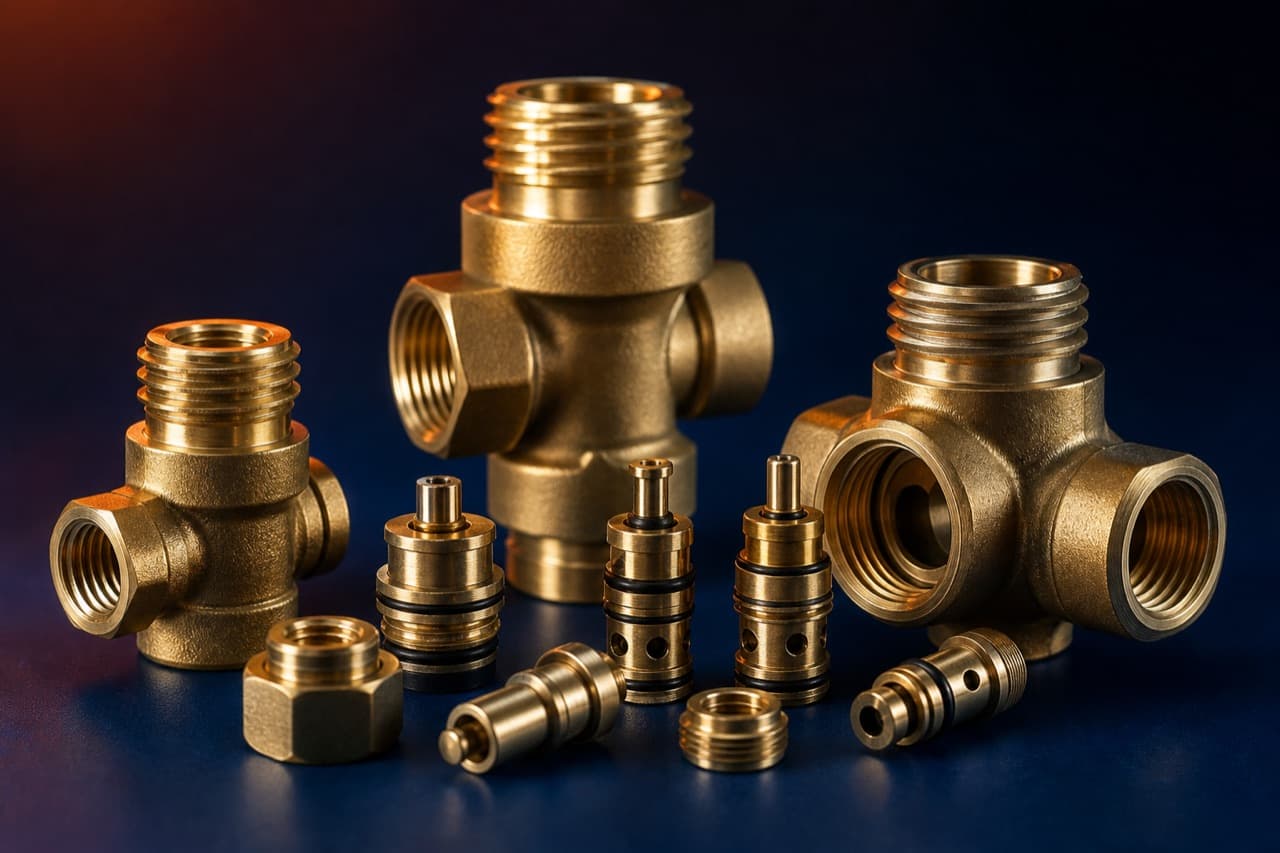
Bodies, inserts, retainers and housings where stainless or other MIM alloys may meet structural requirements.
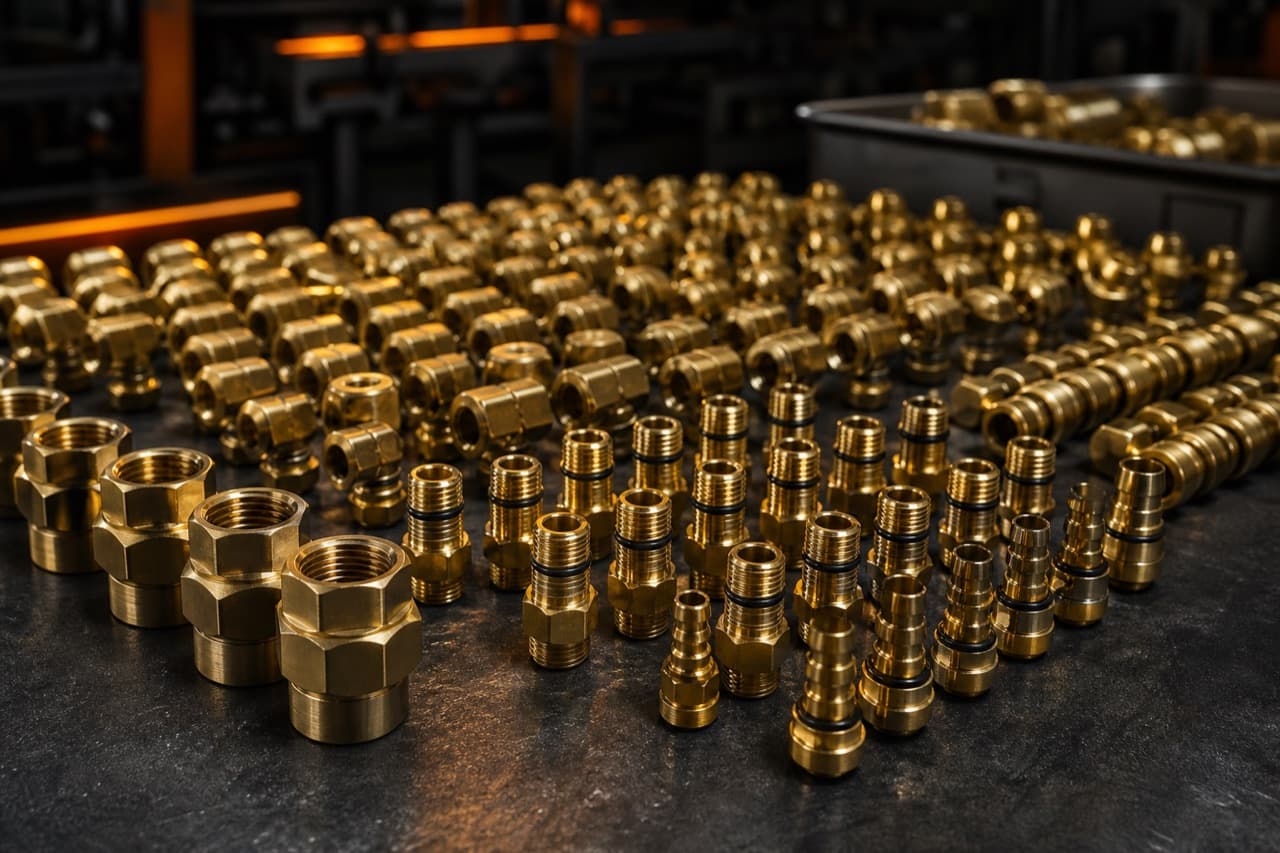
Stable SKUs where tooling can be amortized across annual demand.
Assemblies where MIM redesign can consolidate features or remove joining steps.
We review process fit before recommending a material or production change.
Small complex parts
Features that are expensive to machine from brass bar or billet.
Annual volume above prototype level
Programs where tooling cost can be spread across production.
Parts with machining waste
Components where subtractive processing removes significant material.
Very low volume parts
Tooling may not pay back for one-off or low-run components.
Pure conductivity requirements
If brass is used primarily for electrical conductivity, material selection needs detailed review.
Very large components
Large mass parts can be better suited to casting, forging or machining.
A useful comparison includes material price, scrap, cycle time, secondary machining, tooling amortization, quality loss and assembly steps. We do not quote generic savings without reviewing the part.
| Factor | What to evaluate |
|---|---|
| Annual quantity | Higher stable volume improves MIM tooling economics. |
| Geometry complexity | MIM becomes stronger when CNC operations multiply. |
| Functional material needs | Conductivity, corrosion, strength and surface requirements drive alloy choice. |
| Secondary operations | Threads, sealing faces or precision bores may still need targeted machining. |
Sometimes. MIM can replace selected brass parts when geometry, volume, material function and tolerance requirements fit the process. It is usually a redesign decision, not a blind material swap.
Stainless steel MIM may replace brass in structural, corrosion-resistant or cost-driven applications where brass conductivity is not the key requirement.
Conductivity must be reviewed carefully. If the part depends on brass-level electrical or thermal conductivity, MIM may not be suitable or may require a different material strategy.
MIM is usually strongest for repeated production rather than prototypes. Share annual quantity and forecast so tooling payback can be evaluated.
STEP, STP, IGES, PDF, DWG or DXF files are useful, along with material, tolerance, volume and application notes.
Send drawings and production details. We will review whether MIM can reduce machining cost without risking function.
Upload Your Brass Part